Fila Brasileiro
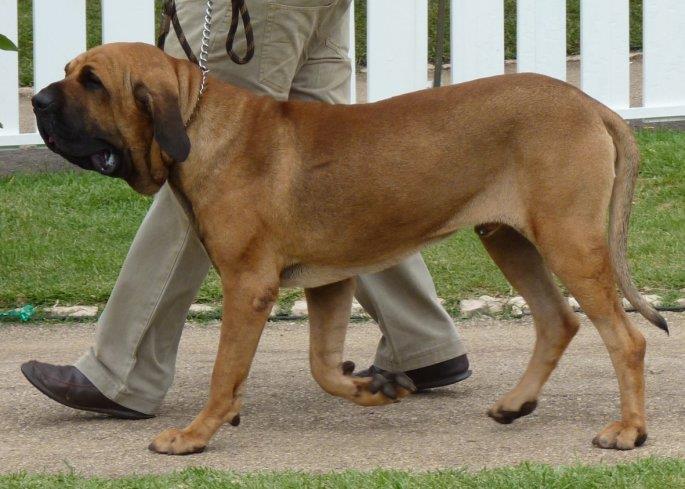
The Fila Brasileiro is a large Brazilian guardian dog, bred to mind livestock and property and known above all for its deep, single-minded loyalty to its own family. It is also one of the breeds you cannot legally bring into Australia. The Commonwealth prohibits its import, and several states treat it as a restricted or prohibited breed on top of that.1, 2, 3 That makes this less a care guide than a straight answer to the question most people are really asking, which is whether they can own one here. If you want a legal guardian-type mastiff you can keep in Australia, start with our guide to the mastiff.
Legal status in Australia (read this first)
This is the part that decides everything else. The Fila Brasileiro is on the Commonwealth list of dog breeds prohibited from import into Australia, so you cannot legally bring one into the country.1
Within Australia it is also regulated under state and territory dog laws. Victoria lists the Fila Brasileiro as a restricted breed, and councils can assess a dog against the approved standard.3 Queensland lists it as a prohibited breed under its regulated dog framework, with strict controls and offences relating to ownership and supply.2
If you already have a dog that might be classed as a restricted or prohibited breed, check the rules where you live and speak with your local council before any change like moving house, rehoming, or travelling.
Origins and working role
The Fila was built for a job, and it shows. The breed developed in Brazil as a large working dog used for guarding and handling livestock, with a history that also takes in big-game hunting. Modern breed standards still reflect that purpose: power, endurance, and a strong defensive response to unfamiliar people.4
Appearance and physical characteristics
Everything about the Fila reads as size and substance. Key points from the breed standard:4
- Height (at the shoulder): about 65 to 75 cm for males, and 60 to 70 cm for females.
- Build: large, heavy-boned, loose-skinned mastiff-type working dog.
- Coat: short and smooth, generally low-maintenance.
- Colours: commonly fawn, brindle and black. Registries and standards differ on what is acceptable, particularly around dilute colours.
Temperament and personality
This is a guardian first and a companion second. Well-bred, well-managed Filas are often steady and devoted with their own people, but they are not a casual dog who takes to everyone. The breed standard emphasises a marked aversion to strangers, which can show up as intense watchfulness and rapid escalation if a situation feels threatening or chaotic.4
That trait is the whole reason the breed is regulated the way it is. In ordinary suburban life it collides with front gates, tradies, parcels at the door, kids' friends coming and going, shared driveways, and off-lead encounters that unfold in seconds. It is a breed that demands secure fencing, controlled greetings and calm routines from an experienced handler, which is a large part of why import and ownership are restricted.
Health concerns the breed is known for
Large, heavy dogs carry a predictable set of risks. Two are worth understanding even at a distance.
Hip dysplasia and joint disease
Big, heavy dogs are at higher risk of orthopaedic problems. Lean body condition (you should be able to feel the ribs), no repetitive high-impact exercise while a puppy is still growing, and hip scoring from breeders where available all reduce that risk.
Gastric dilatation-volvulus (GDV, or bloat)
GDV is a sudden, life-threatening emergency seen more often in large, deep-chested dogs. The stomach distends and twists, and it needs immediate veterinary care.5, 6 Sensible habits include slower feeding (scatter feeding or puzzle feeders), splitting meals rather than one very large feed, and avoiding hard exercise straight after eating. For some high-risk dogs, vets may discuss a preventative gastropexy.6
Grooming and routine care
The coat is the easy part. It is short and simple: a weekly brush to lift dust and shed hair, plus baths only when needed. The less glamorous basics matter more, so keep on top of nails, ears, teeth and skin folds, since large, loose-skinned dogs can get irritated where moisture sits in the creases.
If you are grieving the loss of a Fila Brasileiro
Losing a dog you were close to can knock you flat. Grief after a pet dies is often blunt and physical, with disrupted sleep, waves of guilt, and a house that feels strangely empty, and it hits hardest with a dog that lived close to the family's daily rhythm.7, 8
- Keep the first week simple: eat, sleep, walk, and accept help. Decision-making is harder than it looks when you are raw.
- Mark the bond in a grounded way: a paw print, a written memory, a photo book, or planting something in the yard can give the loss a shape.8
- Watch your other pets: some animals change after a companion dies, with clinginess, searching behaviour or appetite shifts. Steady routines usually help.9
- Reach out if you are not coping: your vet can point you to pet grief supports, and mainstream supports help too, especially if grief is tipping into anxiety or depression.8
Frequently asked questions
Is the Fila Brasileiro banned in Australia?
Yes. The breed is prohibited from import into Australia, and it is treated as a restricted or prohibited breed under various state frameworks.1, 2, 3
Is the Fila Brasileiro recognised by the American Kennel Club (AKC)?
No. The Fila Brasileiro is not an AKC-recognised breed, though it is recognised by the Fédération Cynologique Internationale and other registries.10, 4
What is the biggest health emergency to know about?
GDV, or bloat, is one of the most urgent emergencies seen in large breeds. A sudden swollen abdomen, unproductive retching, restlessness, drooling, weakness or collapse are all reasons to seek emergency veterinary care straight away.5, 6
References
- Department of Agriculture, Fisheries and Forestry (Australia) · Cats and dogs frequently asked questions (prohibited dog breeds list)
- Queensland Government · Regulated dogs (prohibited dog breeds list)
- Agriculture Victoria · Owning a restricted breed dog (includes Fila Brasileiro)
- Fédération Cynologique Internationale (FCI) · Breed Standard No. 225: Fila Brasileiro
- Merck Veterinary Manual · Gastric Dilation and Volvulus (GDV) in small animals (overview, risk, urgency)
- Cornell University College of Veterinary Medicine · Gastric dilatation-volvulus (GDV) or bloat
- SAMHSA · Pet Loss and Grief (resource from the American Veterinary Medical Association)
- RSPCA Pet Insurance (Australia) · What to do when a pet passes away at home
- RSPCA Pet Insurance (Australia) · How to comfort a grieving pet
- American Kennel Club (AKC) · Dog breeds (recognised breeds list)

Dog lover and writer at My Pets Australia, sharing practical breed guides and care advice for Australian pet owners.