Mastiff
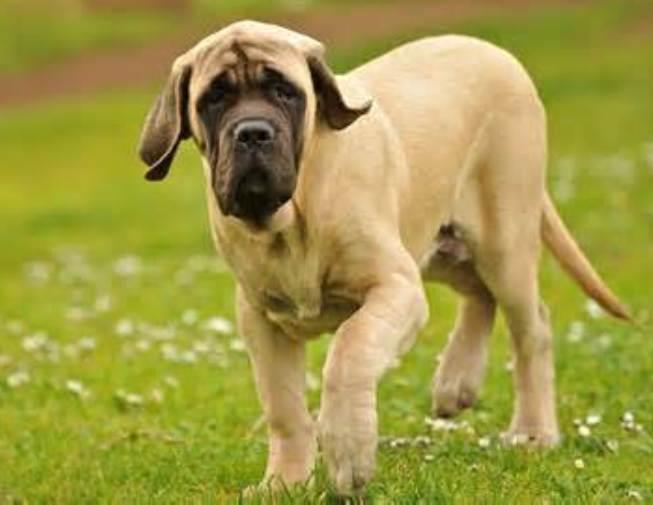
The Mastiff, often called the English Mastiff, is one of the calmest giant breeds you can bring home: a heavy-boned, short-coated guardian that is happy to lie quietly indoors and lets its size do the talking in public. At their best they are affectionate with family, steady with strangers, and slow to escalate when something changes around them. It is also a serious commitment, because everything about a giant dog is bigger, including the food bill, the vet costs and the consequences of a rushed puppyhood. Breed standards give you a rough map of what typical looks like, but real dogs vary, so it pays to focus on sound structure and a steady temperament rather than chasing extreme size.1
Mastiff snapshot
- Group: Giant/working type
- Coat: Short, close-lying (often coarser over the neck and shoulders)
- Common colours: Apricot, fawn or brindle, usually with a dark mask (breed-standard wording varies by kennel club)
- Temperament: Generally steady, dignified and loyal; can be reserved with strangers without being sharp
- Life expectancy: Often quoted around 6 to 10 years, influenced by genetics, body condition and orthopaedic health
- Health concerns to plan around: Orthopaedic disease (including hip and elbow dysplasia), gastric dilatation-volvulus (GDV, or bloat), and some heart conditions
History and Origin
The modern Mastiff is closely tied to the British Isles, developed as a powerful large guardian and estate dog. Popular writing loves the "ancient war dog" story, but what matters for owners today is what selective breeding actually produced: a dog built to deter trouble through size and presence, not constant motion.
In Australia, Mastiffs are mostly kept as companions, with some still doing informal guard duty simply by being there. Their popularity rises and falls with wider trends in giant breeds, but the daily requirements stay the same: room to move, careful early training, and owners who are comfortable living with a dog that takes up a lot of physical and social space.
Appearance and Physical Characteristics
Mastiffs are giant in the practical sense, which means heavier bones, heavier joints, more food, bigger bedding and real force behind an enthusiastic lean. Breed standards describe a very large dog with a broad skull, a substantial body and a short coat in apricot, fawn or brindle, usually with dark pigment around the muzzle and ears.1, 2
If you are comparing puppies, prioritise:
- Sound movement, with no obvious limping, bunny-hopping or stiffness after play
- Moderate build, because extreme bulk adds load to growing joints
- Clear breathing and heat tolerance, since some lines have heavier faces and struggle more in warm weather
Temperament and Personality
A well-bred, well-raised Mastiff is usually calm indoors and slow to react, watching first and deciding second. Many are affectionate with their own people and politely indifferent to strangers, though individuals vary.
The catch is scale. A Mastiff that jumps up, barges through doors or ignores a recall is not so much naughty as physically overwhelming. Training is less about tricks and more about shaping daily manners: walking on a loose lead, settling on a mat, and staying composed when visitors arrive.
Is a Mastiff Right for You?
Many Mastiffs are calm around children when properly supervised and trained, but their size is the constant hazard. Knock-overs happen without any aggression at all. Teach children to give the dog space, and teach the dog to settle, wait and move gently through doorways.
They are usually happiest with a predictable routine and a quiet home base. If your household is crowded, constantly changing, or you are away for long hours most days, think carefully, because an unhappy giant dog is hard to ignore.
Training and Exercise
Early socialisation matters for any dog, but it is especially important for a breed that can look intimidating without trying. The goal is not forced friendliness; it is calm familiarity with the ordinary world, including people of different ages, hats and umbrellas, wheelchairs and skateboards, vet handling, car travel and being left alone briefly.
Australian guidance describes a critical socialisation period in early puppyhood, often roughly between about 4 and 16 weeks, with sources varying on the exact boundaries. During this window, short and positive exposures tend to have outsized effects later.3, 4, 5
A practical approach:
- Choose reward-based training (food, play, access to sniffing) rather than intimidation or "dominance" methods.4
- Teach body handling, with gentle checks of ears, paws, mouth and brushing, paired with rewards.
- Build a default settle, so the dog can lie quietly while the world moves around it.
- Keep sessions short, because giant-breed puppies tire mentally before they look tired physically.
Adult Mastiffs do best with moderate daily exercise: walks, sniffing time and calm play. They are not built for repetitive high-impact work, and many do not enjoy it anyway. For puppies, the biggest risk is overdoing it during rapid growth. Hard running on slippery floors, repeated jumping in and out of cars, or long forced marches all strain developing joints. Aim for frequent, gentle outings with plenty of rest, and let your vet guide you on growth rate and body condition, especially if your dog is on the larger end of the spectrum.
Health and Lifespan
Two health issues deserve real attention before you commit. The first is orthopaedic. Large and giant breeds can be prone to developmental joint disease, including hip and elbow dysplasia. Good breeding, sensible growth, a lean body condition and appropriate exercise all help. If you are buying a puppy, ask what hip and elbow screening has been done in the line, and what the breeder is aiming for besides size.
The second is GDV, or bloat, and it is the one to learn cold. Deep-chested, large dogs are at higher risk of gastric dilatation-volvulus, a rapidly progressive emergency where the stomach distends and may twist, cutting off blood flow and leading to shock. It cannot be safely managed at home.6, 7, 8
Seek emergency veterinary care immediately if you see:
- Retching with little or nothing coming up
- Swelling or tightness of the abdomen, which may be subtle
- Excessive drooling, restlessness or sudden distress
- Weakness, pale gums or collapse
Risk-reduction strategies commonly recommended in veterinary references include feeding multiple smaller meals, avoiding hard exercise around meal times, reducing mealtime stress, and not using raised bowls as a routine prevention measure.6
Grooming and Care
The short coat is the easy part; the dog is not. Weekly brushing keeps shedding manageable and helps you spot skin changes early. Nails need regular trimming, because big dogs tolerate long nails poorly when it changes their gait and loads their joints. Plan for the practicalities too: large bedding that can be cleaned, non-slip flooring where the dog turns and stands, and a cool resting place in warm weather.
Diet and Nutrition
Feed a Mastiff for health, not for maximum bulk. The diet should support steady growth in puppies and a lean, strong body in adults, aiming for controlled development rather than rapid size gain. Your vet can help you choose an appropriate large or giant-breed diet and adjust quantities as the dog matures.
If your Mastiff is gaining weight quickly, tires easily, or struggles to rise after rest, treat that as information rather than a personality trait. With a giant breed, weight management is joint management.
The Bottom Line
A Mastiff is less a high-energy breed and more a moving landmark: steady, powerful and quietly watchful. Kept lean, trained and calmly socialised, they can be deeply companionable dogs. Rushed through puppyhood, allowed to become oversized, or left without guidance, their problems tend to be literal and heavy.
References
- The Kennel Club (UK), Mastiff breed standard
- United Kennel Club (UKC), Mastiff breed standard
- RSPCA Australia, Socialising your puppy
- RSPCA Knowledgebase, How can I socialise my puppy?
- RSPCA Knowledgebase, What should I do when I bring home a new puppy?
- Merck Veterinary Manual, Gastric dilation and volvulus (GDV) in small animals
- Cornell University College of Veterinary Medicine, Gastric dilatation-volvulus (GDV) or bloat
- American College of Veterinary Surgeons, Gastric dilatation-volvulus (GDV) and gastropexy

Dog lover and writer at My Pets Australia, sharing practical breed guides and care advice for Australian pet owners.