Zebra Finch
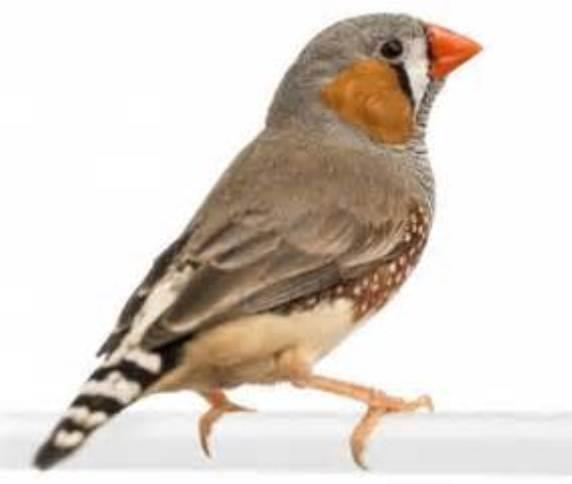
The zebra finch is a small grey seed-eater from Australia's dry inland, easily known by its red bill, red eyes, and the bold black-and-white barring on its rump and tail. It is one of the toughest little birds on the continent, built for open country where rain, and the seed that follows, arrives in short bursts. As a pet it is hardy, active, and endlessly watchable, best suited to people who enjoy observing natural behaviour rather than handling a bird. Zebra finches are legal to keep across Australia and are among the most common aviary birds here, though state wildlife rules can still vary. Get the basics right, space, diet, warmth, and hygiene, and they are one of the more forgiving birds to keep.1
Quick Identification
The bird most Australians mean is the inland "Australian zebra finch", also called the chestnut-eared finch. Adults are mostly grey with bold black-and-white barring on the rump and upper tail. Both sexes carry a red bill and red eyes. Males show chestnut cheek patches and stronger patterning, while females are plainer overall.1
Appearance and Physical Characteristics
Zebra finches are small seed-eaters with a short, strong bill made to de-husk grass seeds. Their compact build and busy, ground-feeding style suit open country where food comes in pulses after rain, then vanishes again for long dry stretches.1
Habitat and Range
In Australia, zebra finches are widespread across the mainland, though scarce or absent in some wetter coastal zones and much of Cape York Peninsula. They favour dry wooded grasslands and the edges of watercourses, often turning up wherever seed and reliable drinking water meet.1
Taxonomy can be confusing in older guides. Many Australian references now separate the inland Australian zebra finch as Taeniopygia castanotis, while databases and older literature may still place it under Taeniopygia guttata or list it as a subspecies. If you are checking records, it is worth searching both names.1, 2, 3
Temperament and Personality
Zebra finches are strongly social. In the wild they move in flocks, sometimes modest groups and sometimes larger gatherings, often concentrating around water sources in dry times.1
Their vocal communication is constant but usually not loud: short contact calls, flight calls, and, in males, more complex song. These sounds help birds stay together and coordinate movement in a crowded, shifting landscape.4
A common care mistake is keeping a single zebra finch. Many individuals cope, but the species is built for company. A compatible pair or small group usually suits their natural rhythms far better, provided space and husbandry are adequate.
Is a Zebra Finch Right for You?
Zebra finches suit people who like to watch natural behaviour rather than handle a bird. They are small, active, and observant, spending much of the day feeding, calling softly, bathing, and shifting between perches in quick, economical flights. For someone wanting a lap-tame companion, this is not the bird.
What is good about them:
- Small size and a generally gentle household noise level.
- Fascinating flock dynamics and breeding behaviour, if managed responsibly.
- Often robust when kept warm, clean, well-fed, and not overcrowded.
What to be honest about:
- Not a cuddly bird. Many stay hands-off by nature.
- Mess is part of the package: seed husks, bath splashes, and fine dust.
- Health issues can be subtle at first, and small birds can go downhill quickly once unwell.
Diet and Nutrition
Wild zebra finches feed mainly on fallen or ripening grass seeds, foraging in groups on the ground. They also take insects, particularly when feeding young, when the extra protein makes a difference.1
In captivity, aim for a diet that reflects that seed-based foundation without sliding into all millet, all the time. A practical baseline is:
- Quality finch seed mix as the staple.
- Fresh, washed greens in small amounts, offered regularly and removed before they wilt.
- Protein support during breeding and moulting, often via soft food or appropriately sized live foods, depending on your avicultural practice.
- A calcium source, commonly cuttlebone or a mineral block.
- Fresh water daily, with extra vigilance in hot weather.
Keep feeding areas clean and dry. Seed husks build up quickly, and damp corners are where mould and bacteria thrive.
Breeding and Reproduction
Zebra finches can breed rapidly when conditions suit, one of the reasons they do so well in inland Australia after rain. Pairs may bond long-term, with both adults involved in caring for eggs and chicks.1
In good conditions, young develop quickly. BirdLife Australia notes fledging at about two weeks after hatching, and independence at around 35 days.1
If you keep zebra finches and do not want breeding, avoid providing nest boxes and nesting material. If you do intend to breed, do it deliberately: make sure you can manage extra birds, provide the right nutrition, and prevent overcrowding.
Health and Conservation Status
Globally, zebra finches are commonly listed as "Least Concern". In Australia they remain widespread, but local pressures still matter, especially habitat change, drought, and predation at feeding and watering points.1
One common misconception is worth correcting: zebra finches are not listed as a threatened species under Australia's national EPBC Act. They may still be managed differently under state wildlife rules, and keeping requirements vary by state, so check your state authority if you are unsure.
A Few Things Worth Knowing
- Zebra finches are often used in scientific research because they breed readily in captivity and have well-studied vocal learning, especially male song. That work has shaped much of what we know about bird communication, development, and behaviour.
- They mature fast. BirdLife Australia reports a short pathway from hatching to sexual maturity, around 70 to 80 days, which fits their boom-and-bust life in inland Australia.1
The Bottom Line
The zebra finch is a small inland specialist, made for open drying country, sudden rain, and fast breeding when food appears. In captivity that same resilience shows up as energy and appetite, and it stays healthy on the quiet basics: clean space, steady warmth, fresh water, and a diet that is more than seed out of habit. For a watcher rather than a handler, kept in a pair or small group, it is a rewarding and low-fuss bird.
References

Dog lover and writer at My Pets Australia, sharing practical breed guides and care advice for Australian pet owners.