African Grey Parrot
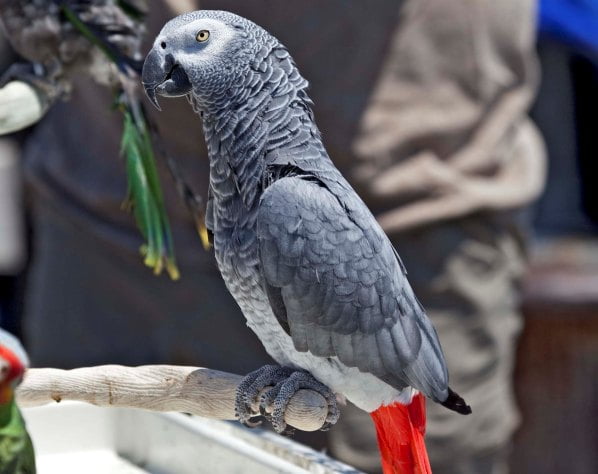
The African grey parrot (Psittacus erithacus) is a compact, ash-grey forest bird with a bright red tail and a reputation for being one of the most capable talkers in the parrot world. Many individuals mimic voices, doors, phones and household routines with unsettling accuracy, and they track their surroundings closely enough to seem like they are paying attention because they are. That intelligence is the appeal, and it is also the catch. These birds live for decades, need constant mental work, and do poorly when a home cannot keep up. Kept well, a grey settles into a calm, watchful companion; kept badly, the problems show up in feathers, appetite and behaviour.
Quick facts: African grey parrot
- Scientific name: Grey parrot (Psittacus erithacus)
- Typical size: around 33 to 40 cm long, often roughly 400 to 650 g (varies with sex, age and condition)
- Plumage: grey body, pale face mask, black beak, bright red tail
- Noise: strong natural calls; many individuals learn to mimic household sounds and human speech
- Wild range: West and Central Africa, mainly forested habitats
- Conservation: listed as Endangered on the IUCN Red List, with major pressure from trapping and habitat loss1
- Trade controls: listed on CITES Appendix I, so commercial international trade in wild birds is highly restricted2, 3
Appearance and Physical Characteristics
The African grey is a broad-winged parrot with soft, scalloped grey feathering and a sharply contrasting red tail. Up close the face looks masked, because the pale facial skin and fine feathering sit against a dark beak. It is a bird built for climbing as much as flying. The beak works as a third hand, and the feet are made for gripping branches and manipulating food. In a home, that same build translates into a powerful bite, a love of shredding and a real need for safe things to chew.
Habitat and Distribution
In the wild, African greys are closely tied to forested landscapes across West and Central Africa. They are often associated with dense forest but may also use forest edges, clearings and other wooded habitats where feeding trees and nesting hollows are available.1
They are not native to Australia. African grey parrots do not occur naturally in the Northern Territory, Queensland or Western Australia. Here they are kept as companion birds and in aviaries, and any free-flying bird would be an escapee rather than part of a native population. Because they are an exotic species, keeping requirements can vary between states and territories, so check your state wildlife or agriculture authority before buying.
Temperament and Personality
African greys are intensely observant. They learn patterns of voices, door sounds and daily routines, and many will reproduce those sounds with startling accuracy. Mimicry is not the same as understanding, but it does reflect how closely they follow their environment. They are also strongly social. In a home that can look like deep attachment to one person, discomfort with change, and a tendency to develop unwanted behaviours when daily interaction and enrichment run thin.
Is an African Grey Right for You?
For most people looking for an easy pet, honestly, no. A grey is a long-lived, high-maintenance animal that needs daily interaction, a varied diet, real enrichment and a calm, predictable home. Many owners plan for a bird that may outlive them, so it is a genuine multi-decade commitment rather than a passing purchase. If your schedule, budget and patience can carry that for the long run, a grey can be a rewarding companion. If they cannot, a less demanding bird is the kinder choice for both of you.
Diet and Nutrition
In the wild, greys feed on a shifting mix of plant foods, foraging as the seasons change. In captivity the most reliable approach is a balanced base diet with variety layered over the top, because a single-seed diet is easy to offer and easy to get wrong. A common, vet-supported pattern is:
- Quality pellets as a foundation
- Daily vegetables (aim for more veg than fruit)
- Fruit in smaller amounts, due to sugar content
- Nuts and seeds mainly as training rewards or enrichment, not the whole menu4, 5
Fresh, clean water should always be available, and food bowls should be cleaned properly to reduce spoilage and mould.
Foods to avoid
Some foods are well known for causing serious harm in parrots. Avocado is widely treated as toxic for birds, and chocolate is also a recognised risk.4 If you are unsure about a specific food, check with an avian veterinarian before offering it.
Care and Housing
For an African grey, enrichment is not decoration. It is the daily work of keeping a clever animal busy enough that it does not start dismantling itself or its surroundings. Good enrichment covers four areas:
- Foraging: food hidden in paper, safe foliage or purpose-made foraging toys
- Chewing: destructible, bird-safe materials such as untreated wood, cardboard and natural fibre
- Movement: climbing routes and varied perch sizes and textures
- Training: short, reward-based sessions such as step up, stationing and indoor recall where safe
Wing clipping: proceed with caution
Wing clipping is not a routine tidy-up. Australian welfare guidance notes that poor wing trims can cause injury and contribute to behavioural problems, and clipping should be approached carefully and preferably performed, or directly supervised, by a veterinarian experienced with birds.6, 7 If you are considering clipping for safety, look first at the alternatives: bird-proofing rooms, controlled flight time, and training reliable step-ups and recall indoors.
Health and Lifespan
African greys can be hardy, but they do not cope well with chronic stress, poor diet or stale indoor air. Problems often build slowly, then show up as feather damage, weight changes, breathing signs or a sudden shift in droppings. In well-managed captivity they are often reported to live for decades.
Feather damaging behaviour
Feather plucking is a sign, not a diagnosis. It can be linked to boredom, lack of sleep, anxiety, skin irritation, nutritional imbalance or underlying disease. Because it has many causes, the safest path is a veterinary check early, before the behaviour becomes entrenched.
Psittacine beak and feather disease (PBFD)
PBFD is caused by a circovirus and is recognised across many parrot species. It can cause abnormal feathers, immune suppression and severe illness, particularly in young birds. It spreads through feather dust, dander and other secretions, and testing and quarantine are central to control in multi-bird homes and breeding settings.8
Respiratory disease
Respiratory infection is a broad label. In parrots it can involve bacteria, fungi, viruses, irritants such as smoke, aerosols and fumes from overheated non-stick cookware, or simply poor ventilation. Any sign of tail-bobbing, open-mouth breathing, wheezing or persistent nasal discharge should be treated as urgent.
Breeding
Breeding biology varies by individual and environment, and it is easy for casual online hatching numbers to drift. If you are keeping a pair or considering breeding, speak with an avian vet or an experienced, welfare-focused aviculturist, particularly because of disease risks and the need for appropriate permits and record-keeping.
Conservation and Ethical Buying
African greys have faced heavy pressure from trapping for the pet trade and ongoing habitat loss, which has contributed to their Endangered status.1 International trade is tightly controlled under CITES, and the species is listed on Appendix I.2, 3 If you are choosing an African grey:
- Prefer captive-bred birds from transparent, welfare-focused breeders or reputable rescues.
- Ask for health records and discuss disease testing with an avian vet, especially if you already have birds at home.
- Be wary of vague origin stories, missing paperwork or pressure to buy quickly.
The Bottom Line
An African grey is not a decorative cage bird. It is a long-lived, watchful forest parrot, adapted for daily movement, steady social contact and constant problem-solving. When those needs are met, with good food, safe movement, calm routines and real enrichment, the bird tends to settle into a quieter confidence. When they are not, the warning signs are usually there, written in feathers, appetite and the tone of the calls.
References
- World Land Trust, Grey Parrot (Psittacus erithacus): range, threats, and IUCN status (Endangered, 2018 assessment)
- IISD Earth Negotiations Bulletin, CITES CoP17 daily report (2 Oct 2016): proposal to transfer African grey parrot to Appendix I
- CITES, Summary list (shows Psittacus erithacus listed under Appendix I)
- Bird Vet Melbourne, Feeding your small parrot (vegetables daily; fruit in smaller amounts; lists toxic foods)
- Animal Welfare League Queensland (AWLQ), Bird care: diet guidance and toxic foods to avoid
- RSPCA Australia Knowledgebase, How should I groom my bird? (wing trimming guidance and risks)
- Agriculture Victoria, Code of Practice for the Housing of Caged Birds (free flight; wing clipping only on veterinary advice or for health)
- Merck Veterinary Manual (Professional Version), Viral diseases of pet birds (includes PBFD: cause, transmission, diagnosis, control)

Dog lover and writer at My Pets Australia, sharing practical breed guides and care advice for Australian pet owners.