Understanding Dog Body Language: A Guide for Pet Owners
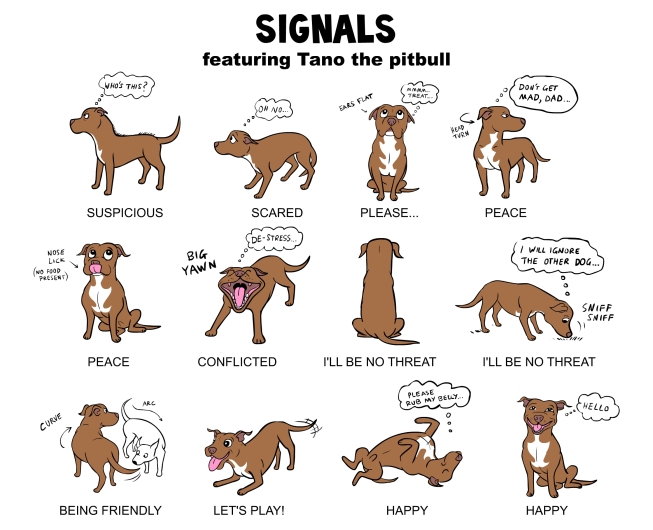
Dogs tell you how they feel long before they bark or bite. The information is in the tail height, the eye shape, the tension around the mouth, the way the weight shifts forward or back. Most people go looking for this guide after one confusing moment: a wagging tail that did not feel friendly, a dog that "looks guilty" but is probably just worried, or a growl that seemed to come from nowhere. Reading the signals well is a genuinely useful skill, and it keeps everyone safer, because getting it wrong can mean a frightened child, a scuffle at the dog park, or a dog pushed past its limit. The goal is simple: read the whole animal in context, then pick the safest next step.1, 2
How to read a dog: start with the whole body
One signal on its own will mislead you. A wagging tail can sit on top of real tension, and a yawn can mean fatigue or stress. The reliable approach is to scan from nose to tail and ask a single question: does this dog look loose and flowing, or tight and held?
- Loose body: curved spine, soft face, easy breathing, movements that look unhurried.
- Tight body: stiff legs, weight pitched forward or pulled back, mouth shut tight, eyes wide or hard, movements that look sharp or frozen.
Context does a lot of the work. A dog on lead, behind a fence, guarding a doorway, or approached face-on is more likely to feel pressure than the same dog in open space with room to move away.2
Tail language: wagging is arousal, not a promise of friendliness
The tail is an arousal meter, not a friendship flag. A dog can wag because it is thrilled to greet you, and it can also wag when it is unsure, overstimulated, or getting ready to escalate. Always read the tail alongside the rest of the dog.1
- Neutral, loose wag (tail at the dog's normal resting height): often relaxed engagement.
- High, stiff tail (sometimes with a small vibration): assertive arousal, so give space.
- Low or tucked tail: fear, stress, appeasement, or discomfort.
- Fast wag at the tip with a tight body: a warning sign in some dogs, so do not assume it is playful.
What counts as "neutral" carriage varies by breed and by individual dog, whether that is a curled tail, a naturally low tail, or a docked one. Learn your own dog's baseline when it is calm at home, then watch for departures from that norm.1
Ears, eyes and face: small changes with big meaning
Dogs broadcast emotion through tiny shifts. Ears angle back, the skin around the mouth tightens, the eyes go from soft to round. In many dogs these changes happen seconds before a lunge or a snap, well before an actual bite.
Ears
- Forward or pricked: alert, aroused, focused, but not automatically happy.
- Pinned back tightly: fear or high discomfort.
- Back but loose: can be calm appeasement, depending on the rest of the body.
Ear shape changes what you can see. With floppy-eared breeds you will notice more movement at the ear base and on the forehead than at the tips.1
Eyes
- Soft eyes, normal blink rate: a calmer state.
- Hard stare: pressure, challenge, guarding, or high arousal.
- "Whale eye" (white showing at the corners): fear, anxiety, or discomfort, especially if the head is turned away but the eyes stay locked on the trigger.
- Averted gaze or head turn: an appeasement signal, and often a request for space.
Brief eye contact is usually fine. A sustained stare, especially from a stranger, can feel like a threat to a dog that is already unsure.1, 2
Mouth and facial tension
- Relaxed, open mouth (in cool conditions, without frantic panting): often calmer.
- Tight, closed mouth: uncertainty or rising stress.
- Lip licking or yawning when it is not about food or sleep: common stress and conflict signals.
- Teeth showing, lip lift, growl: distance-increasing warnings. Do not punish them, create space instead.
These "fiddle behaviours" (yawn, lick, blink, head turn) often appear early. If you respond then, by pausing, stepping back, or easing off, you may never see the louder signals at all.1
Posture and movement: the weight shift tells the story
Posture is the headline. The direction of the dog's weight usually tells you where things are heading.
- Weight forward, body tall and stiff: assertive arousal, with higher risk if it comes with a hard stare and a high tail.
- Weight back, crouched, low head: fear or uncertainty, with higher risk if the dog cannot escape.
- Frozen stillness: a serious moment. Many dogs go quiet and still right before they escalate.
- Curved approaches rather than walking straight in: polite social behaviour, since many dogs prefer angles over direct, face-on greetings.
- Play bow: often an invitation to play, though it can also surface as a stress release in tense moments, so read the whole dog.
A dog that can move away usually will. A dog that cannot, because it is cornered, held on a short lead, or crowded by people, may choose growling or snapping instead.1, 2
Stress and discomfort: common early warning signs
These signals are easy to miss because they look so ordinary. Out of context they are often the first visible cracks in a dog's comfort.
- Yawning when not tired
- Lip licking when not eating
- Frequent blinking
- Turning the head away or avoiding eye contact
- "Whale eye"
- Panting when not hot or exercising
- Full-body shake when not wet
- Tail tucked or carried low
If several of these appear together, treat it as a request for space and a cue to lower the intensity: less reaching, less talking, more distance.1, 3
Signs of fear, conflict and aggression: what to do in the moment
Behaviour tends to escalate because earlier signals went unread. When you notice a shift towards tension, aim for safety and distance rather than "testing" the dog.
When a dog looks fearful
- What you may see: crouching, tucked tail, ears pinned back, lip licking or yawning, looking away, trying to move off.
- What helps: stop approaching, turn your body sideways, give an exit route, keep your hands low and still, and cut the noise and crowding.
Fearful dogs bite when they feel trapped. Creating space is not "rewarding fear", it is removing pressure.2, 4
When a dog looks conflicted (mixed signals)
- What you may see: a wagging tail on a stiff body, moving forward then backing off, barking while retreating, yawning while staring.
- What helps: treat the situation as higher risk. Pause, increase distance, and avoid direct contact.
Conflicted dogs are unpredictable because they are still deciding what to do next.4
When a dog looks assertive or aggressive
- What you may see: tall stiff posture, weight forward, hard stare, high stiff tail (which may still wag), raised hackles, lip lift, growl, lunge.
- What helps: do not reach in, do not stare, do not run. Create distance calmly and put a barrier between you and the dog if you can.
Growling and snarling are warnings, so heed them. If a dog is regularly reaching this point, get help from a vet to rule out pain, then a qualified trainer or veterinary behaviourist.2, 4
Vocalisations: useful, but secondary
Barks, whines and growls add colour, but they are rarely the whole message. Some dogs are noisy and relaxed, others are silent and tense. Use sound as a supporting detail, not the headline.
- Growling: a clear "increase distance" signal, whether the dog is guarding, frightened, or overstimulated.
- Whining: can go with frustration, uncertainty, or anticipation, so read the posture and pacing to interpret it.
- Barking: can be alarm, excitement, play, or distress, so match it to body stiffness, tail carriage and eye shape.
If the body is tight, treat the situation as serious no matter how friendly the sound seems.4
Training and day-to-day handling: use your own body language
Dogs watch us closely. Small changes in our posture and speed can turn a manageable situation into a stressful one.
- Approach in an arc rather than straight on, especially with unfamiliar dogs.
- Turn side-on and soften your gaze instead of leaning over a dog.
- Reward calm choices like looking away, sniffing, or checking in, and give breaks before your dog is overwhelmed.
- Avoid punishing warning signals such as growling, since it can suppress the warning while leaving the discomfort intact.
Where you can, use structured socialisation and positive reinforcement training so the dog learns that novelty and handling predict safety, not pressure.2, 5
Health and wellbeing: when body language suggests pain or illness
Not all "bad behaviour" is behavioural. Pain changes how a dog moves, tolerates touch, and copes with everyday handling. Watch for a sudden shift away from your dog's normal baseline.
- Reluctance to jump, climb stairs, or sit and lie in a usual position
- Stiffness, limping, guarding a body part
- Withdrawal, irritability, reduced tolerance of touch
- Persistent panting, restlessness, unusual stillness
If you suspect pain, book a veterinary check rather than trying to "train through" it. Modern veterinary guidelines stress recognising pain early and treating it properly, because unmanaged pain harms welfare and drives behaviour.6
Quick safety check: before you pat any dog
- Look for a loose body and a soft face.
- Avoid dogs showing whale eye, lip licking, yawning, stiff posture, or a hard stare.
- Ask the owner first. If you get a yes, let the dog come to you. Keep your hands low and pat the chest or shoulder rather than reaching over the head.
- If the dog freezes, leans away, or the mouth closes tight, stop and give space.
These small habits reduce bite risk and give dogs more say in how they interact with us.4
References
- RSPCA Pet Insurance (Australia): How to interpret body language in dogs
- RSPCA Knowledgebase (Australia): How do I communicate with my dog?
- RSPCA Knowledgebase (Australia): What does my dog's body language mean?
- ASPCA: Dog Bite Prevention
- ABC News (Australia): Dog bite campaign aims to reduce attacks, better educate about canine behaviour and warning signs
- WSAVA: Global Guidelines for the Recognition, Assessment and Treatment of Pain

Dog lover and writer at My Pets Australia, sharing practical breed guides and care advice for Australian pet owners.