Tosa Inu
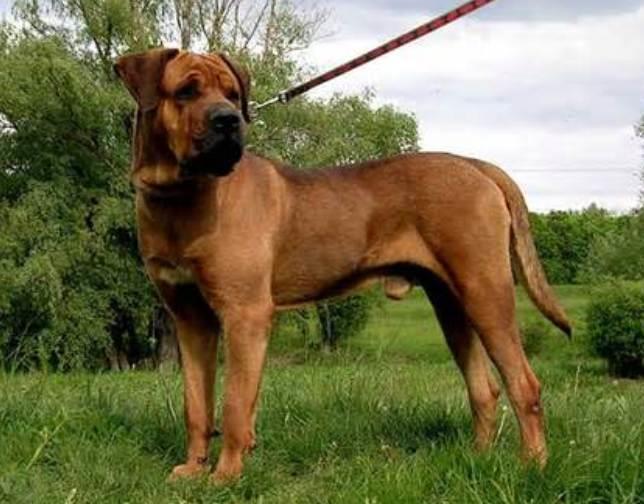
The Tosa Inu is a large Japanese mastiff, short-coated and heavily muscled, known for a quiet, watchful presence rather than noise or fuss. Well-bred and well-raised, it is often steady, composed and deeply devoted to its household. It is also a serious commitment: a powerful guardian breed that matures slowly and takes other dogs seriously. There is a bigger catch for Australians. The Japanese Tosa is a prohibited import here and is treated as a restricted breed in some states, so for most people in Australia this is a dog you cannot legally acquire in the first place.6, 7, 8
History and Origin
The Tosa is a Japanese molosser, or mastiff type, developed in the late 1800s and associated with the Tosa region, modern-day Kochi Prefecture. Local Japanese dogs were crossed with imported European mastiff-type breeds through the 19th century to produce a larger, more powerful dog bred for a controlled, rules-based style of dog fighting that historically existed in parts of Japan. That origin shaped the breed for strength, stamina and composure under pressure, along with a tendency to take other dogs seriously.2
Exact crosses vary by account and period, but the direction is consistent: selection for size, endurance and a steady temperament under handling. One point often mangled online is the legal history. Dog fighting in Japan was not outlawed in a single clean nationwide moment the way some sources suggest. Rules and restrictions varied by place, and claims about one blanket national ban are usually overstated or poorly sourced.10
Appearance and Physical Characteristics
In motion, a good Tosa looks like a heavy animal moving with surprising efficiency: powerful shoulders, a deep chest, a strong loin and a short, dense coat that shows every line of muscle underneath.2, 9
Kennel clubs describe size a little differently. The FCI standard sets minimum heights rather than a tight ideal range, while other registries focus on overall balance and substance rather than a specific weight target. If you see exact kilogram ranges repeated everywhere, treat them as rough guides. Adult Tosas vary a lot by lineage, sex and conditioning.2, 9
The coat is short, dense and tight to the body. Reds, including fawn, and brindles are commonly described. Acceptance of black, pied patterns and the amount of tolerated white marking depends on the registry's standard.2, 9
- Also known as: Tosa, Tosa Ken, Japanese Mastiff (informal)
- Build: Large, athletic, heavily muscled, slightly longer than tall2, 9
- Coat: Short, dense, tight to the body2, 9
- Colours: Commonly red or fawn and brindle, with other colours and white markings accepted or discouraged depending on the registry2, 9
- Typical lifespan: Often quoted around 10 to 12 years, varying with size, care and genetics
Temperament and Personality
Well-bred, well-raised Tosas are often described as quiet and composed, dogs that do not waste movement. That calm surface sits alongside a strong guarding tendency, a slow maturity and a real potential for dog-to-dog aggression if management is sloppy or social experiences go wrong.9
This is not a beginner's breed. Most households do better with a dog that is more forgiving of mistakes, more socially flexible and less physically overwhelming.
Is a Tosa Inu Right for You?
For almost anyone in Australia, honestly, no, and the reason is the law before it is the dog. The Japanese Tosa is listed as a prohibited import under federal rules, so you generally cannot legally import one into Australia even if it is a purebred with full paperwork.7, 8
On top of import rules, state and territory laws can treat the Japanese Tosa as a restricted breed with special requirements or outright prohibitions covering ownership, sale, transfer, muzzling, enclosure standards and permits. In NSW, for example, the Japanese Tosa is listed under restricted dogs guidance, and there are offences around selling or giving one away.6
Because of those import restrictions, be cautious with any breeder advertising Tosa puppies in Australia. Claims about recent imported bloodlines or easy import should be treated as a red flag until verified through proper channels. If you are considering adoption of a dog already legally here, speak with the shelter or rescue about temperament testing, dog-to-dog behaviour and the legal requirements in your state. With giant, powerful dogs the boring details, secure fencing, lead skills and calm routines, matter more than pedigree.7, 8
Training and Exercise
Where a Tosa is legally and responsibly kept, socialisation is the single most important job, and the window is short. The critical period in puppies runs from roughly 2.5 to 14 weeks, and experiences during it can shape how a dog responds to the world for life. Waiting until vaccinations are finished can backfire if it means missing safe, controlled exposure to people, places, sounds and handling.5
- Prioritise calm exposure: new surfaces, gentle handling, household noise and car rides, kept brief and positive.
- Build handling skills early: muzzle conditioning, collar grabs, nail and ear checks, and calm restraint, all using rewards.
- Choose puppy classes carefully: small groups, clean facilities, vaccination checks, and trainers who understand large guardian breeds.
- Train for management, not just tricks: loose lead walking, a reliable recall in low-distraction settings, and settling on a mat are everyday safety tools.
Exercise needs are moderate to high, with a focus on calm conditioning rather than frantic running.
Health and Lifespan
Like many large, deep-chested breeds, the Tosa may be at risk of gastric dilatation-volvulus (GDV), often called bloat, which is a life-threatening emergency. Learn the signs and know where your nearest after-hours vet is before you need one.4
- Orthopaedic disease: hip and elbow dysplasia can occur in large dogs, so ask breeders for relevant health screening and results.
- Skin disease and allergies: not unique to the breed, but common enough that diet, parasites and underlying dermatitis need a proper veterinary work-up.
- GDV (bloat): risk management may include feeding several smaller meals and avoiding hard exercise around meal times, with your vet tailoring the advice.3, 4
Lifespan is often quoted around 10 to 12 years, varying with size, care and genetics.
A Few Things Worth Knowing
- The Tosa is recognised internationally, including by the Federation Cynologique Internationale (FCI). Standards broadly agree on the essentials: a large, powerful, athletic dog with a short dense coat and a composed, dignified bearing.2
- Recognised by a kennel club and straightforward to own, import or register in Australia are not the same thing. Local law is the deciding factor here.
- The Tosa has nothing to do with Rhinelander or Wurttemberger horses. Those are horse types, not dog breeds, and they are not part of any credible Tosa history.
- Much repeated pop-culture trivia is simply wrong. In I Am Legend (2007) the dog character Sam was played by a German Shepherd named Abbey, not a Tosa. If you are identifying a dog from a film, check a reliable credit rather than recycled trivia.1
The Bottom Line
The Tosa Inu is built for strength and composure, a quiet, heavy presence that can look effortless right up until it is not. In experienced hands, with careful training and management, it can be steady and devoted. In the wrong setting, the combination of size, power and potential dog aggression becomes hard to contain.
For Australians the legal and practical barriers are decisive, not incidental. Start with the rules where you live, since the Japanese Tosa is a prohibited import and a restricted breed in some states, then work back to the ethical question of whether you could provide the structure, handling skill and secure environment this dog needs for its whole life.6, 7, 8
References
- People, Will Smith praises working with his canine costar in I Am Legend (confirms the dog was a German Shepherd named Abbey)
- Federation Cynologique Internationale (FCI), Tosa (No. 260) breed listing and standard publication details
- VetZone (Australia and NZ), Gastric dilation and volvulus (bloat) in dogs
- Lort Smith Animal Hospital (Melbourne), Bloat (explains progression to GDV and emergency signs)
- RSPCA Australia Knowledgebase, Puppy socialisation and the critical period (approx. 2.5 to 14 weeks)
- NSW Office of Local Government, Restricted dogs (includes Japanese Tosa and restrictions on sale and transfer)
- Australian Border Force, Importing animals (lists prohibited dog breeds including Japanese Tosa)
- Australian Government (DAFF), Cats and dogs FAQ (notes breeds that cannot be imported, including Japanese Tosa)
- United Kennel Club (UKC), Tosa Ken breed standard (temperament notes, coat and colour guidance, size approach)
- Wikipedia, Dog fighting (notes Japan is not banned at a nationwide level, use with caution)

Dog lover and writer at My Pets Australia, sharing practical breed guides and care advice for Australian pet owners.