The Ultimate Guide to Fish Tank Filtration: Keeping Your Aquarium Clean and Healthy
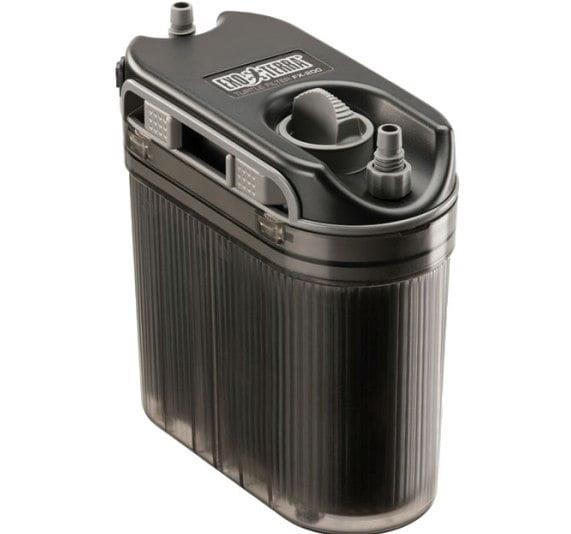
A filter is the single most important piece of equipment in an aquarium, because it does the work you cannot see. It keeps the water clear, but more importantly it keeps the chemistry stable, stops waste from rotting in the corners, and gives beneficial bacteria the flow and oxygen they need to convert toxic ammonia into safer forms.1, 2 Most people only think about filtration once the water turns cloudy, the fish start gasping, or a new tank refuses to cycle. In nearly every case the answer is not a miracle product. It is matching the right filter to your tank, then maintaining it in a way that protects the bacteria doing the quiet, essential work.
Why filtration matters, even when the water looks clear
Clear water is not the same as clean water. In a closed aquarium, fish waste, leftover food and decaying plant matter quickly break down into ammonia, which can harm fish at low levels and rises fast in an uncycled tank or after a filter failure.2, 3
Filtration is really three jobs working together:
- Mechanical filtration traps physical debris so it can be removed before it breaks down.
- Biological filtration grows nitrifying microbes on surfaces, especially inside the filter, to convert ammonia to nitrite, then nitrate.2, 3
- Chemical filtration uses media such as activated carbon to adsorb some dissolved chemicals, colours and odours. It is useful in specific situations, but it is not a substitute for cycling.4
The three filtration types, in plain terms
Mechanical filtration: catching the mess
Mechanical media acts like a sieve. It grabs suspended particles, including uneaten food, plant fragments and fish waste, so they do not keep circulating and dissolving into the water.5
Common mechanical options include:
- Sponge and foam, great all-rounders that also provide surface area for bacteria.
- Filter floss and pads, which give fine polishing but clog quickly.
- Pre-filter sponges on intakes, quietly effective, especially for canister and hang-on-back filters.
Mechanical filtration only helps if you remove the trapped waste. If the media is left clogged and untouched, water flow drops and the trapped debris keeps breaking down inside the filter.5
Biological filtration: the living engine inside the filter
This is where stability comes from. Nitrifying microbes colonise hard surfaces such as filter sponges, ceramic rings, bio-media and gravel, and use oxygen-rich flowing water to convert ammonia into nitrite, which is toxic, then nitrite into nitrate, which is generally less toxic but still needs managing.2, 3
This cycling process usually takes weeks in a new aquarium. During that time, ammonia and nitrite can spike unless you are testing and managing the load carefully.2, 6
Chemical filtration: useful, but not always necessary
Chemical media is best treated as a tool you use on purpose, not a permanent requirement. Activated carbon is commonly used to remove some dissolved organic compounds that cause yellowing, odours and traces of medications. Standard activated carbon is not a reliable way to remove ammonia, nitrite or nitrate in an aquarium.4
Zeolite in freshwater can reduce ammonia by ion exchange. It is often used temporarily during emergencies or in new setups, but it can become exhausted and needs regeneration or replacement, and it is generally not used the same way in marine systems.7
Common filter styles and what they are good at
Hang-on-back (HOB) filters
Easy to install and service, and good for small to medium tanks. They usually combine mechanical and biological filtration, with optional chemical cartridges. Their strength is convenience. Their weakness is limited media volume compared with canisters.
Canister filters
Strong flow, large media capacity and flexible media layouts make these ideal for medium to large aquariums. Because they hold plenty of biological media, they can be very stable once established, though they still need routine cleaning to prevent flow loss.
Sponge filters
Air-driven sponges are gentle and safe for fry, shrimp and tanks with delicate fish. They offer excellent biological filtration for their size and simple mechanical capture, but they do not polish water as finely as a canister loaded with fine media.
Undergravel filters (less common now)
These provide biological filtration by pulling water through the substrate, but they are harder to maintain well and they do not suit all substrates or planted tanks.
How to choose the right filtration system
Choose filtration based on the realities of your tank, not the label on the box:
- Tank volume. More water usually means more waste capacity, but also more to circulate.
- Stocking and feeding. Messy eaters and heavy stocking demand more mechanical capacity and stable bio-media.
- Fish behaviour. Some species dislike strong current, others need it.
- Maintenance style. The best filter is the one you will actually service on time.
In practice, most healthy aquariums rely heavily on mechanical and biological filtration, with chemical media used only when there is a specific reason, such as removing medication residues, tannin staining or a known contaminant.5
Installation and routine maintenance
Follow the manufacturer's instructions for your specific unit, but a few principles hold across most filters. Rinse new media, including sponges, rings and floss, in dechlorinated water to remove dust. Set the outlet up for steady flow rather than a sandstorm, so fish can rest away from the strongest current. And run the filter 24/7, because biological filtration depends on oxygenated flow and long stoppages can damage the biofilter.6
Most filtration problems come from one of two extremes: never cleaning the filter, or cleaning it so aggressively that the tank loses a chunk of its biological stability. The goal is gentle, staggered maintenance.
- Do rinse mechanical media when flow drops or the media looks visibly clogged.
- Do use aquarium water in a bucket during a water change to gently rinse sponges and pads, so you do not shock the biofilm or expose it to disinfectants.1
- Do not replace all filter media at once unless you are prepared for cycling instability afterwards.
- Do not deep-clean everything on the same day. Stagger the filter, substrate and decoration cleans to keep bacterial populations steady.
There is no single schedule that fits every tank. A lightly stocked aquarium may go weeks with minimal attention, while a heavily stocked one may need mechanical rinses far more often. Let the tank tell you: clean when the flow rate drops, when debris builds up in the water column after feeding, or when ammonia or nitrite appears on a test. That last one is urgent.2, 6
Troubleshooting common filtration problems
Weak flow
- Check the intake for plant matter, snail shells or a clogged pre-filter sponge.
- Rinse the mechanical media, since pads and floss clog fastest.
- Inspect the impeller well for sludge or grit.
Noisy filter
- Look for trapped air, common after cleaning or when the water level in a HOB filter is low.
- Check the impeller for wear, misalignment or debris.
- Make sure the unit sits level and is not vibrating against the tank or cabinet.
Cloudy water even with a running filter
- White haze can be a bacterial bloom in new tanks or after disruption, and often improves as the system stabilises.
- Green water is usually free-floating algae. Filtration helps, but light and nutrients drive it.
- Brown tint is often tannins from wood. Activated carbon can help if you want the colour reduced.4
Ammonia or nitrite detected
This is a water-quality problem first and a filtration problem second, and you should treat it as urgent. Reduce feeding, do partial water changes, and check whether the filter has been stopped, over-cleaned or clogged. Keep testing until ammonia and nitrite return to zero.2, 6
The bottom line
A healthy aquarium filter is mostly habitat: surfaces, flow and oxygen. Mechanical media catches the visible waste, biological media quietly processes the invisible toxins, and chemical media stays optional, kept for specific jobs and removed when it has done them.4, 5 When filtration is doing its job, waste does not linger long enough to poison the water, oxygen stays steadier, and fish are less likely to be stressed by sudden chemical swings. Over the long term that also means fewer emergency clean-ups, less equipment wear from constant clogging, and more consistent test results in an established tank.2, 6 If your tank is struggling, start with the basics: confirm ammonia and nitrite are zero, restore steady flow, and maintain the filter gently rather than aggressively.2
References
- RSPCA Australia Knowledgebase: How should I care for my tropical fish?
- RSPCA Australia Knowledgebase: Why is water quality important when setting up a fish aquarium?
- Microbial community succession of home aquarium biofilters associated with early establishment of comammox Nitrospira (peer-reviewed, via PubMed Central)
- Environmental Literacy Council: Does activated carbon remove ammonia from water?
- Aquarium filter (overview of mechanical, biological and chemical filtration)
- University of Florida IFAS Extension: Ammonia in Aquatic Systems
- Zeolite (including aquarium use and ammonia ion-exchange)
- NSW Department of Primary Industries: Yabby preparation for market (water quality notes on ammonia, nitrite, nitrate and biofiltration)
- Aquarium filter: Mechanical and chemical filtration (notes on trapped solids needing removal and common chemical media)

Dog lover and writer at My Pets Australia, sharing practical breed guides and care advice for Australian pet owners.