Fish Feeding and Digestion
Feeding your fish is the part of fishkeeping you do every day, and it quietly decides how well everything else goes. Get it right and you see steady growth, normal waste, calm breathing, and water that stays clear. Get it wrong and the leftovers start doing the damage, because uneaten food turns into ammonia inside a closed glass box. Feeding and digestion are also tied to the background factors most people forget about: temperature, salinity, and hardness. This guide walks through all of it, with the goal of building routines that keep your fish healthy rather than firefighting problems after they appear.1, 2, 3, 4
Why feeding matters more than it looks
Fish nutrition is not just about growth and colour. It supports immune function, tissue repair, and the ordinary costs of living, from breathing and swimming to maintaining internal salt and water balance.5
In an aquarium, feeding also shapes water quality directly. Extra food breaks down into waste and adds to the ammonia load that your biological filter has to process. This is why the right amount is usually the amount that vanishes fast, with no drifts of flakes settling into the gravel and corners.1, 2, 6
A sensible portion rule:
- Feed only what your fish can finish within about 1 to 3 minutes (different guides use slightly different timings).2, 6
- Remove uneaten food promptly, especially in small tanks where it breaks down quickly.2
How fish digest their food
Digestive anatomy varies by species and diet, but the basic path is familiar. Food enters through the mouth, passes down the oesophagus, moves into the stomach (in many species), then into the intestine where digestion continues and nutrients are absorbed.7
One common point of confusion is where the digestive helpers come from. Bile is produced by the liver and delivered into the gut through ducts, alongside pancreatic secretions. It is not made by the intestine itself, even though it acts there to help process fats.7
Some fish also have pyloric caeca, small blind sacs near the junction of the stomach and intestine, which can help with digestion and absorption. They are not extra stomachs, but they do increase the working surface area of the gut in some species.7
Types of fish food and what they suit
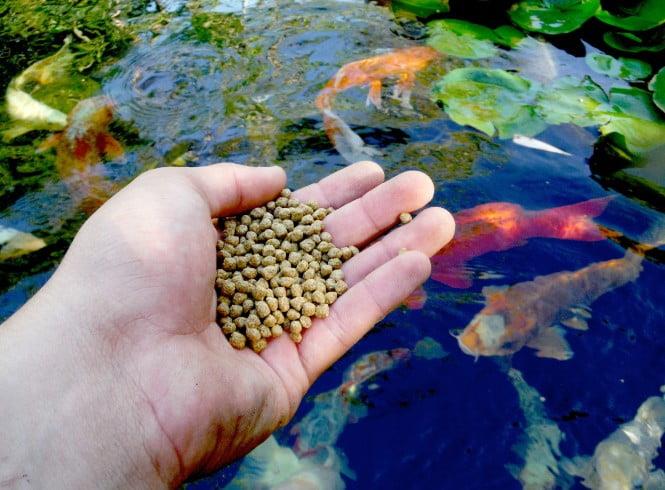
Most home aquariums do best on a stable base diet, topped up with small variations that match the species rather than whatever looks entertaining in the shop. A reputable pelleted food designed for the fish you keep is often the most consistent choice for everyday feeding.2
- Pellets and granules: often more nutrient-dense and consistent than flakes, with many species-specific formulas available.2, 3
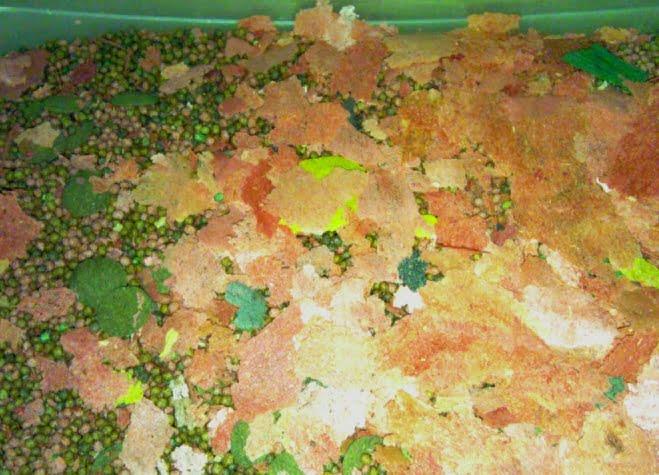
- Flakes: useful for small-mouthed community fish and surface feeders, but easy to overdo because they disperse fast.3
- Frozen foods (for example brine shrimp or prawn mixes): handy for variety and for species that do poorly on dry diets alone. Thaw and feed small amounts to avoid waste.3, 6
- Live foods: useful for conditioning or picky feeders, but they can introduce parasites or pathogens if poorly sourced or handled.3
Matching the feeding technique to the fish
Feeding once a day forever works for some fish, but not all. What matters most is matching the feeding pattern to the species' natural style: grazers that pick all day, ambush predators that eat larger meals less often, and tiny juveniles that burn energy quickly.5
- Small fish and juveniles: usually do better with smaller, more frequent feeds than with one heavy drop.5
- Bottom feeders: use sinking foods and make sure dominant surface fish are not eating everything first.
- Nocturnal species: feed after the lights dim, or offer a second small feed later, so they get a fair share.
Whatever the schedule, watch the fish rather than the label. A strong, steady appetite is often a sign that temperature and oxygen levels are reasonable, and that water quality is not quietly slipping.5
Water quality: the hidden half of digestion
Digestion does not happen in isolation. In a tank, the chemistry of the water decides how stressful normal life feels, and stress commonly shows up as reduced feeding, poor growth, and greater vulnerability to disease.1, 8
Uneaten food and fish waste break down into ammonia. In a cycled aquarium, beneficial bacteria convert ammonia to nitrite, then nitrite to nitrate. Without a mature biological filter, or when the tank is overfed or overstocked, ammonia and nitrite can rise fast and harm fish.1, 2
Ammonia is especially dangerous because its more toxic form increases as pH and temperature rise. That means a tank can become more toxic without any extra waste, simply because conditions shift upward.9
Temperature also drives feeding behaviour directly. Fish are ectotherms, so their metabolism tracks the water temperature. When the water is too cold for the species, digestion slows and appetite often drops. When it is too warm, oxygen levels fall and stress rises, and feeding can become frantic or stop altogether, depending on the fish and the situation.5
Salinity and hardness
Salinity and hardness are often filed under water parameters, but to a fish they are part of the daily cost of osmoregulation, keeping the right balance of water and salts inside the body. When that balance is pushed outside the species' comfort zone, energy gets diverted away from growth and digestion and towards basic regulation.4, 8
Marine fish continually lose water to their environment and typically drink seawater, then excrete excess salts through specialised gill cells and produce small amounts of concentrated urine. Freshwater fish face the opposite pressure and typically do not drink. They lose salts and gain water, excreting large volumes of dilute urine instead.4
Because these strategies are built into their physiology, just adding a bit of salt is not a neutral act. Some freshwater species may tolerate it, but for others, and for many plants and invertebrates, it becomes another stressor layered onto the tank. If you are considering salt as a treatment, confirm the diagnosis first and match any intervention to the species you keep.8
Hardness refers mainly to dissolved calcium and magnesium. Alkalinity (often tracked as KH) is the water's buffering capacity, its resistance to pH swings. In practical terms, low buffering can allow sudden pH drops, while higher buffering tends to keep pH steadier.10
Fish can often adapt to a stable range that is not perfect on a chart, but they struggle with rapid change. If you need to adjust hardness or alkalinity for a particular species, do it gradually and measure as you go, rather than relying on one-off additives and guesswork.10
Digestive problems and how to prevent them
Digestive trouble in aquariums is usually less about a mysterious disease and more about the daily basics: overfeeding, low oxygen, food of the wrong size, abrupt dietary changes, and water quality that is quietly deteriorating.1, 2
Signs that digestion or feeding has gone off track:
- Loss of appetite or spitting food out repeatedly.6, 8
- Bloating, stringy faeces, or a visible trail of waste from the vent.6, 8
- Floating problems or unusual swimming, especially alongside poor water-test results.1, 8
Prevention that works quietly in the background:
- Keep feeds small and consistent, and change diets gradually over several days.
- Prioritise filtration and routine water testing, especially in newer tanks where the biological filter is still developing.1
- Do not treat symptoms with random products. If fish repeatedly refuse to eat, or several fish are affected, check water quality first and seek advice from a veterinarian or an experienced aquatic professional.8
The bottom line
Good feeding is measured less by enthusiasm at the surface and more by what happens afterwards: steady growth, normal waste, calm breathing, and water that stays clear and stable. When digestion looks off, the quickest fix is usually a simple sequence. Reduce feeding, remove leftovers, test the water, and correct the underlying condition before adding more food or more treatments.1, 2
References
- RSPCA Knowledgebase, Why is water quality important when setting up a fish aquarium?
- RSPCA Victoria, Fish (feeding and care)
- FAO, Management for freshwater fish culture: feeding rates and frequency (training materials)
- The Environmental Literacy Council, Do saltwater fish gain or lose water? (osmoregulation overview)
- FAO, The nutrition and feeding of farmed fish and shrimp (training manual)
- Agriculture Victoria, Caring for your pet fish
- Encyclopaedia Britannica, The digestive system (fish anatomy)
- Australian Government (DAFF), How you can protect Australia's aquatic animal health
- PetPlace, Aquarium water quality: ammonia and nitrite toxicity explained
- DrTim's Aquatics, Water quality: a holistic approach (alkalinity, hardness, pH stability)

Dog lover and writer at My Pets Australia, sharing practical breed guides and care advice for Australian pet owners.