Parasitic Fish Diseases
Parasitic diseases are one of the more common reasons an aquarium fish suddenly looks unwell: small white spots, ragged fins, laboured breathing, or frantic rubbing against the décor. Most of these parasites arrive quietly on new stock or shared gear, then only tip into a real outbreak once fish are stressed or water quality slips. The reassuring part is that a few basic habits handle the large majority of them: quarantine, steady water, and clean equipment. This page covers what the common parasites are, what they look like, how they are confirmed, and what tends to work in real tanks.
Two common mix-ups to clear up first
People sometimes worry that a fish parasite might jump to another pet in the house, such as a rat. It will not. The parasites discussed in home aquariums, such as Ichthyophthirius multifiliis ("Ich"), monogenean gill flukes (Dactylogyrus), and anchor worm (Lernaea), are fish parasites. They spread fish to fish, usually via new stock, plants, nets, or water, and they are managed within the aquarium rather than treated in mammals.1, 2, 3 If a rat happens to fall ill around the same time as your fish, look for a shared environmental cause instead: cold, poor ventilation, fumes, mould, or cleaning chemicals. If you suspect toxin exposure, move the rat to fresh air and contact a vet promptly.
The second mix-up is the phrase "white spot". In Australia it can also mean white spot disease, a serious viral disease of decapod crustaceans such as prawns, crabs, yabbies, and lobsters, caused by white spot syndrome virus. That is a biosecurity matter handled separately, and finfish are not affected by it. It is a different problem to Ich in aquarium fish.6
Common parasitic problems in aquarium fish
Ich (white spot in freshwater fish)
Ich is caused by the ciliated protozoan Ichthyophthirius multifiliis. It is one of the most common aquarium parasites, and it often arrives with new fish, plants, substrate, or equipment moved between tanks.1, 2
Typical signs include:
- Small white spots like grains of salt on the body and gills
- Scratching or flashing against objects
- Reduced appetite, hiding, and general dullness
- Rapid breathing and decline in heavier gill infections
Part of what makes Ich feel so relentless is timing. Some life stages are protected from treatment while they sit on the fish or encysted in the environment, so control usually relies on repeated dosing over time to catch the vulnerable free-swimming stage.2
Gill flukes and skin flukes (monogeneans)
Flukes in aquariums are usually monogenean flatworms. In freshwater, Dactylogyrus is a classic gill fluke group, while Gyrodactylus is more often associated with the skin, though there is overlap. Heavy infestations can cause serious gill damage and losses, especially in crowded tanks or where fish are already stressed.3, 4
Clues that point towards flukes include:
- Flashing and irritation
- Clamped fins and lethargy
- Fast or laboured breathing where the gills are involved
- Excess mucus, pale gills, or inflamed gill covers
Anchor worm (Lernaea)
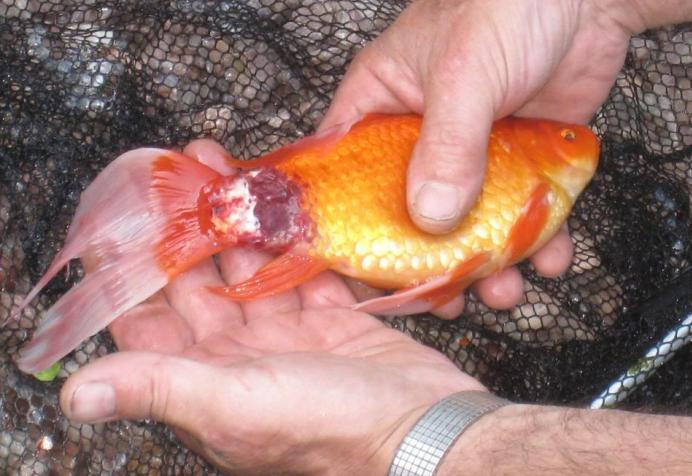
Anchor worms are not worms at all. They are copepod crustacean parasites (Lernaea spp.) that embed into a fish's tissues, leaving a thread-like body visible where it trails from the skin. The attachment site often becomes red, inflamed, and prone to secondary infection.5
How parasites spread in home tanks
In most household aquariums, parasites arrive by hitchhiking. The usual routes are:
- New fish added without quarantine
- Plants, rocks, substrate, filter media, or décor moved between systems
- Nets, buckets, siphons, or hands shared between tanks
- Transport water from shops or other hobbyists added to the tank
Reading the symptoms
Aquarium fish show a fairly small set of general distress behaviours for a wide range of problems: parasites, bacterial disease, poor water quality, temperature swings, aggression, even low oxygen. Scratching, clamped fins, lethargy, poor appetite, and rapid breathing all matter, but none of them is specific to parasites on its own.
Confirmation usually needs a closer look:
- Look closely. Salt-grain white spots strongly suggest Ich, while a thread-like protrusion fits anchor worm.1, 5
- Use microscopy. A skin scrape or gill sample examined under a microscope is the reliable way to identify flukes and many other parasites.4
Prevention that holds up
Quarantine new arrivals
A simple quarantine tank is often the difference between a minor nuisance and a whole-tank event. Hold new fish separately, watch their behaviour, and only move them across once they have settled and look clean. Quarantine also lets you treat a small volume of water accurately, without exposing your display tank's plants or invertebrates to unnecessary medication.2, 3, 5
Keep water quality steady
Parasites exploit stress. Stable temperature, adequate filtration, regular maintenance, and avoiding overcrowding all reduce the background pressure that turns a low-level parasite presence into obvious disease.4
Do not share wet equipment between tanks
Use dedicated nets and siphons per tank where you can. If you must share, disinfect and dry the gear thoroughly between uses.
Treatment options and cautions
Treatment depends on the parasite, the tank set-up (plants, shrimp, snails, sensitive species), and whether the fish are ornamental or destined for food. The key is to match the treatment to a confirmed or strongly suspected diagnosis, then follow the product label precisely.
Ich treatments
Ich is commonly treated with products based on agents such as copper, formalin, or dye-based combinations, used in repeat doses to line up with the parasite's life cycle. Prevention and control lean heavily on quarantine and careful cleaning, because Ich can be introduced on fish, plants, substrates, or equipment.1, 2
If you are in Australia and treating imported ornamental fish during post-arrival quarantine, note that the Australian Government publishes an approved treatments list for ornamental fish biosecurity, covering common actives used for external parasites, with specific exclusions and cautions.7
Fluke treatments
Praziquantel is widely cited as an effective treatment for monogenean flukes in ornamental fish. Repeat dosing is often needed for egg-laying species such as Dactylogyrus, because the eggs can be resistant to treatment.4
Anchor worm treatments
With Lernaea, you are usually dealing with both the visible parasite and the damaged skin it leaves behind. Management commonly includes carefully removing visible adult parasites and treating the system to reduce reinfection from other life stages.5
Medication safety notes
- Follow the label and measure carefully. Many parasite treatments become toxic when overdosed, and some are unsafe for invertebrates.
- Food fish and ornamental fish are not the same. Regulatory status and residue concerns differ sharply for fish intended for human consumption, including restrictions on certain dyes in food-producing animals in some jurisdictions.8
Why density matters
In aquaculture and fisheries, parasites can slow growth, raise mortality, and add cost through monitoring and treatment, especially when fish are held at high densities. The same logic applies in a small home system: crowding and stress give parasites the opening to multiply quickly.4
The bottom line
Parasitic diseases in aquarium fish are usually a story of introduction and opportunity. A parasite arrives quietly, then thrives when fish are stressed or the system is unstable. Quarantine, steady water quality, and careful equipment hygiene do most of the heavy lifting. When disease does appear, slow down, confirm what you can, and treat with a product that matches both the parasite and your tank's inhabitants.
References
- Encyclopaedia Britannica, Ich (Ichthyophthirius), white spot disease in freshwater fish
- University of Florida (EDIS), Ichthyophthirius multifiliis (White Spot) Infections in Fish (rev. 12/2016)
- Merck Veterinary Manual, Parasitic Diseases of Fish (Aquarium fish)
- University of Florida (EDIS), Monogenean Parasites of Fish
- University of Florida (EDIS), Lernaea (Anchorworm) Infestations in Fish
- Outbreak.gov.au (Australian Government), White spot disease (decapod crustaceans), and the clarification that it is not white spot in aquarium fish
- Australian Government Department of Agriculture, Fisheries and Forestry, Approved treatments (chemicals) for ornamental fish
- US Food and Drug Administration, Import Alert 16-131 (context on unapproved drugs and residues including malachite green in food-producing aquaculture)

Dog lover and writer at My Pets Australia, sharing practical breed guides and care advice for Australian pet owners.