Fungal Fish Diseases
Aquarium "fungus" is the white, cotton-wool growth that turns up on a fin, a patch of skin, or a clutch of eggs, usually on a fish that has recently been injured, moved, or kept in water that is off. Most of the time it is a secondary problem, an opportunistic bloom on tissue that was already damaged or on a fish that was already stressed. That is the useful part to hold onto: the fuzzy patch is often a symptom of husbandry, not the whole story. The safest response is to slow down, confirm what you are actually looking at, and fix the conditions that let it take hold before reaching for a treatment.2, 3
What people mean by "fungus" in aquarium fish
In home aquariums, "fungus" usually describes a white-to-grey, cotton-wool growth on skin, fins, or eggs. Often it is caused by water moulds (oomycetes) such as Saprolegnia, which behave like fungi in aquariums and tend to colonise damaged tissue or dead eggs.4
True fungal infections do occur, but they are less commonly the primary problem in otherwise healthy, well-kept ornamental fish. The practical takeaway is the same either way: treat the fish and correct the husbandry issue that made the outbreak possible.2, 4
Common "fungal" conditions, and one key correction
The names used in shops and forums can be misleading. Some conditions bundled under "fungus" are not fungal at all, and some need veterinary diagnosis to separate them from lookalikes.2
Saprolegniasis (water mould, "cotton wool disease")
Typical signs include pale, cottony tufts on fins, skin, or around an injury. It commonly follows net damage, fighting, transport stress, or chronically poor water quality.4
Branchiomycosis (gill rot)
This is a serious gill disease seen more often in aquaculture than in home tanks. It can cause respiratory distress and sudden losses, and it is not something to guess at from appearance alone.5
Ichthyophonus (not a "fungus on the skin")
Ichthyophonus causes a systemic infection, often with chronic wasting and internal lesions, and is not the same thing as a surface cottony growth. If a fish has persistent illness with an unclear cause, a laboratory diagnosis is the only reliable way to sort fungal-like organisms from other serious diseases.6
Signs that fit a fungal or water-mould problem
Watch for:
- white, grey, or off-white "cotton" patches on fins or body
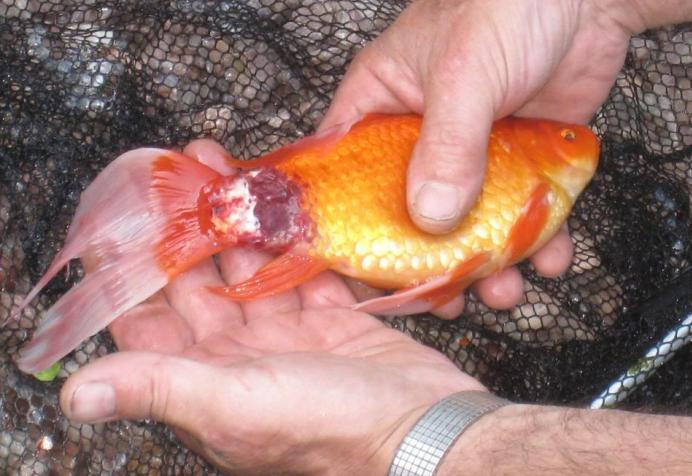
- skin that looks roughened, thickened, or ulcerated, often with a fuzzy edge
- frayed fins that do not improve once water quality is corrected
- fish spending more time resting, hiding, or being pushed around by tankmates
These signs overlap with bacterial disease, parasites, and simple injury, so appearance alone can be a trap.2
Diagnosis: when to treat at home, and when to get help
If there is a small patch on an otherwise active fish and you can clearly link it to a recent injury or transport, you can often respond with improved water quality, reduced stress, and careful supportive care while you observe closely.
If several fish are affected, if it spreads quickly, if there are unexplained deaths, or if you see gill or breathing signs, treat it as potentially serious. NSW DPI advises that unusual signs or unexplained deaths (particularly in cultured or wild fish) should be reported promptly, and Australia's federal guidance also emphasises reporting unusual aquatic animal disease events, including via the Emergency Animal Disease Hotline.1, 7
Causes and risk factors
These organisms are often present in aquatic environments already. Outbreaks are more likely when fish are stressed or the tank is working against them:
- poor water quality, meaning ammonia or nitrite spikes and a high organic waste load
- injury from net damage, nipping, or abrasion on decor
- overcrowding and chronic low-level stress
- temperature swings and unstable conditions
- new arrivals without quarantine, introducing pathogens or simply arriving stressed and vulnerable
NSW DPI notes that many "named" aquarium illnesses are symptom labels rather than a confirmed single cause, and that proper diagnosis may require microscopy or specialist tests.2
First response when you spot "fungus"
- Stop and observe for 5 minutes. Note breathing rate, balance, appetite, and whether tankmates are nipping.
- Test the water now, at minimum ammonia, nitrite, nitrate, and temperature. Poor water is a common driver of recurring "fungus-like" outbreaks.
- Do a partial water change if parameters are off, and clean obvious waste without stripping the filter of beneficial bacteria.
- Isolate if practical. A simple hospital tank reduces spread and lets you treat without stressing the whole system.
- Take clear photos each day. Progression, or the lack of it, is diagnostic information.
Treatment options: use the right tool, not a random one
Medication choice depends on the organism and the fish species, and some products used in aquaculture are not suitable for casual use in home tanks. Avoid the common mistake in older advice: antibiotics do not treat fungal or water-mould infections. They are for bacterial disease and should be used under veterinary direction where possible.2
Approaches used in managed settings
In aquaculture contexts, hydrogen peroxide is used as an immersion treatment for certain external infections, including saprolegniasis of freshwater-reared finfish eggs, with species sensitivity and dosing considerations.4
For imported ornamental fish during Australian post-arrival quarantine, the Department of Agriculture, Fisheries and Forestry (DAFF) maintains a list of chemicals approved for use in quarantine settings under specific conditions and directions.8
What to do in a home aquarium
For home aquariums, the safest baseline is straightforward:
- prioritise water quality and stress reduction first
- treat in a hospital tank where possible
- follow product directions exactly and avoid stacking multiple medications "just in case"
- consult an aquatic-experienced veterinarian for persistent or spreading cases
NSW DPI specifically cautions that gross signs alone should not be used to diagnose and treat suspected fish disease without appropriate training and diagnostics.2
Prevention that actually holds up
Quarantine new fish
Quarantine is not about perfection, it is about time. A short isolation period lets transport stress settle and gives you a window to notice disease before it reaches the display tank. It also lets you treat one fish without dosing an entire community tank.
Keep a stable, clean system
NSW DPI's hobbyist guidance emphasises practical routines that reduce stress and disease pressure: regular partial water changes, not overfeeding, and avoiding overcrowding.2
Dispose of fish and water responsibly
Aquarium fish and their water can carry diseases that threaten waterways and aquaculture if released. DAFF advises never releasing aquarium fish into waterways and disposing of aquarium water appropriately, not into stormwater drains or local waterways.7
Buying fish online: the real risks
Online buying is not automatically unsafe, but the risk profile is different: longer transport times, temperature swings, and delayed recognition of illness. Those pressures can tip a fish into an opportunistic "fungus-like" outbreak even when the original stock was reasonable.
Some simple safeguards:
- choose sellers who ship with temperature control appropriate to the season and your location
- inspect the fish immediately on arrival, and take photos if you need to raise an issue
- quarantine by default, even if the fish "looks fine"
- avoid adding multiple new fish from different sources to the same tank on the same day
When to escalate quickly
- multiple fish affected within 24 to 48 hours
- breathing distress, gasping, or gill damage
- rapid tissue breakdown, deep ulcers, or sudden deaths
- outdoor ponds that could overflow to stormwater or waterways
If you suspect a serious disease event, follow official reporting advice. DAFF lists the Emergency Animal Disease Hotline (1800 675 888) for unusual symptoms in aquatic animals, and NSW DPI provides guidance for reporting aquatic diseases and unusual deaths.1, 7
The Bottom Line
Most aquarium "fungus" is a signal flare. A fish has been stressed, injured, or kept in water that is not quite right. When you correct the underlying conditions, meaning clean water, steady temperature, sensible stocking, and gentle handling, true fungal and water-mould problems become less common and easier to contain. When the signs are widespread or severe, resist guesswork and treat it as a diagnostic problem first, not just a medication problem.2
References
- NSW Department of Primary Industries: Report an aquatic pest or disease
- NSW Department of Primary Industries: Caring for your pet fish
- Australian Government DAFF: Approved chemicals for ornamental fish (post-arrival quarantine)
- Merck Veterinary Manual: Therapeutic considerations in aquaculture (includes hydrogen peroxide use for fungal infection and saprolegniasis of eggs)
- FAO: Health management and biosecurity maintenance in fish farming (includes discussion of gill diseases such as branchiomycosis)
- Iowa State University, Center for Food Security and Public Health: Ichthyophonus hoferi factsheet
- Australian Government DAFF: How you can protect Australia's aquatic animal health
- Australian Government DAFF: Industry Advice Notice 41-2025 (live marine ornamental fish quarantine release conditions)
- Australian Government DAFF: Australia's National List of Reportable Diseases of Aquatic Animals (June 2025)

Dog lover and writer at My Pets Australia, sharing practical breed guides and care advice for Australian pet owners.