The Thrill of Horse Show Jumping: A Comprehensive Guide
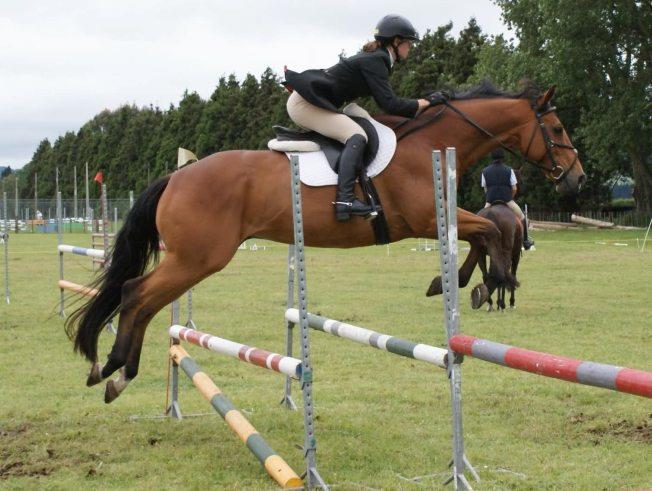
Horse show jumping is the equestrian sport where a horse and rider tackle a course of coloured fences against the clock, trying to leave every rail in place. It is one of the most watchable disciplines because the goal is simple to follow: fewest penalties wins, and the clock decides ties. Behind that simplicity sits a lot of quiet skill, from the rider shaping the canter to the training that keeps a horse sound. Once you know what counts as a fault and why some classes go to a jump-off, the whole thing reads very differently from the stands. This guide covers the rules, the courses, the horses, and where the sport shows up in Australian life.
What show jumping is (and what it isn't)
Show jumping is an equestrian discipline where a horse and rider combination completes a course of fences within a set time. The aim is to finish with the fewest penalties, and, when penalties are tied, the best time. It is sometimes described as "fastest wins", but at most levels the sport rewards careful accuracy first. Speed only starts to matter once a pair is already jumping clean, or when the class is specifically run as a speed competition.1
Rules and scoring
Most modern show jumping uses a faults and time format. A round is judged by penalties (faults) and, depending on the class, time.
Common penalties
- Knocking down part of an obstacle: typically 4 penalties.1
- First refusal or disobedience: typically 4 penalties.1
- Second refusal and falls are commonly treated as elimination in many classes (rules vary by level and discipline).1
- Time penalties: in many classes there is a "time allowed", and exceeding it adds penalties (the exact rate depends on the rule table used).1
What a jump-off is
If several riders finish on the same penalties (often on zero), the class may go to a jump-off: a shorter, faster round where the winner is the combination with the fewest penalties, and then the fastest time if still tied.1
What a typical course looks like
A course is built to test carefulness, scope, balance, and the rider's ability to place the horse accurately to a take-off point. It commonly includes a mix of single fences and related distances (combinations), set on lines that ask the pair to adjust stride length without losing rhythm. Course size and difficulty vary by class, but you will often see up to around 15 numbered efforts in an arena, with the time allowed set to encourage a forward, efficient round rather than slow circling.1
Common obstacle types
- Vertical: a tall, narrow fence that tests careful technique.
- Oxer: a spread fence that asks for width as well as height.
- Combination (double or triple): two or three fences on short distances, demanding quick balance and straightness.
- Water: a wide tray or open water where accuracy and commitment matter.
Horse and rider dynamics
At the top of the sport it can look effortless, but the work is visible if you know where to look: a steady canter, a line held without drifting, and small adjustments made early rather than in the last stride.
Traits of a capable jumping horse
Successful show jumpers typically show athletic strength, quick coordination, and the ability to maintain focus in a busy arena. Temperament matters too: not "brave" in a human sense, but steady enough to keep responding to the rider's aids when the environment is loud and unfamiliar.
What the rider is really doing
The rider's job is to shape the canter, its pace, balance, and straightness, so the horse can leave the ground from a useful distance and land in a rhythm that sets up the next fence. Much of the control is subtle: half-halts to rebalance, changes in line to shorten or lengthen a stride, and calm, consistent contact rather than constant pulling.1
Training and preparation
Most preparation for show jumping happens away from fences. Flatwork builds adjustability and strength, while pole work and grids develop technique without overloading the horse with big efforts. Good programs also protect recovery time, because jumping fitness is as much about resilient tendons and joints as it is about enthusiasm.
Building blocks you will see in most programs
- Flatwork sessions to improve steering, transitions, and balance.
- Gymnastic lines (gridwork) to refine technique and rhythm.
- Course schooling in moderation, to practise turns, distances, and competition feel.
- Conditioning (often hill work, trot sets, or structured canter work) matched to the horse's level and soundness.
Equipment and safety basics
Show jumping tack varies, but it tends to prioritise a secure rider position and clear communication. Fit matters: poorly fitting saddles and restrictive gear can affect performance and comfort, and can contribute to training problems that look like "naughtiness" from the stands.
Common essentials
- For the rider: an approved helmet is standard, and many riders also use a body protector depending on level and personal preference.
- For the horse: a jumping saddle, bridle, and commonly protective boots or bandages to reduce interference injuries.
Health and welfare
Jumping loads the horse's limbs with repeated impact and twisting forces, so management is not an afterthought. The everyday basics, sound hoof care, appropriate workload, and early attention to small changes in gait, are often what keep a season on track.
Common problems to watch for
In sport horses, injuries often involve the lower limb: tendons, ligaments, joints, and hooves. Early signs can be subtle, such as mild heat, a shortened stride, or reluctance to land on one lead, and should be checked promptly rather than trained through.
Veterinary oversight and event standards
Welfare-focused event policies commonly emphasise fitness checks, competent supervision, and veterinarian attendance where there is meaningful risk of injury or stress.2 In Australia, Equestrian Australia also publishes welfare updates and education resources for members, reflecting the sport's ongoing scrutiny and changing standards.3
Nutrition
Most performance diets still begin with forage. Many guidance documents for horse feeding suggest that adult horses commonly consume around 1 to 2 percent of body weight per day in forage (as a typical range), with changes made gradually over about a week or more to reduce digestive upset.4
A brief history
Jumping as a riding skill grew out of practical cross-country travel and hunting traditions in Europe, then became formalised into arena competition as course design and rules developed. Show jumping appeared at the Olympic Games in 1900, then returned when equestrian sport re-entered the Olympics in 1912 and has been on the program since then.5, 6
Show jumping in Australia
Australia's jumping scene is shaped by local agricultural shows, state and national competitions, and the steady pull of international sport. Large public events such as the Sydney Royal Easter Show include equestrian competition as part of a broader program that brings horses, riders, and the general public into the same busy space.7
Notable Australian riders
Australia has produced riders who have competed for decades on the world stage. Vicki Roycroft represented Australia at three Olympic Games, and Edwina Tops-Alexander has been a prominent international competitor, including appearances at FEI World Cup Finals.8, 9
References
- Equestrian Australia, Jumping (rules overview and penalties)
- RSPCA Australia Knowledgebase, Policy C04: Animals in Competitive Events
- Equestrian Australia, Horse Welfare
- Utah State University Extension, Equine Nutrition: Forages
- Individual jumping at the Olympics (event history overview)
- Equestrian events at the 1912 Summer Olympics (return of equestrian events)
- Sydney Royal Easter Show (event overview)
- Olympics.com, Vicki Roycroft
- FEI, Athlete profile: Edwina Tops-Alexander

Dog lover and writer at My Pets Australia, sharing practical breed guides and care advice for Australian pet owners.