Bronc Riding in Australia: A Thrilling Tradition
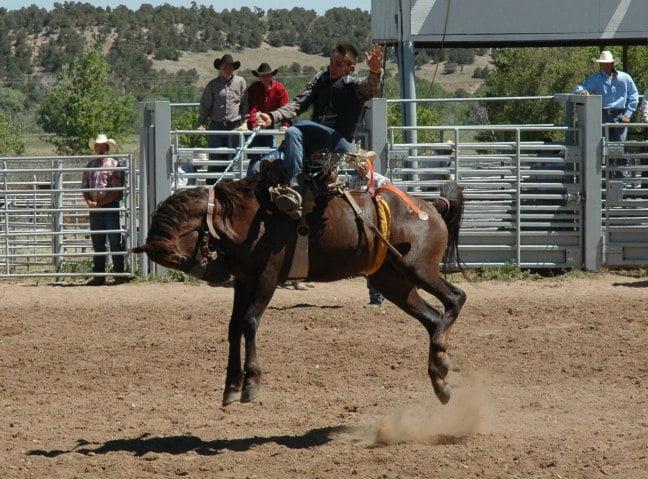
Bronc riding is a rodeo event where one rider tries to stay aboard a bucking horse for eight seconds, holding on with a single hand. It is one of the centrepiece roughstock events at Australian rodeos, and it draws a crowd because the outcome is genuinely uncertain from the moment the gate swings. Eight seconds sounds simple, but it is a loud, fast window where timing, balance and safety all matter at once. This guide explains how the event works in Australia, how saddle bronc and bareback differ, what the judges reward, and what riders wear to manage the risk.
What bronc riding is, in plain terms
Bronc riding is a roughstock event where a rider tries to stay on a bucking horse for eight seconds, using one hand to hold either the rein (saddle bronc) or the rigging handle (bareback). The free hand cannot touch the rider, the horse or the equipment during a qualified ride.1, 2
Judges do not reward simply clinging on. They reward control and rhythm, meaning how well the rider stays in time with the horse's jumps while the horse does its own best work: a strong drop in the front end, height behind, and clean, consistent bucking.
Saddle bronc vs bareback
Saddle bronc
Saddle bronc is often described as rodeo's classic roughstock ride. It uses a specialised saddle, two stirrups and a single braided rein held in one hand. The ride is judged for smoothness, timing and effective spurring that matches the horse's movement, rather than yanking or scrambling.1
Bareback
Bareback is ridden without a saddle. The rider grips a rigging handle, a suitcase-style handhold, on a pad cinched to the horse. There are no stirrups, and the motion through the shoulders and hips is more abrupt and higher-impact.2
The basic rules you will see in most rodeos
- Ride time: 8 seconds for a qualified score.1, 2
- One hand: one hand holds the rein or handle, and the other stays free.
- No free-hand contact: touching yourself, the horse or your gear with the free hand is a disqualification.1, 2
- Marking out: in saddle bronc and bareback, riders are generally required to begin with their spurs placed forward at the horse's shoulder points on the first jump out of the chute. The exact wording varies by organisation, and failing to do so is typically a no-score or disqualification in rule sets that use this standard.1, 2
Rodeos can also have additional equipment and conduct rules, for example which saddle or rigging styles are permitted. If you are competing, check the rulebook for the specific association running the event.
How scoring works
In the common judging model used across major roughstock rule sets, the ride is scored out of 100 points, split evenly between two halves:
- Rider (up to 50): control, balance, timing, spurring action and overall form.
- Horse (up to 50): strength, speed, degree of difficulty and consistency of the buck.
Two judges typically score both the athlete and the animal, then combine the totals.1, 3 Scores in the 80s are widely treated as strong rides in this scoring culture, high enough that the horse likely bucked well and the rider stayed in sync rather than merely surviving the clock.1
Equipment and what it is for
Bronc riding gear is a mix of tradition, grip and risk management. The exact setup differs between the two events, but you will commonly see the following:
- Saddle bronc: a bronc saddle with stirrups, a braided bronc rein, chaps, spurs designed for controlled contact, and a glove for the rein hand.1
- Bareback: a rigging pad and handle, a glove, spurs and chaps, and protective equipment chosen by the rider and sometimes required in junior divisions.2
Some safety items are increasingly common, especially in younger age groups. Australia's National Rodeo Association specifies helmets and protective vests for junior competitors in roughstock events.4
Technique: what good riding tends to look like
From the fence, a good ride can look almost quiet. The horse rises and snaps down while the rider stays centred, the free arm acting like a counterweight rather than a windmill. In saddle bronc, the best rides often show a steady, repeatable rhythm, with the feet reaching forward as the horse's shoulders drop, then returning as the hindquarters kick.1
In bareback, the movement is sharper. The rider's body stays close to the rigging handle, absorbing the buck-and-drop forces through the core and shoulders while keeping the legs working forward in time with the jump.2
Health and safety: what the risk looks like
This is a high-risk event, and the numbers back that up. Rodeo injuries range from bruises and sprains to fractures and concussion, with roughstock events carrying higher risk because falls and animal contact are part of the job. A systematic review of rodeo injury research reports injury rates measured per competition exposure, with sprains and strains common, knees frequently affected, and concussions reported in a notable proportion of injuries.5
In professional rodeo injury surveillance, roughstock riders account for the vast majority of recorded injuries, and concussion appears regularly among the more common injury types.6 This is why many rodeos put medical staff ringside, and why helmets and vests are treated as non-negotiable in some junior rule sets.4
Bronc riding and Australian rodeo culture
Australian rodeo grew alongside working horsemanship, where buckjumping and rough riding sat close to the practical business of handling livestock. Over time those informal tests became organised competition, and bronc riding settled in as one of the centrepiece roughstock events.
Warwick, Queensland, is one of the sport's best-known stages. The Warwick Show and Rodeo Society records buckjump competitions near Warwick from the 1800s, and describes the first official Warwick rodeo being held in 1906, not 1929 as it is sometimes repeated.7 Further north-west, Queensland's Mount Isa Mines Rodeo has long promoted itself as the largest annual rodeo in the Southern Hemisphere, and draws competitors and visitors from well beyond the region.8
Famous names, and a note on getting them right
Rodeo fame can be slippery on the page, especially when riders share nicknames, travel widely or compete across multiple events. If you are looking up a particular name, it is worth checking the exact discipline (saddle bronc, bareback or bull riding) and the association records for that era. One figure often linked with Australian rodeo's public image is Smoky Dawson, who performed around rodeos and country shows and helped popularise cowboy entertainment for Australian audiences in the mid-20th century.9
The bottom line
Bronc riding sits in a narrow space between skill and unpredictability. The rules are simple enough to memorise in a minute, but the judging rewards something harder to describe: a rider who can stay composed, match the animal's motion, and make eight seconds look like a single, continuous movement.
References
- Bennington PRCA Rodeo, Saddle Bronc Riding (rules, scoring, equipment)
- Bennington PRCA Rodeo, Bareback Riding (rules, scoring, equipment)
- Spokane County (Interstate Fair & Expo), Saddle Bronc (disqualifications and scoring overview)
- National Rodeo Association (Australia), Junior information (helmet and vest requirements)
- PubMed, Characteristics of Rodeo Injuries and Suggestions for Injury Prevention: A Systematic Review
- PubMed, Analysis of 4 Years of Injury in Professional Rodeo
- Warwick Show & Rodeo Society, History (including first official Warwick rodeo date)
- ABC News, Mount Isa Rodeo described as the largest rodeo in the Southern Hemisphere
- Smoky Dawson (biographical overview and links to rodeo performances)

Dog lover and writer at My Pets Australia, sharing practical breed guides and care advice for Australian pet owners.