The National Show Horse: A Comprehensive Guide to This Elegant Breed
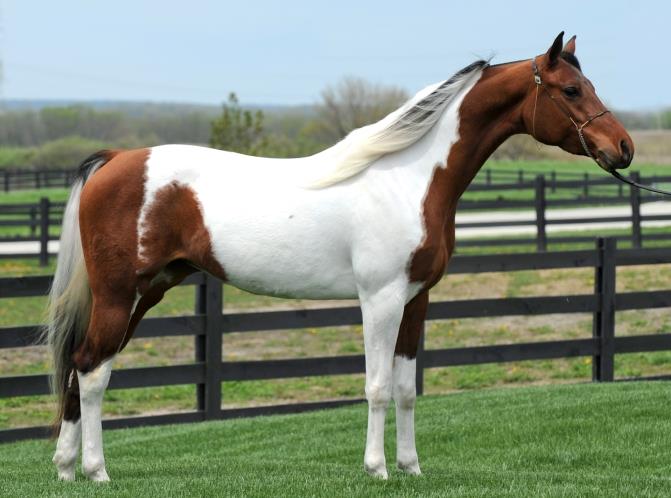
The National Show Horse is an American breed built from Arabian and American Saddlebred bloodlines, and it is bred for one thing above all: presence in the show ring. Picture a horse that looks light and elegant standing still, then lifts and brightens the moment it is asked to work, especially at the trot. It carries a long, high-set neck, a refined head and an elevated, elastic way of going that reads as animated but controlled. The registry was formed in 1981, and today eligibility turns on Arabian percentage rather than colour, with at least 50% Arabian blood required. It is a genuinely striking horse, and a specific one: kept well it is not fragile, but it does ask for careful, consistent management.1, 2, 3
Quick Profile
- Origin: United States, from an Arabian and American Saddlebred foundation2, 3
- Registry: National Show Horse Registry, founded August 19812
- Typical height: commonly around 14.3 to 16.2 hands, with individuals varying4
- Colours: all colours accepted, with eligibility tied to Arabian blood percentage rather than colour4, 5
- Primary disciplines: saddle seat and related show divisions, with many also doing hunt seat, some dressage, trail, driving and other work depending on training and build6
- Build and movement focus: long, upright neck, refined head, deep shoulder, short and well-coupled back, elevated and elastic action powered from behind1, 3
History and Origin
The National Show Horse began as a deliberate show-type cross, blending Arabian refinement and stamina with the American Saddlebred's upright carriage and animated way of going. The breed's identity solidified with the founding of the National Show Horse Registry in August 1981, which gave breeders a formal standard and a consistent pathway for recording bloodlines and show results.2, 4
Registration is not simply any Arabian crossed with a Saddlebred. The modern registry framework recognises National Show Horses as a separate breed and sets blood-percentage and paperwork rules for eligibility, including the widely cited requirement of at least 50% Arabian blood. Rule changes have occurred over time. Across the decades the written standard has stayed anchored to a recognisable silhouette, a refined head, a long neck set high, a deep shoulder and correct legs, and to a particular kind of motion: power rising from the hindquarters into an elevated front end, with both flexion and extension rather than flinging or paddling.1, 2, 3, 5
Appearance and Physical Characteristics
A good National Show Horse tends to look drawn upward. The neck is long and set high, the withers are pronounced, the shoulder is laid back, and a short, well-coupled back flows into a long hip. The legs should read clean and correct from all angles, with enough bone for durability even when the overall impression is fine and refined.1
The movement people come to see is animated but not chaotic. The standard describes motion that is balanced and correct, with obvious power from the hindquarters flowing forward into an elevated front end. In practical terms, the best horses stay straight, track up honestly, and keep their rhythm as the frame lifts.1
Temperament and Personality
Most National Show Horses are bred to be responsive, quick to notice small aids and quick to change gears. That sensitivity can look like generosity in a steady program, or like tension when handling is inconsistent. It helps to treat spirited as information rather than attitude: manage the day so the horse can predict what comes next, then ask for effort in clear, short blocks.6
Is a National Show Horse Right for You?
This is a horse for someone who wants a refined show athlete and can give it structure. The sensitivity that makes it brilliant under lights also means it does poorly with inconsistent handling, so it suits an experienced or well-supported home more than a casual first-horse buyer. If you want a quiet paddock companion or a low-input trail horse, there are easier types. If you want presence, animation and a genuine show prospect, and you are prepared to commit to careful conditioning, farriery and routine, this breed rewards the work.6
Training and Exercise
Early handling should build rhythm and confidence: leading, standing, feet, short floats, and gentle exposure to arenas and loudspeakers. Show-ring composure is rarely a single skill. It is the sum of dozens of small, unremarkable repetitions.
These horses often enjoy varied, structured work. Many do best with a mix of arena schooling for straightness, transitions and balance, careful conditioning, and low-drama time outside the ring so the body stays loose and the mind stays settled.
High, elevated action can load the limbs differently to flatter-moving horses. Good farriery, thoughtful surfaces, and conditioning that builds topline and hindquarter strength matter more than chasing height in the front end. If the horse starts shortening its stride, stumbling, or changing its way of going, treat it as a veterinary and hoof-care question first, not a training problem.
Health and Lifespan
There is no single National Show Horse disease list, but the same themes turn up again and again in refined performance horses: lameness risk from work, surfaces, shoeing and conformation, and respiratory disease risk from travel, stabling and close contact at events. Good ventilation, dust control and realistic workloads do a lot of quiet work in the background.
- Hooves: consistent trims and shoeing on an individual schedule, watching for changes in wear, heat, digital pulse and willingness to land heel-first.
- Teeth: regular dental checks to keep chewing efficient and contact comfortable.
- Biosecurity: isolate new arrivals, do not share water buckets at events, and treat fevers and nasal discharge as stop-and-check signs.
Grooming and Care
The coat on a National Show Horse is usually fine and sleek when the horse is healthy, well fed and regularly groomed. Daily brushing also doubles as surveillance: you feel small swellings, rubs under tack, tender spots across the back, and heat in legs before they become a story.
During seasonal shedding, a curry comb and consistent grooming lift dead hair and dirt while keeping the skin healthy. Bathe when you need to, but protect the coat's natural oils with sensible frequency, and dry the horse thoroughly in cooler weather.
Diet and Nutrition
Start with forage. Most adult horses do best when the bulk of their diet is pasture or hay, with concentrates added only to meet energy and nutrient needs that forage cannot cover. A widely used guide is that horses should receive roughly 1.5 to 2% of body weight per day, on a dry matter basis, as forage, with total intake commonly around 1.5 to 2.5% of body weight depending on workload, pasture quality and the individual horse.7, 8
- Change feeds slowly: sudden changes can raise colic risk by disrupting hindgut fermentation.7
- Feed by weight: scoops are convenient but unreliable, so weigh hay and concentrates when adjusting rations.7
- Keep water and salt available: hydration underpins performance, appetite and recovery.8
A Few Things Worth Knowing
Vaccination plans in Australia depend on where you live, how much you travel and what diseases circulate locally. Tetanus is widely recommended, and risk-based vaccination for respiratory disease such as strangles is commonly discussed with your vet, particularly for horses that mix closely with others at events.9, 10
If you are in flying-fox areas, Hendra virus is part of the conversation. Australian authorities emphasise that vaccination is an effective way to reduce the risk of Hendra virus infection in horses and to reduce viral shedding, alongside practical steps like keeping feed and water away from trees where flying-foxes may feed or roost, and isolating sick horses early.10
The Bottom Line
A National Show Horse is built for presence: a clean outline, an elevated way of going, and a responsiveness that can look almost electric under lights. Kept well it is not fragile, just specific. The daily job is to keep the body strong enough to carry that lift, and to keep the horse's world steady enough that brilliance stays a choice rather than a reflex.
References
- National Show Horse Registry, About (breed standard and mission)
- Wikipedia, National Show Horse (registry founding date and registration overview)
- Horse Canada, National Show Horse (breed characteristics and 50% Arabian requirement summary)
- Horse Illustrated, National Show Horse profile (height range, colour note, use overview)
- National Show Horse Registry, Home (official registry context)
- National Show Horse Registry, Show Horse Alliance discipline standard (saddle seat type and motion emphasis)
- Rutgers NJAES, The Basics of Equine Nutrition (feeding guidelines and management notes)
- Merck Veterinary Manual, Nutritional requirements of horses (forage intake guidance)
- NSW Department of Education, Horses: health (vaccination discussion and risk-based programs)
- Agriculture Victoria, Hendra virus (vaccination and risk-reduction measures)

Dog lover and writer at My Pets Australia, sharing practical breed guides and care advice for Australian pet owners.