The Irish Draught Horse: A Comprehensive Guide to This Versatile Breed
The Irish Draught is Ireland's traditional all-round farm horse, bred to plough and cart through a working day and still carry a rider home afterwards. It is compact, powerful and economical to keep, with a reputation for docility and good sense that has made it one of the most reliable riding types you can put a beginner or a nervous rider on. Its blood also sits behind the modern Irish Sport Horse, so the breed matters far beyond the farm gate. None of that makes it a casual purchase. A horse of this substance is a serious, long-term commitment, and the traits that make it easy to love also come with care points that catch people out.
History and Origin
The Irish Draught grew out of practical need on Irish farms, with written references to the type dating back to at least the 18th century. It had to be strong enough for field work and carting, yet agile and comfortable enough to hunt or ride, one horse for the whole job list across wet ground and narrow lanes. That mix of strength and athleticism is why Irish Draught blood still sits at the centre of Ireland's sport-horse story, most often crossed with Thoroughbreds to produce modern Irish Sport Horses for jumping and eventing.2, 5
Appearance and Physical Characteristics
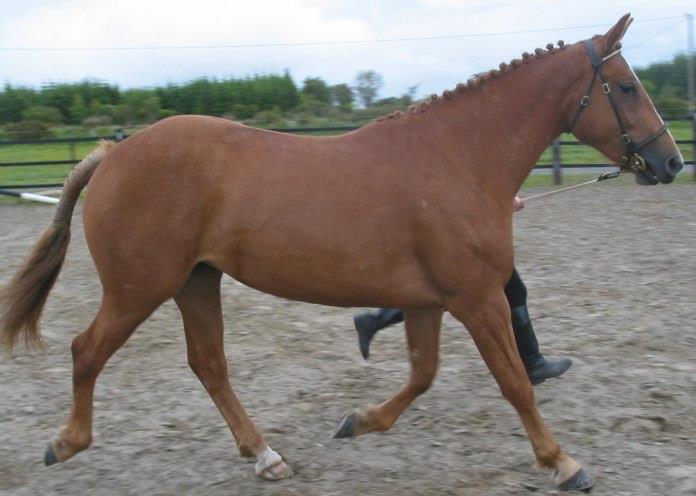
A good Irish Draught looks like it could work all day without rushing. The frame is powerful rather than tall and leggy: deep through the heart, strong over the back, and built from the hindquarters forward. The limbs are a defining feature, with clean substantial bone, short cannons (the "short-shinned" look), and feet meant to cope with mileage. Most studbook descriptions also emphasise an active, straight, free way of going that never feels heavy, even though the horse carries plenty of substance.1, 3
Measurements vary slightly by organisation, but most modern breed standards place Irish Draughts in the mid-15 to mid-16 hands range (roughly 15.2 to 16.3 hh), with stallions typically taller than mares. Most solid colours are accepted, commonly bay, brown, chestnut, grey, black and dun, while excessive white markings, especially above the knees and hocks, are generally discouraged.1, 3, 4
Temperament and Personality
The Irish Draught's reputation rests on steadiness. Breed societies repeatedly describe a horse that is intelligent, gentle and notably docile, reliable under saddle and sensible around the everyday bustle of yards, livestock and traffic. That does not guarantee "unflappable". Any individual horse can be sharp, worried, under-handled or sore. But as a type, the breed is built for manageability: a horse that saves energy, reads its environment, and gets on with the work.1
Is an Irish Draught Right for You?
For a rider who wants a solid, sensible all-rounder rather than a hot competition horse, the Irish Draught is one of the easiest breeds to recommend. It suits steady hacking, low-level jumping, dressage basics, property work and harness work, and its temperament forgives the ordinary mistakes that unsettle sharper horses. What it asks in return is space, time and money: this is a large animal that needs daily care, proper turnout, regular farriery and years of consistent handling. It is also an easy keeper, which sounds convenient until you realise that trait quietly works against its own health if feeding is not managed. If you can commit to routine and disciplined feeding, few horses reward you more plainly.
Training and Exercise
Most Irish Draughts respond best to calm repetition and clear boundaries. Because many are naturally economical movers and easy keepers, they tend to do well on a routine built around a few priorities:
- Early handling and varied exposure to surfaces, livestock, vehicles, water and gates
- Consistent basic schooling that builds straightness, balance and strength behind
- Regular low-to-moderate work rather than long gaps between intense sessions
They enjoy purposeful jobs. Steady hacking, low-level jumping, dressage basics, farm and property work, and harness work all suit them, depending on the individual and their soundness.
Health and Lifespan
Irish Draughts are generally hardy horses with a strong constitution, and with good management many live well into their 20s. The word "hardy" hides the main risk: they are very efficient at holding weight. When feed is rich and exercise drops away, they can tip into obesity, and that raises the risk of laminitis, which is an emergency rather than an inconvenience. They can also develop the usual wear-and-tear concerns of larger riding horses, particularly after years of carrying weight, including joint arthritis, back soreness, and hoof problems if trimming and turnout are neglected.6, 7
Prevention is quiet and unglamorous, and it works:
- Watch body condition closely. Photos help, and so does a weigh-tape trend tracked over time.
- Base the diet on fibre. Pasture management and suitable hay matter more than most supplements.
- Introduce spring grass carefully and talk to your vet if the horse has had laminitis before.
- Prioritise hooves. Keep farriery consistent and act promptly on heat, digital pulses or a pottery gait.
Grooming and Care
The coat care is straightforward: regular brushing to lift dirt and shed hair, plus a steady check for rubs under tack. The real maintenance happens lower down, in the feet, legs and weight. Irish Draughts were shaped to be economical and many still live like that, so they do best when turnout, forage and exercise are managed with quiet consistency rather than big swings between a spelling paddock and a sudden fitness plan.
A Few Things Worth Knowing
- The Irish Draught is one of the key foundation breeds behind the Irish Sport Horse, usually crossed with Thoroughbreds and, in more recent generations, influenced by other warmblood lines depending on the breeding goal.5
- In Ireland the studbooks are overseen by Horse Sport Ireland, which maintains both the Irish Draught Horse Studbook and the Irish Horse Register.8
- The breed is prized as much for what it produces in a cross as for its own performance, which is why "Irish Draught blood" is a selling point on sport-horse pedigrees.
The Bottom Line
At its best, an Irish Draught is a calm animal with enough strength to carry weight and enough athleticism to stay useful under saddle. It tends to feel solid under you, built for hours rather than minutes, and it rewards sensible management: steady work, careful feeding, and honest attention to hooves and condition. Give it that and it will keep showing up, year after year.
References
- Irish Draught Horse Society of North America (IDHSNA), About the Irish Draught (breed standard and overview)
- Horse Sport Ireland, Studbooks (Irish Draught background and studbook notes)
- Irish Draught Society of Canada, About the Irish Draught (breed description, height, bone, colour)
- Irish Draught Horse Society (Great Britain), The Irish Draught Breed
- Horse Sport Ireland, Irish Sport Horse studbook (composite breeds and breeding context)
- RSPCA Australia Knowledgebase, What is laminitis in horses?
- Australian Government Department of Agriculture, Fisheries and Forestry, Equine health information (laminitis)
- Horse Sport Ireland, Breeding policy (HSI maintains Irish Draught and Irish Sport Horse studbooks; breeding goals)
- Fédération Équestre Internationale (FEI), Horse Sport Ireland federation details (Irish Horse Register responsibility)

Dog lover and writer at My Pets Australia, sharing practical breed guides and care advice for Australian pet owners.