The American Paint Horse
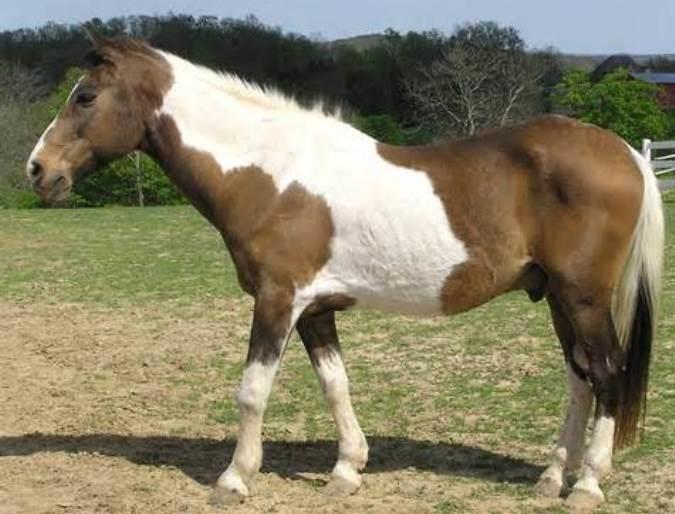
The American Paint Horse is a stock-type horse best known for its bold white spotting set against any base coat colour. It carries Paint, American Quarter Horse or Thoroughbred breeding, along with the compact, athletic build that suits western disciplines, ranch work, showing and steady trail riding. Colour is the obvious drawcard. It also sits directly on top of genetics, and in Paint breeding one wrong pairing can be fatal for a foal. This guide covers how the breed is defined, how the main pattern types work, what registration with the American Paint Horse Association actually looks at, and the everyday care that keeps these horses sound and useful for the long haul.
Snapshot
- Type: Stock-type horse of Paint, Quarter Horse, or Thoroughbred lineage1
- Height: Commonly around 14.2 to 16 hands (individuals vary)
- Weight: Often 450 to 590 kg (varies with height, bone and condition)
- Coat: Any base colour, with recognised white spotting patterns. Many Paints are also "solid" by appearance but still eligible for registration by bloodline1
- Lifespan: Often into the 20s with good care, and some reach 30 or more years5
- Typical uses: Western disciplines, ranch work, sport and show, trail and pleasure riding. The stock horse build lends itself to quick turns and steady work1
What Makes a Paint a Paint
In everyday paddock talk, "paint" can mean any horse with patches. In breed terms it means something more specific. An American Paint Horse is defined by both type and lineage, a stock-type horse with Paint, American Quarter Horse or Thoroughbred breeding, registered through the American Paint Horse Association (APHA).1
That distinction matters. A horse can look boldly marked and still not be a Paint, while another can look nearly solid and still be eligible for APHA registration through its parents and genetics.1
Coat Patterns
Paint patterns get described as if they are neat categories. In real horses the markings can be messy, layered or subtle, especially when more than one white-pattern gene is in play. APHA describes the main pattern types and also recognises solid Paint-bred horses that meet the bloodline requirements.1
Tobiano
Tobianos commonly show white crossing the topline somewhere between the withers and tail, with darker colour often on one or both flanks. The tail is frequently a single colour, and head markings may be simpler than in many overos, though there is plenty of variation.1
Overo
"Overo" is an umbrella term for several patterns and genes. Many overos have irregular, scattered or splashy white, and can present with bold face white and blue eyes. Some patterns are difficult to identify accurately by eye alone, which is one reason DNA testing is widely used in breeding programs.1
Tovero
Tovero generally describes horses showing tobiano plus one or more overo genes, often resulting in more extensive white and distinctive head and chest markings.1
Solid Paint-bred
A Paint does not need obvious body patches to be real. Under APHA rules a horse can be registered on pedigree even if it does not meet the minimum white-marking thresholds, and may be classified as Solid Paint-Bred depending on its markings and genetics.1
Registration and Breeding
APHA registration is built around parentage and colour or pattern eligibility. In broad terms:
- If a horse has at least one APHA-registered parent, it is eligible for APHA registration, and classification then depends on markings and genetics.1
- If a horse has only AQHA (Quarter Horse) or Jockey Club (Thoroughbred) parents, it must meet APHA's minimum colour requirements to be eligible for registration.1
APHA also recognises a pathway where certain horses that look solid can qualify for the Regular Registry using a combination of Paint traits and DNA-confirmed pattern genes, commonly referred to as the "genetics rule".2
Temperament and Personality
Temperament tracks bloodline, handling and environment far more than colour does. Paints are bred in the same working stock horse tradition as many Quarter Horses, so you often see a compact, athletic horse that learns quickly and thrives on consistent, clear cues. Quiet, steady training tends to produce quiet, steady horses.
Reward-based methods suit many Paints well, especially young or sensitive horses. Keep sessions short, repeatable and physically fair. Most training problems in stock horses show up first as tension in the body, not as defiance.
Training and Exercise
The breed is strongly aligned with stock-horse conformation and training culture, which is why Paints turn up across so many working and arena disciplines. Common uses include:
- Western riding, reining and working cow horse
- Ranch work and mustering, where suitable and appropriately trained
- Barrel racing and gymkhana events
- Trail riding and pleasure riding
- Show rings, where type, movement and presentation matter as much as colour
Individual horses do become well-known within particular show, performance or breeding circles, but "famous historic" claims are often repeated without reliable documentation. If you are researching a pedigree horse, work from studbook records and verified competition results rather than anecdotes.
Health and Lifespan
The main genetic risk in Paint breeding is lethal white syndrome, also called overo lethal white syndrome. It is strongly associated with the frame overo pattern and is caused by a mutation in the EDNRB gene. Affected (homozygous) foals are born white or nearly white and develop severe intestinal dysfunction, and the condition is fatal within days.3, 4
The practical takeaway is that when breeding Paints, especially where frame overo may be present, DNA testing and informed mating choices are standard risk management. Visual pattern identification alone is not always reliable.3, 4
With good care a Paint often lives into its 20s, and some reach 30 or more years.5
Diet and Nutrition
Most Paints do best on the same foundation as other horses: plenty of forage, a steady routine, clean water, and enough work to keep joints and minds supple.
- Forage first: Good-quality pasture and hay should make up the bulk of the diet.
- Concentrates only when needed: Hard-working horses, growing horses, or those struggling to hold condition may need extra energy and protein, introduced gradually.
- Fresh water and salt: Always available, with electrolytes considered during hot weather and heavy work.
Grooming and Care
Dental and hoof maintenance quietly shapes everything else, from behaviour to condition to saddle fit. NSW DPI guidance recommends dental checks every six months for horses aged 2 to 5 years, and at least annually after five years of age.6 RSPCA guidance is similar, with young horses commonly checked at six-monthly intervals and adults at least yearly.7 The MSD Veterinary Manual covers the preventive side of equine dental care and common risk factors in more detail.8
The main international registry and governing body for the breed is the American Paint Horse Association (APHA), which maintains the breed registry and publishes registration guidance and rules.1
References
- American Paint Horse Association (APHA), The Breed (registration, eligibility, pattern types)
- APHA, FAQs (including the "genetics rule" and Regular Registry guidance)
- PubMed, Endothelin receptor B polymorphism associated with lethal white foal syndrome in horses
- Lethal white syndrome (overview, inheritance, EDNRB association)
- National Equine, How long does a horse live? (general lifespan ranges)
- NSW Department of Primary Industries, Caring for horses (teeth check intervals and general care)
- RSPCA Knowledgebase, When does my horse need to see the dentist?
- MSD Veterinary Manual (AU), Dental disorders of horses (preventive care and risk factors)

Dog lover and writer at My Pets Australia, sharing practical breed guides and care advice for Australian pet owners.