Tenterfield Terrier
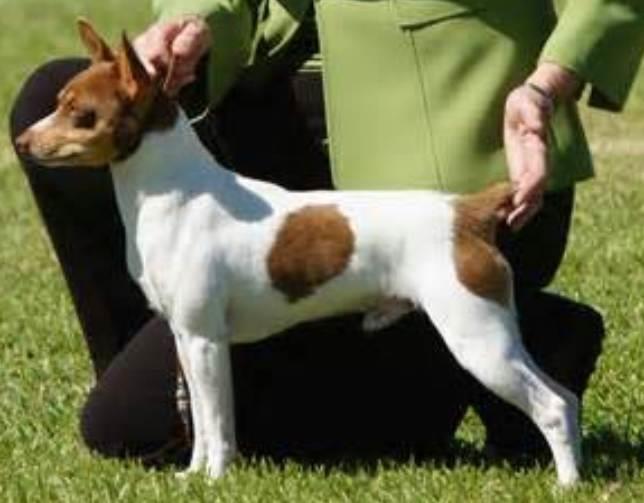
The Tenterfield Terrier is a small Australian working terrier: compact, bright, and sturdier than its size suggests. Bred to keep sheds and yards clear of vermin, it still carries that quick, alert shape, and it slots neatly into a house, a unit, or a farm. It is affectionate and quick to learn, which is a large part of the appeal. It is also a real terrier, so it wants a job and will invent one if the day is too quiet. This guide covers temperament, care, training, and what the recognised breed standards actually say about size and appearance.1, 2
Quick breed snapshot
- Height: 25.5 to 30.5 cm at the withers, ideal around 28 cm1
- Weight: in proportion to size. The standard does not fix a set weight, though many adults sit in the mid single digit kilos1
- Coat: short, smooth, single coat1, 2
- Colours: predominantly white with black, tan, blue, or liver markings. Tri-colour is common. Full-colour coats are not acceptable in the standard1, 2
- Temperament: confident, keen, and intelligent. Loyal and eager to learn1, 2
- Exercise needs: moderate to high for a small dog. Plan on daily walks plus play and short training sessions3
- Watch for: kneecap issues (patellar luxation) and the dental disease risk typical of small breeds3, 6
History and Origin
The Tenterfield Terrier is an Australian breed, tied closely to the small working terriers kept for pest control on farms and around sheds. The tidy build, smooth coat, and quick movement all trace back to that job: a dog meant to slip through tight spaces and stay busy for long stretches.2, 4
The exact ancestry is not fully documented. A few origin stories get repeated, including links to small fox-terrier types brought out by early European settlers. Treat these as likely influences rather than a settled family tree.4
Appearance and Physical Characteristics
A well-bred Tenterfield Terrier reads as balanced and athletic rather than toy-like. The breed standard describes a strong, active, agile working terrier with a smooth coat and an alert expression.1, 2
Size
Adult height is typically 25.5 to 30.5 cm at the withers, with an ideal around 28 cm. Unlike many breed summaries online, the official standard does not lock the breed to a set weight range. Weight should suit the size and overall condition of the dog.1
Coat and colour
The coat is short, smooth, and single-coated, so it is easy to keep clean and quick to dry after a wet walk. Colour is predominantly white with black, tan, blue, or liver markings, and tri-colour is common. Full-colour coats are not acceptable under the standard.1, 2
Tail
Docking was common historically, and the standard acknowledges both docked and undocked tails. Natural bob tails also occur in the breed, so a single litter can include pups born with different tail lengths.1, 5
Temperament and Personality
This is a terrier built to notice and respond: ears up, eyes scanning, ready to follow a sound under the fence line. The breed standard describes a confident dog with an eagerness to learn and strong loyalty, and that holds up in daily life when the dog is given enough structure and activity.1, 2
At home, many Tenterfield Terriers settle well, but they keep a watchful interest in what is happening, especially at doors, windows, and the boundary fence. If you want a reliably quiet dog, plan early training around barking and arousal, and choose lines known for steadier temperaments.
Is a Tenterfield Terrier Right for You?
For an active household, this is an easy dog to recommend. It is a good fit if you want a small dog with real stamina and presence, a companion that enjoys training and interactive play, and a neat, low-fuss coat.1, 2
Think twice if you need a very quiet home, a dog that is content with minimal daily activity, or a pet that copes with long hours alone every day. Many terriers alert-bark unless trained early and consistently, and a bored one gets louder, not calmer.
About separation anxiety
Some Tenterfield Terriers cope fine alone once trained, while others struggle, especially if alone time changes suddenly or the dog has a strong attachment pattern. Separation anxiety is defined by distress behaviours that reliably occur when the dog is left alone, and it is best treated as a welfare and training issue, not naughtiness.9, 10
If your dog panics when left, get help early. A structured plan, often with a qualified trainer or behaviourist, plus veterinary support, can make a real difference.9, 10
Training and Exercise
Most Tenterfield Terriers learn quickly. The challenge is not intelligence, it is momentum: a day that is thin on movement and attention leaves them free to start their own projects.
What tends to work best
- Short, regular sessions: a few minutes at a time, repeated through the day.
- Reward-based training: food, toys, and access to play are usually strong motivators for terriers.
- An outlet for chase and sniffing: fetch, food scatters, and scent-based puzzles take the edge off indoor restlessness.
For exercise, think beyond a single walk. Many do best with a daily walk plus brisk play and a little training, enough to leave them pleasantly tired rather than wired.3
Health and Lifespan
No breed is problem-free, but you can stack the odds. Start with a reputable breeder who health-checks, keep your dog lean, and stay consistent with dental care and routine vet checks.
Kneecap issues (patellar luxation)
Luxating patellas, a slipping kneecap, come up commonly in the breed. Watch for skipping steps, intermittent lameness, or a back leg that suddenly flicks out mid-run. A vet exam is the right first step if you notice signs, especially in a young dog.3
Dental disease
Small breeds are prone to dental disease, and it is one of those slow problems that turns expensive when ignored. Home care helps: gradual tooth-brushing training, appropriate dental chews and toys, and regular vet dental checks.6
When choosing dental chews or diets, look for products carrying the Veterinary Oral Health Council (VOHC) Seal of Acceptance, which shows evidence of reducing plaque and calculus when used as directed.7, 8
Grooming and Care
The coat is straightforward. A weekly brush is usually enough to lift dead hair and dust, and baths can be occasional or reserved for genuinely muddy adventures. The steadier work is the small, regular jobs: nails, ears, teeth, and keeping the dog at a healthy body condition.
- Brushing: weekly, more during shedding periods.
- Nails: trim when you hear clicking on hard floors.
- Ears: check weekly for redness, smell, or discharge.
- Teeth: aim for frequent brushing, built up slowly and gently.6
The Bottom Line
The Tenterfield Terrier is small, bright, and built for movement, an Australian terrier that still carries its working shape and quick reflexes. In a home that enjoys daily walks, play, and a bit of training, they tend to thrive. In a home that is quiet, busy, and often empty, the same dog can turn noisy and unsettled.
Choose carefully, meet adult dogs where you can, and treat dental care and training as part of the weekly rhythm rather than an occasional fix.6
References
- Dogs NSW (Dogs Australia), Tenterfield Terrier breed standard
- Dogs Australia, Tenterfield Terrier breed standard (last updated 17 Apr 2019)
- Burke's Backyard, Tenterfield Terrier breed profile (temperament, size, health notes)
- Wikipedia, Tenterfield Terrier (overview and history summary)
- National Tenterfield Terrier Council of Australia, Tenterfield facts (including natural bob tail notes)
- RSPCA Pet Insurance, Guide to dog dental care (brushing guidance and safety notes)
- Veterinary Oral Health Council (VOHC), about the VOHC seal and standards
- Veterinary Oral Health Council (VOHC), accepted products list
- RSPCA Victoria, separation anxiety (signs and management overview)
- FOUR PAWS Australia, separation anxiety in dogs (prevention and management)

Dog lover and writer at My Pets Australia, sharing practical breed guides and care advice for Australian pet owners.