Tennessee Walking Horse (Tennessee Walker)
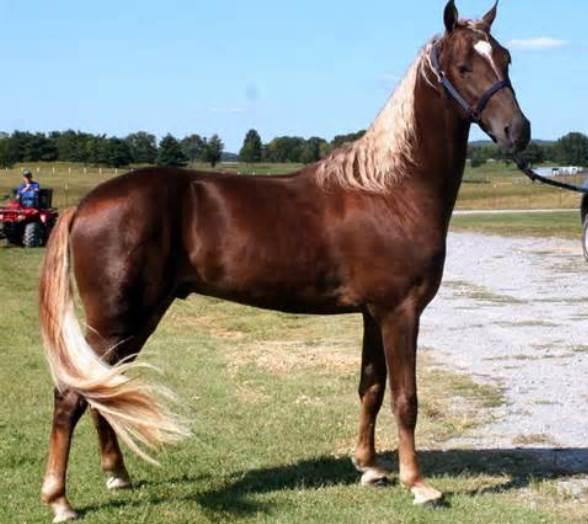
The Tennessee Walking Horse is an American gaited breed prized for one thing above all: comfort in the saddle. Its trademark "running walk" is a smooth, ground-covering four-beat gait that makes long trail days easier on a rider's back and hips, which is a big part of why the breed has spread well beyond its home state. It is generally calm and people-friendly, and it suits distance riding better than most. The breed also carries a genuine welfare controversy around show-ring "soring", and that is worth understanding before you go looking. This profile keeps the horse and the way some people have handled it clearly separate.1, 2
Quick facts: Tennessee Walking Horse (Tennessee Walker)
- Origin: United States, developed in Tennessee1
- Height: commonly around 15 to 16 hands, with some sources giving a broader range up to about 17 hands1, 3
- Weight: often around 410 to 545 kg (roughly 900 to 1,200 lb), varying with size and condition3
- Coat colour: a wide range of solid colours and markings1, 3
- Distinctive feature: a natural four-beat "running walk", inherited and not something you can train into a horse that does not have it1, 4
- Temperament (general): commonly described as calm and people-friendly, though individuals still vary1
- Common uses: trail and pleasure riding, plus showing in gaited classes1
History and Origin
The Tennessee Walking Horse developed in the American South as a practical riding horse, built for long hours in the saddle over uneven ground, with a gait that stays smooth as the speed rises. Over time a mix of horse families contributed to the breed, and selective breeding fixed the running walk as its trademark movement.1
Appearance and Physical Characteristics
Most Tennessee Walking Horses sit in the middle-to-large riding-horse range: solid through the body, with sloping shoulders and a longer outline that suits a ground-covering stride. Height varies by line and by individual, but many adults fall around 15 to 16 hands, with taller horses also seen.1, 3
Colour is not the point of the breed, and you will see plenty of variation: dark bays and blacks, chestnuts, palominos, greys and more. Markings can be minimal or bold.1, 3
The Running Walk
The running walk is a four-beat gait with the same basic footfall pattern as a normal walk, just faster and more ground-covering. The key detail is overstride: the hind foot typically lands ahead of the print left by the forefoot, which gives that long, gliding feel from the saddle. Many horses also show a natural head nod in rhythm with the stride.1, 4
Worth saying plainly, this gait is inherited. Training can improve balance, softness and fitness, but it cannot manufacture a true running walk in a horse that was not born with it.1, 5
Temperament and Personality
The breed is commonly described as calm and people-friendly, and that steadiness is part of why it stays popular for everyday riding. Individuals still vary, so a quiet reputation is a starting point rather than a guarantee. In the saddle, the pairing of a level head and a smooth intermediate gait is what makes these horses easy company on longer days.1
How Tennessee Walkers Are Used
In everyday riding, the breed's reputation rests on comfort and stamina. A smooth intermediate gait can make longer trail days easier on a rider's back and hips, and it is one reason the breed has stayed popular beyond its home region.1
Common, realistic roles include:
- trail and pleasure riding, English or Western tack
- gaited showing, flat-shod or performance divisions depending on the rules
- general riding where a calm, steady horse is valued
Breeding and Training
Good Tennessee Walking Horses are usually the quiet result of sensible selection: parents with a clear natural gait, sound legs and feet, and minds that stay steady under pressure. Training then polishes what is already there, the rhythm, straightness and responsiveness, so the horse can keep the gait without tension or fatigue.
Because the running walk is a natural gait, training that prioritises relaxation and correct conditioning tends to produce the best movement. Heavy-handed methods may produce a look, but they rarely produce lasting soundness.
Soring, "Big Lick" and the Rules Around Them
The horse itself is not the controversy. The controversy is "soring": deliberate pain applied to the lower limbs or feet to exaggerate a horse's action in some show classes. In the United States, soring is illegal under the Horse Protection Act, enforced by USDA APHIS.6
APHIS describes soring as the use of substances, devices and practices that cause pain, distress, inflammation or lameness in order to create a more animated gait, an approach tied particularly to some Tennessee Walking Horse and racking-horse competition settings.6
Regulation also changes over time. As of late January 2026, APHIS announced a postponement of implementation for parts of its strengthened Horse Protection Act rule, with the non-vacated provisions moving to an effective date of 31 December 2026.7
For owners and riders outside that show niche, the practical takeaway is simple: a naturally gaited, flat-shod Walking Horse can be a comfortable, capable trail horse, and an exaggerated, manufactured look should always raise welfare questions.
Health and Lifespan
Tennessee Walking Horses share the same big-ticket health risks as many riding breeds. Two that owners routinely plan around are laminitis and colic, not because they are unique to Walkers, but because they can turn life-threatening quickly.
Laminitis
Laminitis is inflammation and damage within the hoof that can cause severe pain and, in serious cases, destabilise the pedal (coffin) bone. Early signs can include heat in the feet, a bounding digital pulse, reluctance to move, and a characteristic "sawhorse" stance as the horse shifts weight to reduce pressure on the front feet.8
Colic
"Colic" means abdominal pain, and it ranges from mild to a surgical emergency. Signs can include pawing, looking at the flank, repeated lying down or rolling, reduced appetite and reduced manure output. Colic can be fatal, so it is treated as an urgent veterinary problem until proven otherwise.9
A Few Things Worth Knowing
- The running walk is inherited, so no amount of training will build it into a horse that lacks it.5
- Colour has no bearing on the breed standard, so choose for soundness and gait, not markings.
- Famous show-ring names can be part of the breed's story, but they are not a reliable guide to what a horse will be like day to day. The useful questions are closer to home: how sound is this horse, how naturally does it gait, and how was it trained?
The Bottom Line
The Tennessee Walking Horse is best understood as a smooth-travelling riding horse shaped by practical needs: distance, comfort and steady movement. The running walk is real, natural and quietly impressive when it is produced without force. The breed's welfare debates are real too, and they sit alongside the better everyday reality of flat-shod horses doing what they were built for, covering ground calmly.1, 6
References
- Encyclopaedia Britannica, "Tennessee walking horse"
- USDA APHIS, Horse Protection Act (HPA)
- Oklahoma State University, Tennessee Walking Horses
- Wikipedia, Ambling gait (running walk overview)
- Encyclopaedia Britannica, running walk as a natural gait (breed profile)
- USDA APHIS, definition of soring and what the HPA prohibits
- USDA APHIS, "USDA Postpones Implementation of Horse Protection Amendments" (January 28, 2026)
- Virbac Australia, Laminitis in horses & ponies (clinical signs)
- Michigan State University College of Veterinary Medicine, Colic (signs and urgency)

Dog lover and writer at My Pets Australia, sharing practical breed guides and care advice for Australian pet owners.