Swedish Elkhound - Jamthund
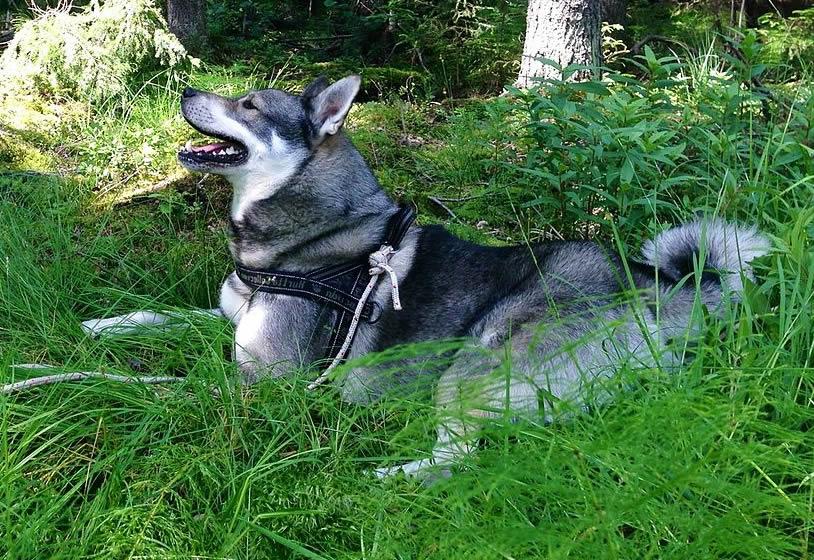
The Swedish Elkhound, known in its homeland as the Jämthund, is a large Nordic hunting spitz built for long, cold forests and serious work. It is loyal to its people, weatherproof, and confident, with a strong hunting drive and a voice it is not shy about using. That working history shapes everything about it: the exercise it needs, the independence it shows, and the way it holds back around strangers. It can make a calm, purposeful companion in the right home. It is also a real commitment of time and daily movement, so it pays to know what the breed actually asks for before you commit.
Quick Facts
- Breed name: Jämthund (Swedish Elkhound)
- Country of origin: Sweden
- Height: males 57 to 65 cm; females 52 to 60 cm at the withers1
- Weight: commonly around 25 to 35 kg depending on sex and build (not fixed in every standard; expect sturdy rather than heavy)2
- Coat: dense double coat with a harsher outer coat and softer undercoat1
- Colour: light to dark grey with characteristic lighter wolf markings on face, chest, belly and legs1
- Life expectancy: often around 12 to 15 years (individual variation applies)2
- Typical work: Nordic hunting spitz, traditionally for large game (not a retrieve-to-hand gundog)
History and Origin
The Jämthund comes from the northern forest regions of Scandinavia. Large hunting spitz-type dogs were used there to locate large game and hold it at bay by barking, steady and persistent, and from a safe distance until the hunter arrived.2
Internationally, the breed is recognised by the Fédération Cynologique Internationale (FCI) as breed number 42 in Group 5 (Spitz and primitive types). Final recognition was recorded in 1954, and the current standard was published in 2019.3
Appearance and Physical Characteristics
In profile, a Jämthund looks built for travel. It has a rectangular body, strong legs, and a coat designed to shed snow and block wind. The double coat sits close to the body, with longer hair on the neck, tail and the back of the thighs.2
Size is one of the easiest ways to tell it apart from similar Nordic breeds. Adult males are typically 57 to 65 cm, females 52 to 60 cm at the withers.1 They are often described as powerful and strongly built, but not heavy or clumsy.
Temperament and Personality
The Jämthund was bred to work at a distance from people, so independence is part of the design. Expect a dog that can think for itself, make its own decisions, and sometimes weigh up whether a cue is worth following in the moment.
Breed descriptions from Sweden emphasise a steady temperament, courage and a strong hunting drive, with the dog working very independently while still being capable of cooperation.2 Many are reserved with strangers at first, and they tend to do best with calm, consistent handling rather than heavy correction.
Is a Swedish Elkhound Right for You?
A Jämthund fits best where life has room to breathe: secure fencing, regular outdoor time, and owners who enjoy training without needing instant compliance. Many will alert-bark, and some will range if given the chance, so management is part of responsible ownership. If your days cannot reliably make space for daily movement and mental work, this is a frustrating mismatch no matter how good the breed looks on paper.
Homes that usually suit the breed include:
- Active households that genuinely like daily exercise in all weather.
- People with experience in spitz or hunting breeds, or the patience to learn.
- Rural or semi-rural settings, or suburban homes with strong containment and structured enrichment.
Training and Exercise
These are not low-output dogs. A bored Jämthund will usually find its own job, often loud, repetitive, and deeply interesting to the dog.
- Exercise: plan on at least 1 to 2 hours of activity most days, plus time for sniffing, exploring and problem-solving games.
- Training style: short, frequent sessions work better than drilling. Use rewards, clear boundaries, and a long line while recall is still under construction.
- Socialisation: early, steady exposure to people, dogs, handling and everyday environments helps reduce wariness later on.
Health and Lifespan
The Jämthund is often described as generally healthy, but hip dysplasia and epilepsy are both known to occur in the breed.1, 2 That makes sensible screening and frank breeder conversations worth the time. Individuals often live around 12 to 15 years.2
Hip dysplasia, in general terms, is a malformation and looseness of the hip joint that can lead to pain and arthritis over time. Signs can include stiffness, reluctance to jump, a bunny-hop gait, or reduced activity, though some dogs hide discomfort until it is advanced.4
Other problems sometimes mentioned online, such as progressive retinal atrophy, may appear in individual lines, but they are not consistently listed by Swedish breed information pages in the way that hip dysplasia and epilepsy are.2 If eye disease worries you, ask what eye testing is done in that breeder's program and request documentation.
Health checks to discuss with a breeder
- Hip assessment results for both parents, and how often hip issues show up in their lines.
- Any history of seizures or epilepsy in the pedigree.
- How puppies are raised (handling, noise exposure, surfaces, time outdoors, stock or animal exposure if relevant).
- What support the breeder offers if the dog develops a serious inherited condition.
Grooming and Care
The coat is designed to look after itself in harsh weather, but it still needs routine attention. Weekly brushing usually keeps it tidy; during seasonal shedding, more frequent brushing helps pull out undercoat before it mats and compacts.1
Basic maintenance still matters with an easy coat:
- Ears: check regularly, especially if your dog swims or has allergies.
- Nails: trim before they start clicking on hard floors.
- Teeth: daily brushing is considered the gold standard for at-home dental care; ask your vet for a realistic routine you will actually keep up.5
Choosing a Breeder or Adoption Pathway
If you are buying rather than adopting, the safest approach is slow, practical due diligence. Meet the breeder in person, meet the litter with the mother, and do not accept pressure to pay deposits for a puppy you have not seen. RSPCA advice for buying pets online is blunt for a reason: do not buy sight unseen, and treat "delivery can be arranged" as a red flag rather than a convenience.6
Red flags to watch for
- Won't let you visit, or won't show you where the dogs are kept.
- Won't provide written proof of health testing they claim has been done.
- Pushes fast payment, shipping, or only-one-left urgency.
- Sends puppies home before 8 weeks of age (a welfare concern, and also a common scam signal).6
The Bottom Line
The Swedish Elkhound (Jämthund) is a capable, weatherproof working spitz: loyal to its people but not clingy, intelligent but not automatically obedient. In the right home, with steady training and real daily exercise, it can be a calm companion with a strong sense of purpose. In the wrong home, it tends to fill the silence with movement and noise.
References
- Swedish Kennel Club (SKK), Jämthund (breed information)
- Swedish Kennel Club (SKK), Jämthund (about the breed)
- Fédération Cynologique Internationale (FCI), Jämthund (No. 42) listing and standard publication details
- American Kennel Club, Hip dysplasia in dogs (overview of signs and management)
- Australian Veterinary Association (VetVoice), Dental checks and brushing guidance
- RSPCA Australia Knowledgebase, Red flags when looking for a dog or cat online
- RSPCA Australia Knowledgebase, Safe ways to look for a new companion animal online
- Dogs Australia (ANKC), Breed standards index (general guidance)

Dog lover and writer at My Pets Australia, sharing practical breed guides and care advice for Australian pet owners.