Sulphur-Crested Cockatoo as pets
The sulphur-crested cockatoo is one of Australia's most recognisable parrots: a big white bird with a bright yellow crest, a loud voice, and enough intelligence to mimic speech and household sounds. Kept well, it is affectionate, curious and closely bonded to the people it lives with, and it can stay with you for decades. It is legal to keep in much of Australia provided the bird comes from a lawful source, though the exact rules vary by state and territory. It is also a serious commitment: these are loud, messy, long-lived birds with large daily needs. The notes below cover what matters most in Australian homes, from legal sourcing and housing to diet, enrichment, training and health.
Appearance and Physical Characteristics
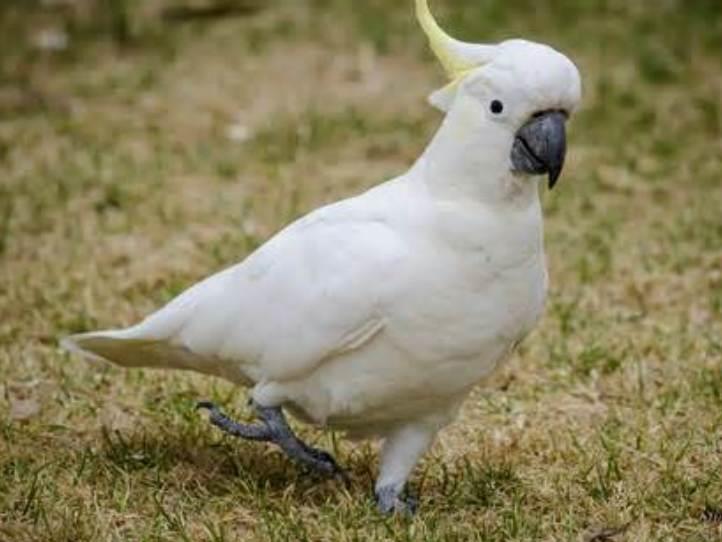
The sulphur-crested cockatoo (Cacatua galerita) is a large white parrot with a forward-curving yellow crest that it raises when excited or alarmed.1 Adults are commonly around 45 to 50 cm long, with some sources noting a wider range up to about 55 cm.1, 2 They are powerful, heavy-bodied birds with a strong beak built for chewing, which shapes almost everything about keeping one at home.
Temperament and Personality
These are intelligent, intensely social birds, and with regular handling and routine they tend to become strongly people-focused.4 In the wild they move in noisy groups and spend long hours travelling, foraging, chewing and watching what others are doing. In a home those same instincts show up as constant curiosity and a strong drive to interact with everything around them, usually with the beak. Many birds learn to mimic household sounds and some speech, but this is best treated as a by-product of a well-stimulated bird rather than a promise. What is far more reliable is volume: their calls carry, and the neighbours will hear them.4
Before You Buy: Legality and Sourcing in Australia
Legality comes first. In Australia it is illegal to trap or take native birds from the wild, so a sulphur-crested cockatoo should only come from a lawful source, for example a licensed seller where one is required, with paperwork or receipts showing where the bird came from.5, 6
Rules vary by state and territory. NSW, for instance, lists sulphur-crested cockatoos among the native birds that can be kept without a biodiversity conservation licence, but the bird must still be lawfully sourced and not taken from the wild.6 Queensland sets out licensing frameworks for keeping protected native animals and stresses buying only from licensed sellers where required.7 If you are moving between states, check the destination state's requirements before you commit.
Is a Sulphur-Crested Cockatoo Right for You?
For most households, honestly, this is a big ask. You can shape how the home responds to noise, but you cannot train a sulphur-crested cockatoo to be a quiet bird.4 Expect peak calling around morning and late afternoon, plus bursts whenever something changes: visitors, a dog next door, a vacuum cleaner, a flock flying over. If you live in close quarters, plan ahead by choosing the most sound-buffered part of the home for the main enclosure, building a predictable routine around sleep and meals, and using foraging and training to occupy the loud, restless parts of the day.
Some cockatoos live well in family homes, but supervision is essential. These birds are powerful, fast and easily startled, and a warning bite from a large cockatoo can do real damage. Good matches usually involve an adult who stays the primary carer and trainer, clear rules for children (no teasing, no fingers through bars, no sudden face-level contact), and a bird that has been gently socialised to calm handling over time.
Care and Housing
Space is the first requirement. A sulphur-crested cockatoo needs room to move, climb, and fully extend and flap its wings without striking bars or furniture, because a cramped cage tends to produce less movement, more frustration and more self-directed behaviour, including feather damage. Set the living space up around three priorities:
- Security: strong locks and heavy-duty fixtures. These birds test hinges, latches and clips, patiently.
- Variety: multiple natural perches of different diameters, plus safe chewable materials that can be destroyed.
- Predictable routine: consistent sleep and darkness, and regular out-of-cage time for supervised climbing and flight where safe.
Aviary-style housing can work well if it is predator-proof and weather-safe and paired with daily human contact. Sunlight matters, but so does shade and the ability to retreat from heat.
Enrichment is not optional for this species. Sulphur-crested cockatoos are built for hours of daily foraging and chewing, and enrichment is how you stop boredom turning into noise, destruction or self-harm. Useful enrichment tends to be simple and replaceable: pellets hidden in paper, cardboard, safe untreated branches and puzzle feeders; destructible toys rotated often (wood, paper, vegetable-tanned leather); daily climbing and flapping space with supervised flight time if possible; and calm social contact spread through the day rather than one intense burst.
Training works best when it is quiet and repeatable: short sessions, clear cues, and rewards the bird values. Reward-based handling helps with everyday tasks such as stepping up, going back into the cage, accepting a towel, or travelling safely to the vet. Aim to shape cooperation rather than win a standoff, because cockatoos are observant and learn patterns fast, including the ones you did not mean to teach.
Diet and Nutrition
Seed mixes alone are not a diet. In the wild sulphur-crested cockatoos feed largely on plant material such as seeds, nuts, fruits and other vegetation, with some variation by season and location.1 For pet birds, many avian veterinarians and welfare organisations recommend building the diet around a formulated pellet, then adding vegetables and other fresh foods, while treating high-fat foods (including many nuts and seed mixes) as controlled extras rather than the base. This helps reduce long-term nutritional disease in captive parrots.8
- Base: quality pellets appropriate to the bird's size and life stage.
- Daily fresh foods: a wide spread of vegetables (leafy greens, cruciferous veg, squash, capsicum), plus smaller amounts of fruit.
- Controlled extras: nuts and seeds, often best used as training rewards.
- Fresh water: changed daily, and again if it has been fouled with food.
Calcium and vitamin balance is best handled through an appropriate pellet and vet guidance rather than guessing with supplements. If your bird is laying, growing, unwell, or on a seed-heavy diet, ask an avian vet for a tailored plan.
Grooming and Care
Cockatoos produce a fine feather dust, so regular bathing (a mist or a shallow dish, depending on what the bird prefers) supports feather condition and helps keep dust down in the home. Nails and beak should be monitored, but routine beak trimming is not a standard home job. Beak overgrowth can signal diet or health problems and is best assessed by an avian veterinarian.
Wing clipping is a complex welfare decision. It can reduce flight-related accidents in some homes, but it can also increase falls, reduce exercise, and remove an important confidence tool for a nervous bird. Discuss your household risks with an avian vet or an experienced behaviour professional before making changes.
Health and Lifespan
Cockatoos hide illness well, so a bird that looks a bit off can be genuinely unwell. It pays to establish a relationship with an avian veterinarian early and to schedule routine health checks. These are also extremely long-lived birds: captive lifespans of 70 years or more are commonly reported, with shorter lifespans typical in the wild.1, 3 Common issues seen in pet cockatoos include:
- Feather damaging behaviour (including plucking): often linked to boredom, stress, disrupted sleep, pain, or underlying medical disease.
- Nutritional disease and obesity: more likely on seed-heavy, high-fat diets with limited exercise.
- Beak and nail overgrowth: can reflect low wear (not enough chewing and perching variety) or health and diet issues.
A Few Things Worth Knowing
- You cannot legally take in a wild cockatoo that visits your yard, even if it seems tame or persistent around people.5
- Whether you need a licence depends on your state or territory, and the bird must always be lawfully sourced.5, 6
- Talking and mimicry are a by-product of a well-stimulated bird, not a guarantee that comes with the species.4
The Bottom Line
A sulphur-crested cockatoo is not a small, decorative pet. It is a long-lived, high-contact, high-noise native parrot that needs space, routine and daily work: training, cleaning, enrichment and thoughtful feeding. Kept well, the relationship can be steady and richly interactive over many years. Kept casually, the problems build quietly and then become hard to ignore. Go in knowing what the bird actually needs, and it is a decision you can make with your eyes open.
References
- Australia Zoo · Sulphur-crested Cockatoo
- NSW Department of Education (Field of Mars EEC) · Sulphur-crested cockatoo fact sheet
- Oakvale Wildlife Park · Sulphur-crested Cockatoo
- Australian Geographic · Sulphur-crested cockatoos: An Australian icon
- NSW Environment and Heritage · Birds you don't need a licence to keep (and warning about taking birds from the wild)
- NSW Department of Climate Change, Energy, the Environment and Water · Birds you don't need a licence to keep (publication)
- Queensland Government · Licences to keep, use or display native animals
- RSPCA Knowledgebase · What should I feed my pet bird?

Dog lover and writer at My Pets Australia, sharing practical breed guides and care advice for Australian pet owners.