Steer Wrestling
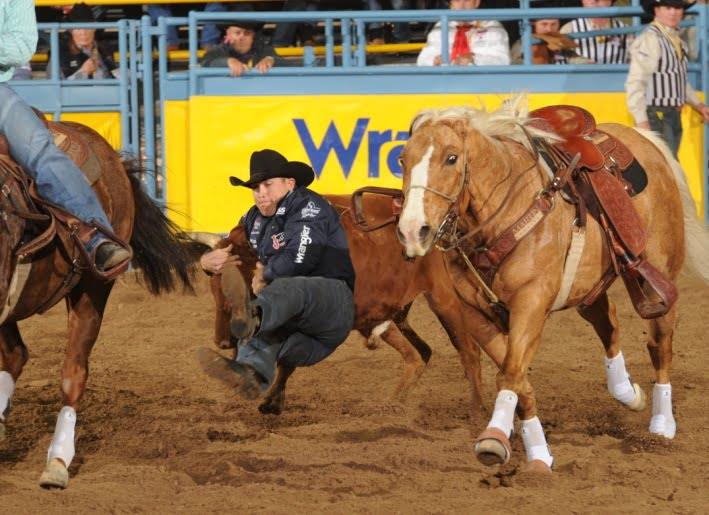
Steer wrestling, also called bulldogging, is one of rodeo's fastest timed events: a mounted competitor draws level with a running steer, drops off the horse at speed, grabs the horns, and wrestles the animal onto its side. The whole run is over in seconds, and when it is done well it can look almost simple. It is not. It is also one of the more scrutinised rodeo events on animal-welfare grounds, and in Australia the rules around it vary by state and organiser. This guide covers what actually happens in the arena, how it is judged, and the welfare questions that follow it here.1, 2
What Steer Wrestling Is
It is a timed event with a simple goal and a narrow margin for error. A mounted competitor accelerates alongside a running steer, dismounts while still moving, takes hold of the steer's horns, and uses leverage and body position to bring it down onto its side. The run only counts as complete when the steer is down with its head and all four feet pointing in the same direction.4, 5
Most rodeos run the event with two riders. The steer wrestler is the one who dismounts and makes the throw. The hazer rides on the opposite side of the steer to help keep it running straight, which reduces the sharp veers that end runs abruptly and raise the risk of injury.4, 5
Where It Came From
Modern steer wrestling developed through Wild West show performance and rodeo in the United States. Bill Pickett, a Black American cowboy and showman, is widely credited with introducing and popularising bulldogging, the technique that later evolved into the event seen today.1
How a Run Works
Setups differ slightly between organisers, but the sequence is consistent across professional rodeos. The steer is released first to get a head start, controlled by a barrier system. The steer wrestler's horse then draws level while the hazer holds a parallel line on the other side. The competitor slides down off the moving horse and takes the horns, then uses leverage, foot placement, and timing to bring the steer down. Time stops when the steer is down with its head and all four feet pointing the same way.4, 5
The event is decided on time, with penalties added for rule breaches. A common one is a 10-second penalty for a broken barrier, applied when the competitor leaves too early and does not give the steer its required head start. Many rule sets also require the steer to be on its feet and moving appropriately before the throw is completed. If a run does not meet the stopping and position requirement, it may be scored as no time.4, 5
The Gear You Will See
Steer wrestling uses less equipment than the roping events, but what is used is specialised. The horse carries a saddle, breast collar, bridle, and often protective leg gear, all chosen for fast acceleration and controlled tracking. The timed-event chute area and its barrier system, known as the box, create the steer's head start and standardise the start across competitors. Unlike tie-down roping, steer wrestling does not involve tying the animal's legs, a detail that general rodeo summaries often get wrong.4
The Horse's Job
The horse is doing far more than carrying the rider. A good steer-wrestling horse runs close enough for a clean horn catch without crowding the steer into a sudden swerve, and it keeps moving forward after the dismount so the rider is not tangled up in a moving wall of muscle and tack. The hazer's horse matters just as much, mirroring the steer's line from the other side to keep the run straight and predictable.4, 5
Physical Demands and Risks
This is short, explosive work: sprint speed, a precision dismount, then a heavy grapple with boots digging into dirt while the steer's momentum keeps pushing forward. Riders can be injured by falls, horn contact, missteps under the steer's shoulder, or a horse clipping the line at the wrong moment. For the steer, the risk sits in the chase, the horn hold, and the force of the throw and landing, especially if the animal goes down poorly or its neck is twisted past what it can absorb. Welfare codes and event rules aim to limit the worst handling, but the risk cannot be removed entirely.2, 7
Welfare Rules and Oversight in Australia
In Australia, animal-welfare requirements for rodeos come through a mix of state and territory law and codes of practice, so the rules depend on where the event is held. These codes can set specific conditions for steer wrestling and chute dogging, including a minimum steer weight, limits on how many times an animal can be used in a day, and explicit bans on putting fingers in sensitive areas such as the eyes, nose, or lips. In Queensland, for example, the state rodeo code of practice includes steer-wrestling provisions.2
If you are attending or competing, it is worth checking which code the event is operating under and whether a veterinarian is engaged, because requirements and enforcement differ by jurisdiction and organiser.2
The event also sits inside a broader debate about rodeo. Animal-welfare organisations argue that the chase, noise, handling, and takedown can cause fear, distress, and injury, and they call for stronger restrictions or an end to certain events. Rodeo bodies and participants point to their rule sets, animal-use limits, and handling restrictions, and frame the event as a test of horsemanship and timing rather than brute force alone.2, 3, 4, 6
If You Want to Get Involved
Start by grounding yourself in the rules and welfare requirements before you think about speed. Watch in person first and focus on the lines: how the hazer holds the steer straight, how close the horse runs, and how the dismount is timed. Ask which welfare code applies at your local rodeo, since organisers should know. If you decide to take part, train only under experienced supervision, because the hazard is not theoretical and small technique errors have big consequences at speed.2, 4
The Bottom Line
Steer wrestling is a short burst where two horses and two riders shape a straight line long enough for a clean dismount and a controlled throw. If you are watching, look for straight tracking, minimal scrambling, and a clean finish. If you are considering taking part in Australia, treat the rule book and the welfare code as part of the sport rather than paperwork on the side.2, 4
References
- Encyclopaedia Britannica, Bill Pickett (introduced bulldogging/steer wrestling)
- Business Queensland, Rodeo code of practice (includes steer wrestling and chute dogging conditions)
- RSPCA Australia, Calf roping in rodeos (notes broader welfare concerns across rodeo events, including steer wrestling)
- PRCA, 2022 PRCA Media Guide (steer wrestling format and timing finish definition)
- PRCA Jr. Rodeo, Let's Learn About Rodeo (steer wrestling basics, hazer role, barrier penalty)
- RSPCA Australia, "A cruel spectacle, why you should never attend a rodeo" (welfare critique including steer wrestling)
- American Veterinary Medical Association (AVMA), Rodeo policy (animal welfare and veterinary oversight considerations)
- Bennington PRCA Rodeo, Steer wrestling overview (timing and barrier penalty summary)
- Canyonlands PRCA Rodeo, Rodeo events (steer wrestling finish position and hazer explanation)

Dog lover and writer at My Pets Australia, sharing practical breed guides and care advice for Australian pet owners.