Standardbred horses
The Standardbred is the horse of harness racing, a purpose-built breed developed in the United States in the 1800s to trot or pace at speed while pulling a driver in a cart. Off the track they have become one of the most sensible and affordable riding horses you can find, valued for a calm head, plenty of forward, and a willingness to learn a new job. Thousands come out of racing every year, so a good one is rarely hard to source. That is the appeal, and it is also the honest catch: most Standardbreds you meet will be ex-racers who need retraining, and like any horse they are a serious daily commitment.
History and Origin
The Standardbred is a purpose-built harness racing horse, developed in the United States during the 19th century.1 Early breeders selected for speed in harness and reliability over the mile. Most modern Standardbreds trace back to a small number of influential foundation bloodlines. The key name in the breed's story is Hambletonian 10 (foaled 1849), widely described as the ancestor of most present-day harness racers.2 The breed name reflects the early standard required for registration, which was linked to meeting a set time over a mile.1
Appearance and Physical Characteristics
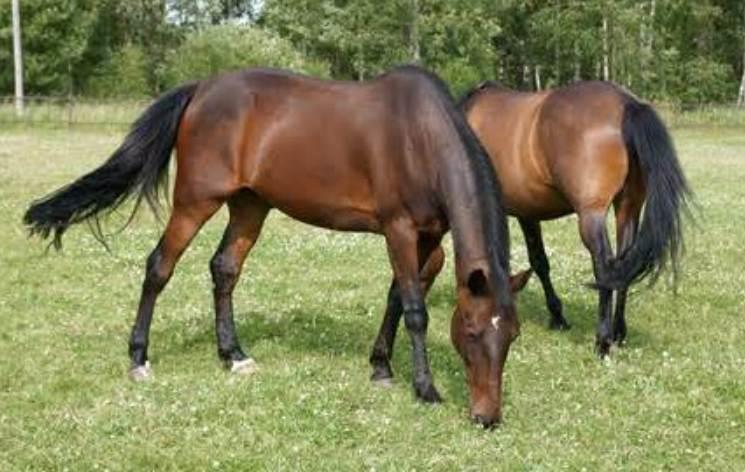
Standardbreds are medium-sized horses built for sustained, efficient speed in harness. Compared with a Thoroughbred they are commonly a little smaller, with a longer, lower outline and heavier bone, traits that suit pulling a sulky at pace.1 Most stand around 15 to 16 hands (about 152 to 163 cm) and weigh roughly 410 to 450 kg, though individuals vary by type and condition.1
Colour is usually solid. Bay is especially common, but brown, black, chestnut and grey all appear in the breed.1
Temperament and Personality
The calm, sensible head is the reason so many Standardbreds find second careers. Many have been handled daily from a young age and taught to work in busy, high-stimulation environments, which often shows up as steadiness and a willingness to keep moving forward once they understand the new job.
Temperament is still individual, though. Training history, management, pain, and time since racing can all change the way a horse presents. A calm horse can become reactive when confused or sore, and a sharp horse can soften quickly with consistent handling and clear boundaries.
Is a Standardbred Right for You?
For a rider who wants an affordable, level-headed horse and does not mind putting in the groundwork, a Standardbred is one of the best value options in Australia. They are widely rehomed for pleasure riding and a range of ridden sports, depending on training and suitability.8 What they are not is a shortcut. A racing record does not predict how a horse will go as a pleasure horse, and many ex-racers were never ridden at all. If you want a horse that is already schooled under saddle and ready to hack out tomorrow, buy one that has already been retrained, or budget for the time and help to do it yourself.
Training and Exercise
Retraining a Standardbred for life beyond racing is mostly a process of new balance and new cues. Some will already be broken to saddle, others will be green even if they look worldly. Quiet, consistent handling tends to work best: short sessions, plenty of repetition, clear boundaries, and a lot of walking.
The one detail that shapes everything is gait. Harness Standardbreds race in two styles, and it affects how a horse balances and what it finds easy under saddle.7 Trotters move in diagonal pairs (left front with right hind, and the reverse). Pacers move the legs on the same side together (left front with left hind, then the right pair). In Australia, pacers make up the majority of harness races,7 so many off-the-track horses here carry pacing muscle memory and may have worn pacing hopples in training. For a pacer, retraining includes helping the horse find a comfortable trot under saddle. It is less a battle to remove the pace than a matter of building strength, balance and understanding over time.
It helps to know the racing background too. In Australian harness racing the horse pulls a driver in a two-wheeled cart, called a sulky, gig or bike, over distances that typically run from about 1,609 metres (one mile) up to around 2,650 metres, with some longer feature events.7
Health and Lifespan
You will often see broad claims that Standardbreds are prone to respiratory or joint problems. The accurate picture is quieter: any horse trained and raced hard can carry wear and tear, and some will have airway irritation from the racing environment, but breed alone does not guarantee chronic issues. With good care many horses live around 25 to 30 years, sometimes longer.6
When assessing an individual, the most useful checks are practical:
- Breathing at rest and after work: cough, excessive recovery time, noisy breathing.
- Soundness in circles and on uneven ground, not just a straight-line trot-up.
- Saddle fit and back comfort, since many were never ridden in racing life.
- Behaviour changes such as reluctance to go forward, difficulty standing, or sudden spookiness, which are often worth ruling out pain for.
Feet deserve their own note. Harness horses can arrive with feet shaped for racing plates, long toes, or imbalances that made sense on a track but do not suit uneven ground or ridden work. A steady farrier schedule and a gradual conditioning plan matter more than any single perfect trim. Regular dental checks matter as well, particularly for horses moving into ridden work, where contact and acceptance of the bit can be affected by sharp points or mouth pain.6
Diet and Nutrition
A Standardbred does not need special feed because of the breed name. Like any horse, they do best when diet, workload and health care are matched to the individual. For most horses the foundation is forage, from pasture or hay, with additional feed based on body condition, work level and any health constraints.6 Many ex-race Standardbreds are used to higher-energy rations, so it can take time to settle onto a forage-first routine without losing condition or becoming fussy.
A Few Things Worth Knowing
- Harness racing has produced some widely recognised champions. Niatross is remembered for a 1:49.1 mile time trial at Lexington's Red Mile in October 1980, reported at the time as a world record time trial mile and the first under 1:50.4
- Cam Fella was another standout pacer, with career earnings listed at just over US$2 million and multiple major honours.5
- One point to correct from older write-ups: Niatross's record run was in 1980, not 1981, and claims that it still stands today depend on the specific record category being discussed.4
- For showing, registration or track-to-hack guidance in Australia, the pleasure and performance associations are the most practical first stop. In Victoria, SPPHAV covers registering Standardbreds and partbreds for performance and breed competition.8 In New South Wales, SPPHA NSW supports Standardbreds and promotes life-after-racing initiatives.9
The Bottom Line
The Standardbred is a genuinely good all-rounder: steady, affordable, and easy to find through rehoming, with a temperament that rewards patient handling. The trade-off is retraining. Most come off the track needing time, consistent work, and attention to feet, teeth and condition before they settle into a new life. Take that on with clear eyes and you get a lot of horse for the money.
References
- Encyclopaedia Britannica, "Standardbred"
- Encyclopaedia Britannica, "Hambletonian (Hambletonian 10)"
- Wikipedia, "Standardbred" (overview of breed history and the "standard" registration concept)
- UPI Archives (2 Oct 1980), Niatross world record time trial mile report
- Wikipedia, "Cam Fella" (career summary and earnings)
- WebMD, "Horse Lifespan and Health Tips" (average lifespan, forage-based diet note)
- Wikipedia, "Harness racing in Australia" (Standardbreds, sulky, pacing and trotting, typical distances)
- Standardbred Pleasure & Performance Horse Association of Victoria (SPPHAV), official website
- Standardbred Pleasure & Performance Horse Association NSW (SPPHA NSW), official website

Dog lover and writer at My Pets Australia, sharing practical breed guides and care advice for Australian pet owners.