Sorraia and Garranos Horse
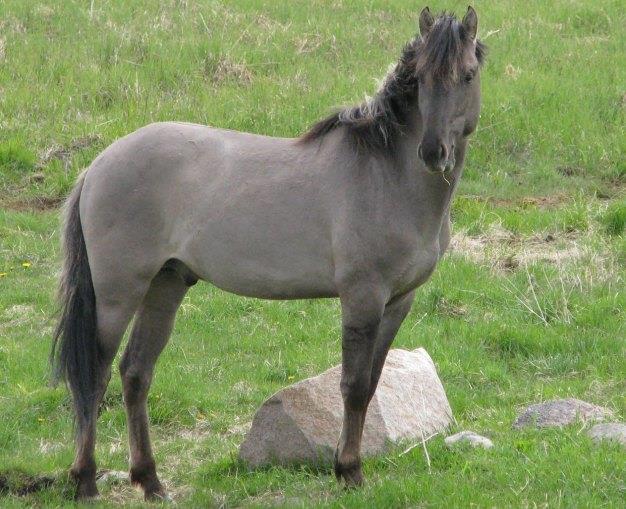
The Sorraia and the Garrano are two rare Portuguese horse breeds that people often mix up, partly because both are small, old, and Iberian. Each has a distinct look worth knowing: the Sorraia is a lean, dun-coloured horse marked with a dorsal stripe and faint leg barring, while the Garrano is a compact, hardy mountain pony from northern Portugal. Both survive today largely thanks to conservation breeding, so most of the interest in them is about identification, provenance, and rarity rather than sport. This guide sets out where they come from, how to tell them apart, and what "endangered" actually means in practice. It also covers what to check before assuming a horse in Australia is genuinely one of these breeds.
Quick Facts at a Glance
Sorraia
- Origin: Portugal (Sorraia river basin, Iberian Peninsula)1, 2
- Typical height: small horse, commonly around 13 to 15 hands (varies by line and registry)1
- Coat: usually dun or grulla with primitive markings (dorsal stripe, leg barring), typically little or no white1
- Distinctive features: lean, leggy build, convex profile, primitive markings1
- Status: rare, conservation breeding focus due to a very small global population1, 2
Garrano
- Origin: northern Portugal, with related types across the north-west of the Iberian Peninsula3
- Typical height: a small horse or pony type, commonly around 12 to 13 hands (many adults under 130 cm at the wither)3
- Coat: many colours occur, bay and black are common, white markings may occur but are not required3
- Distinctive features: compact, hardy, sure-footed, shaped by rough mountain country and extensive grazing4
- Status: listed as at-risk or endangered in international reporting, with ongoing management and breeder programs3, 5
History and Origins
The Sorraia is a rare Iberian breed tied to the Sorraia river basin in Portugal. Its survival owes a lot to one person: the early 20th-century Portuguese zoologist Ruy d'Andrade, who documented and promoted the remnant population when numbers were dangerously low.1, 2
The Garrano is a traditional small horse of northern Portugal, long kept in mountainous regions where the horses live much of the year on open range. In breed histories and genetic comparisons, Garranos are often grouped with the other "Celtic" pony types of Atlantic Europe.3
Appearance and How to Recognise Each Breed
Sorraia: the primitive-marked Iberian horse
Sorraias look spare and efficient rather than bulky, with a lean body, good withers, a slim neck, and a noticeably convex profile. Colour is one of the most reliable clues: usually dun or grulla, often with a clear dorsal stripe and leg barring, and typically minimal white.1
Those zebra-striped legs can be striking, but they are not unique to Sorraias. What matters is the whole pattern: primitive markings paired with the breed's overall type and history, and ideally studbook documentation if you are dealing with breeding animals.
Garrano: compact, mountain-bred, and practical
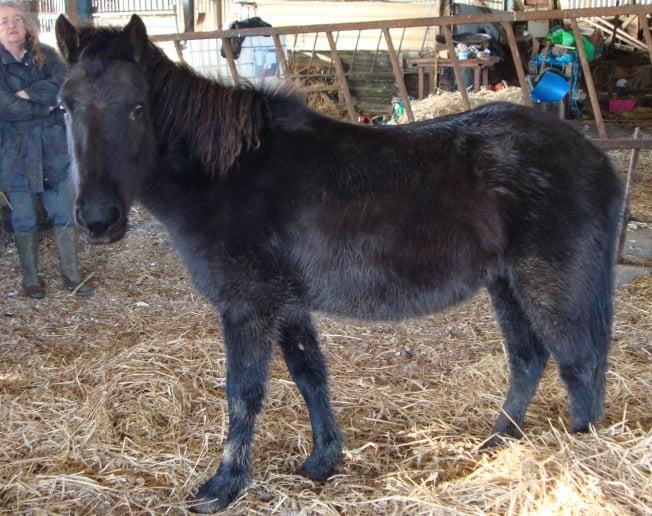
Garranos are generally smaller than people expect, closer to a sturdy pony than a riding-horse height. They are built for steep ground and long days, with tough feet, a compact frame, and an economical way of moving that suits rough pasture and sparse feed.3, 4
Coat colour is more variable than in the Sorraia. Bay and black are often reported, but other colours occur, so colour alone is not a reliable identifier.3
Temperament and Day-to-Day Behaviour
Both breeds were shaped by environments that reward caution and efficiency. In practice that shows up as alertness, strong self-preservation instincts, and a tendency to think before they move. With calm, consistent handling, many individuals become steady and responsive, though they are not bred for the ultra-soft, highly managed temperament seen in some modern sport-horse programs.
One point on language: these are domestic breeds, even when some herds live extensively on open range. "Wild" gets used casually here, but it can blur real welfare and handling expectations.4
What They Are (and Aren't) Used For
These are not competition horses in the mainstream sense. Individual Sorraias and Garranos can be trained for ridden work, but the breeds are far more associated with practical riding, trekking, extensive grazing, and conservation programs than with racing, high-level dressage, or show jumping.4
- Sorraia: conservation breeding, light riding, and historically rural work such as herding and general farm tasks (depending on region and era)1, 2
- Garrano: traditional mountain horse, trekking and leisure riding, still managed in extensive systems in parts of Portugal, with contemporary projects seeking practical roles including grazing for fuel reduction4, 5
Breeding and Preservation: What "Endangered" Means Here
For both breeds, the main conservation challenge is not just headcount. It is the small breeding base and the difficulty of maintaining genetic diversity over time without drifting into inbreeding or losing lineages. That makes careful studbook management, planned matings, and long-term breeder cooperation more important than raw numbers.2
Sorraia conservation is usually described in terms of a very small global population and intensive genetic management needs. Academic work has highlighted how limited breeding numbers affect genetic variability and long-term viability.2
The Garrano is listed as at risk or endangered in international reporting, and public discussion in Portugal has focused on population decline, changing land use, and the need to keep the breed economically and socially useful so it can survive.3, 5
In Australia: Before You Assume They're Common Here
You may see claims that both breeds "have become popular in Australia", but there are no reliable, Australia-specific population figures to back that up. These are niche breeds internationally, and outside Europe you are usually dealing with small private herds, limited breeding options, and import constraints.
If you are trying to confirm whether a horse in Australia is genuinely Sorraia or Garrano, rather than an "Iberian type" or a lookalike, put the paperwork first: studbook or registry details, microchip and ID, and a clear provenance trail. As with any imported breed, ownership and movement can also depend on state and federal biosecurity rules, so check the relevant authority if you plan to import.
Training and Care
Basic care is not exotic: good pasture management, safe fencing, regular hoof care, dentistry, parasite control, and vaccinations suited to your area. What changes with rare, hardy breeds is the management style, and many individuals do best with clear routines and calm, low-drama handling.
- Start slowly with new horses, especially those raised extensively: short sessions, consistent cues, plenty of quiet repetition.
- Prioritise feet and leading manners early. Small horses can still be very strong.
- Feed for the animal in front of you. Many hardy types hold condition easily, and obesity can become the hidden problem.
- Use a veterinarian and an experienced trainer when re-starting horses that have had minimal handling.
Comparing Them With Other Iberian Breeds
Sorraia and Garrano are often called "primitive" or traditional Iberian types, but they are not interchangeable with larger, more widely distributed Iberian saddle breeds such as the Lusitano. If you are choosing a horse for a specific sport or size requirement, do not rely on the general label "Iberian". Start with mature height, conformation, and temperament, then work back to breed suitability and documentation.
Future Prospects and Challenges
The outlook for both breeds rests on slow, steady work: stable breeding programs, accurate record-keeping, and enough real-world roles that owners can justify keeping them. Habitat change, fragmented breeding populations, and the plain economics of horse ownership remain ongoing pressures.2, 5
Are Sorraia and Garrano the same breed?
No. They are different Portuguese breeds with different histories and typical type. The Sorraia is strongly associated with dun or grulla colouring and primitive markings. The Garrano is a northern Portuguese mountain pony type with more colour variation and a generally smaller height.1, 3
Are they wild horses?
No, they are domestic breeds. Some Garrano herds live extensively and may look wild because they range freely for long periods, but they are managed animals, not a separate wild species.4
Why does conservation focus on genetics, not just numbers?
When a breed has few breeding animals, the risk of inbreeding rises and genetic diversity can shrink quickly. That can affect long-term health and fertility even when the headcount looks stable.2
References
- Sorraia (breed overview, characteristics and history), Wikipedia
- Cavalo do Sorraia, uma raça ameaçada: medidas de conservação e gestão genética (University of Lisbon repository, 2008 thesis)
- Garrano (breed overview, height and FAO risk listing), Wikipedia
- Portugal efforts to save the Garrano pony breed (reporting on modern management and threats), The Guardian
- FAO Domestic Animal Diversity Information System (DAD-IS), Food and Agriculture Organization of the United Nations
- Endangered Equine Alliance (rare equine conservation context), The Livestock Conservancy
- Animals (peer-reviewed journal, equine genetics and conservation literature), MDPI
- Livestock Science (peer-reviewed journal, animal genetic resources and conservation literature), ScienceDirect

Dog lover and writer at My Pets Australia, sharing practical breed guides and care advice for Australian pet owners.