Society Finch (Bengalese Finch)
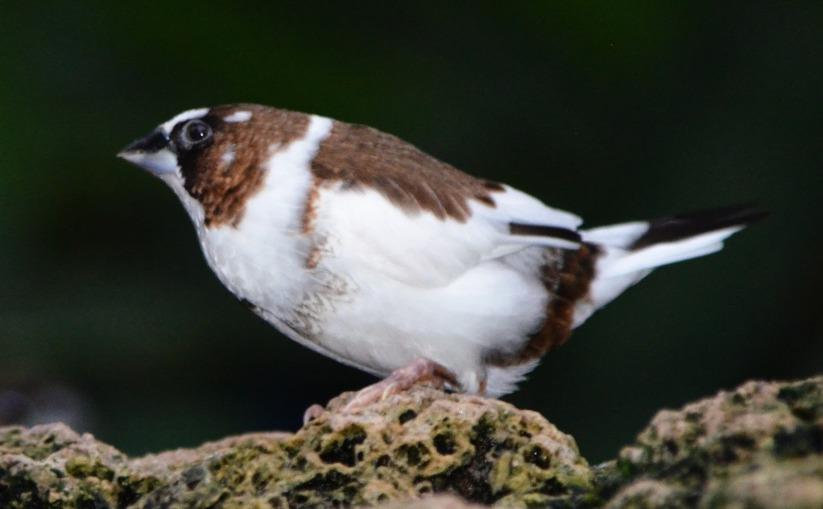
The Society finch, also called the Bengalese finch, is a small, hardy aviary bird and one of the easiest finches to keep. It is sociable to the point of being almost impossible to keep alone, it tolerates living near people, and it breeds so readily that most keepers end up with more chicks than they planned. In Australia it is legal to keep across every state and territory, and it is one of the most common finches in local aviaries. The trade-off is that tiny finches can slip from fine to unwell quickly when housing or hygiene is off, so the everyday basics matter more than they look. This guide covers what the bird actually is, what to expect from its size and behaviour, and how to set up care that keeps the birds steady and breeding under control.1, 2
Quick Facts (Society finch / Bengalese finch)
- Scientific name: Lonchura striata domestica (domesticated form linked to the white-rumped munia)1, 6
- Adult size: commonly around 10 to 12 cm (varies with strain)3
- Adult weight: often reported roughly 10 to 13 g (individuals vary)3
- Colours: many domestic colour forms, not one fixed wild pattern1
- Temperament: strongly social, usually does best in pairs or small groups2
- Breeding: readily breeds in captivity, may nest frequently if given nesting cues2, 3
History and Origin
The Society finch is a domesticated bird kept around the world in aviculture and in research. It is closely associated with the white-rumped munia (Lonchura striata) and is generally described as a domesticated form rather than a naturally occurring wild population you can point to on a map.1, 6 That domestic history explains two of its most useful traits: it is typically comfortable living near people, and it breeds with very little encouragement, sometimes more than its keeper intended.2, 3
Appearance and Physical Characteristics
Society finches are compact, light birds with a neat, conical beak built for husking seeds. Because they have been selectively bred for generations, plumage varies widely, and fawn, pied, brown, white and other forms are all common. Descriptions like white head and yellow body apply to particular strains, not to the species as a whole.1
Temperament and Personality
These are busy, chatty little birds. In a settled aviary they move in short darts and quick hops, returning again and again to a favourite perch. They are most comfortable with company, and a bonded pair or a small compatible group in a flight tends to be calmer and more naturally active than a lone bird.2, 4
Song is part of the appeal, though one claim needs correcting. Society finches are used in research on song learning and can pick up complex song patterns, but they do not talk in the parrot sense, and the idea that they mimic human speech is overstated.5, 7
Is a Society Finch Right for You?
For a first aviary bird, they are one of the safer choices. They are undemanding, they are hardy, and they are affordable and widely available in Australia. What they are not is a hands-on pet: they are watch-and-enjoy birds, not birds that sit on your finger, and they need at least one companion of their own kind. If you provide a nest and nesting material, expect chicks, so decide up front whether you want to breed. If you want a single tame bird that interacts with you, this is not the species for that.
Care and Housing
Finches are horizontal flyers. A wider enclosure is more useful than a tall one, because width lets them do the short, repeated flights their bodies are built for.4 Aim for a setup that supports clean feet, clean air, and predictable routines:
- Perches: use a mix of diameters and textures, with natural branches ideal, so the bird is not loading the same pressure points all day. Avoid abrasive sandpaper style perches.8, 9
- Flooring: keep it dry and easy to clean, and do not let birds spend time standing on bare wire surfaces.8
- Light and calm: a steady day and night rhythm, with low-stress placement away from draughts, smoke, and sudden household traffic.
Diet and Nutrition
A Society finch diet is seed-forward but not seed-only. A quality finch seed mix is the base, and you build in variety from there: fresh greens and vegetables in small amounts, plus breeding support foods such as egg food when appropriate. Fresh water, changed daily, is not optional.2 Keep fresh foods tidy. Remove anything moist or soft before it spoils, and wash bowls daily, because small birds meet germs quickly when they live so close to their food and droppings.8
Breeding and How to Prevent Surprise Babies
Society finches often breed readily in captivity. Provide nesting material and enclosed nest sites and you may trigger repeated clutches, even when you never meant to run a breeding season.2, 3 If you do not want breeding:
- Remove nest boxes and enclosed nests.
- Limit access to nesting material such as long fibres, grasses and feathers.
- Avoid conditioning foods, especially high-protein egg foods, unless advised otherwise for a specific reason.
Health and Lifespan
Most Society finch health problems trace back to housing and hygiene rather than to the birds themselves, which means most are preventable.
Foot problems (bumblefoot / pododermatitis)
Bumblefoot is an inflammatory and often infected condition of the feet, strongly linked to perch design, constant pressure on the same areas of the foot, and poor hygiene. It can start as mild redness and progress to painful ulcers and deeper infection.8, 10 Prevention is mostly husbandry:
- Provide varied, non-abrasive perches with different diameters.8, 9
- Keep perches, floors, and food and water containers clean and dry.8
- Do not ignore early changes such as favouring one foot, persistent fluffing, or reluctance to perch normally.
Gut parasites (including coccidiosis)
Coccidiosis is often used loosely in bird keeping, but the underlying point holds: protozoal gut infections can spread through contaminated droppings, damp litter, and dirty drinkers, and they can cause diarrhoea, weight loss and weakness. Diagnosis and treatment are best done with an avian vet, because the choice of medication and the dosing both matter.8, 10
The Bottom Line
Society finches do well when their world is simple: room to fly, steady companionship, clean surfaces, and food that is predictable but not monotonous. Get those four right and most of the classic finch problems never arrive.
References
- Society finch (Lonchura striata domestica), overview and domestication (Wikipedia)
- Bengalese or Society Finch (Lonchura striata), species profile (National Finch & Softbill Society)
- Bengalese Finch, key facts and husbandry notes (Twycross Zoo)
- Finches as pet birds, space and general care principles (FINNERO)
- Society Finch, overview and care notes, including does not talk (The Vet Desk)
- Draft genome assembly of the Bengalese finch, domestication and link to white-rumped munia (GigaScience / Oxford Academic)
- Songbirds possess the spontaneous ability to discriminate syntactic rules, Bengalese finch song learning research (Nature Neuroscience)
- Pododermatitis (bumblefoot): diagnosis, treatment and prevention (IVIS)
- Bumblefoot in avian species, causes linked to perch design and pressure sores (VCA Animal Hospitals)
- Coccidiosis, clinical signs, diagnosis and prevention principles (Merck Veterinary Manual)

Dog lover and writer at My Pets Australia, sharing practical breed guides and care advice for Australian pet owners.