So you want to buy some fishes and set up an aquarium
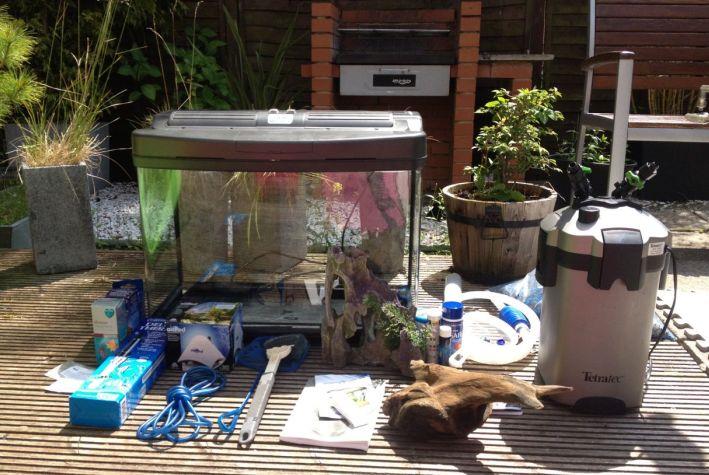
A well-planned aquarium is one of the most rewarding setups you can keep at home: calming to watch, and genuinely low-fuss once the water settles into a steady rhythm. The trick is that almost every aquarium problem starts the same way. A tank looks right on the bench, the fish look fine in the shop, and then days or weeks later the water goes cloudy, fish gasp at the surface, bullying starts, or something dies for no obvious reason. The causes are usually predictable: the tank is too small for the fish at adult size, the water chemistry does not match the species, or the filtration has not had time to stabilise. Get those three right and the rest is mostly routine.
Good planning is less about memorising rules and more about matching living animals to a slice of water you can keep steady week after week. Start with the fish you genuinely want, then work backwards to tank size, equipment, water parameters, compatible tank mates, and a maintenance routine you can realistically stick to.
Questions to ask before you buy anything
- How big a tank can you fit and afford, including a stand, filter, heater if needed, and ongoing running costs?
- Freshwater or marine? Marine systems are less forgiving of shortcuts and usually cost more to set up and run.
- Coldwater or tropical? Temperature stability matters as much as the number on the thermometer.
- Which fish are you drawn to, and how big do they get as adults?
- Do your chosen fish tolerate your tap water? If not, are you prepared for the extra work of conditioning, buffering, remineralising, RO water, or mixing saltwater for marine?
- Can they live together? Consider water chemistry, temperature, flow, habitat, feeding style, and aggression.
- Do you want live plants? If so, will your fish dig them up or eat them?
Space and budget will always shape the final decision, but fish welfare is the non-negotiable line. If the species you want needs a larger, more stable volume of water than you can manage, it is kinder to choose a different species than to force the fit.
Let the fish choose the tank
Decide on a shortlist of fish first, then pick the aquarium that suits them. It keeps you motivated, and it avoids the common trap of buying a starter tank and later realising your dream fish either outgrows it, needs different water, or cannot live safely with the fish you already have.
While researching, note the adult size, water temperature range, preferred pH and hardness, social behaviour (schooling, territorial, or solitary), and how each species feeds. Many fish sold in shops are juveniles or sub-adults, peaceful when small and much bolder once established and grown.
How many fish can a tank hold?
The old fish-per-centimetre formulas are popular because they are simple, but they often fail in real tanks. Stocking depends on adult size, body shape, activity level, waste production, territorial behaviour, filtration capacity, oxygen exchange at the surface, and your maintenance routine.
A more reliable approach:
- Stock for adult size, not the size in the bag.
- Build slowly so the biological filter can adjust to the increased waste.
- Use water testing as your guide. Ammonia and nitrite should stay at safe levels, and nitrate should be managed with water changes and/or plants.1, 2, 3
For a simple starting point, Animal Welfare Victoria suggests a rough guide of at least 10 litres of water for each fish up to 3 cm long, increasing the water volume as fish size increases.2 Treat that as a cautious floor, not a target to fill.
A note on goldfish (Carassius auratus)
Goldfish are often sold as easy starter fish, but they are messy feeders and can grow far larger than most people expect. Australian animal welfare guidance is clear that fish bowls are not suitable; use an appropriately sized tank with filtration.4 In Australian waterways goldfish can also become serious pests, so never release unwanted fish into dams, rivers, creeks, or drains.2, 5
Fish compatibility: the quiet rules that keep a tank calm
Compatibility starts with the environment. Fish from very different habitats may survive for a while in average conditions, but they rarely thrive there.
Match environmental needs first
Before you mix species, check that they overlap on:
- Temperature. Coldwater versus tropical is the obvious clash.
- Water chemistry. pH, hardness, salinity, and whether the fish is freshwater, brackish, or marine.
- Flow and oxygenation. Fast-stream fish often struggle in still water, and still-water fish can be exhausted by strong current.
- Cover and lighting. Some species need plant cover or rocky shelter, while others need open swimming space.
Size and temperament matter just as much
Predation in aquariums is usually simple physics: if one fish can fit another into its mouth, it may eventually try. Plan so the smallest fish stays too large to be swallowed even after the larger fish grows.
Also watch for territorial species. Some fish defend an area for feeding or breeding and will harass tank mates even when the water parameters are perfect. In those cases the best compatibility fix is often a different stocking plan, or a species-only tank.
Think about feeding before you commit
Mixed-community tanks work best when the fish eat in roughly similar ways. Ask:
- Will slower, cautious feeders get enough food if you keep fast, greedy species?
- Will a large, boisterous fish stress smaller, shy tank mates even if it never bites them?
- Are you willing to provide specialised foods if they are needed?
Do not judge compatibility by a dealer's display tank. Shop tanks are often crowded, sparsely decorated, and stocked with young fish, conditions that can temporarily mask aggression. Given space, territory, and time to mature, behaviour can shift.
Water stability: why new tanks go wrong
In a healthy aquarium, beneficial bacteria convert toxic ammonia (from fish waste and decaying food) into nitrite, then into the less toxic nitrate. This process, nitrification, needs oxygen and time, and it establishes on surfaces, especially in filter media.1
In a brand-new tank that biological filtration is not yet established. That is why rushing to add lots of fish early so often ends in ammonia or nitrite spikes, stress, disease, and losses.1, 3
Building your shortlist
- Pick a theme: coldwater goldfish tank, tropical planted community, African cichlids, marine fish-only, reef, and so on.
- Research adult size and behaviour for each species.
- Check compatibility across water, temperature, temperament, and feeding.
- Decide your maintenance rhythm: weekly water changes, gravel cleaning, filter care, and testing.
- Plan a slow stocking schedule so the tank can stabilise between additions.
Getting good advice
Fishkeeping clubs and experienced aquarists
A good club or mentor can save you from expensive almost-right purchases. They have often learned the same lessons, through the same algae blooms and unexpected aggression, on their own time.
Choosing a good aquatic dealer
A helpful shop will ask about your tank size, filtration, and what else you keep, and will steer you away from obvious mismatches. Be cautious of anyone willing to sell you any combination of fish and equipment without questions.
For a gentle test of advice quality, mention a small tank and a fish that grows large. An oscar cichlid, for example, commonly reaches around 30 to 40 cm as an adult, far beyond what a small aquarium can house long-term.6
Before you bring fish home: a quick welfare checklist
- The tank is fully set up with filtration (and a heater if tropical), and running steadily.
- You have a way to test water, at least ammonia and nitrite, ideally nitrate too.3
- You know the adult size and temperament of the fish you are buying.
- You have a plan for rehoming if life changes, and you will never release aquarium fish into natural waterways.2, 5
References
- University of Florida IFAS Extension (EDIS): Ammonia in Aquatic Systems (nitrogen cycle and nitrification)
- Agriculture Victoria (Animal Welfare Victoria): Caring for your pet fish
- RSPCA Australia Knowledgebase: How should I care for my goldfish?
- RSPCA Victoria: Fish (care and setting up an aquarium; fish bowls not suitable)
- NSW Department of Primary Industries: Releasing fish in public waters
- Animal Diversity Web (University of Michigan): Astronotus ocellatus (oscar) species account
- NSW Department of Primary Industries: Aquarium owners and trade (legal responsibilities and biosecurity)
- NSW Department of Primary Industries: Rehome unwanted fish
- Oklahoma State University Extension: Nitrification and maintenance (ammonia stress and management)

Dog lover and writer at My Pets Australia, sharing practical breed guides and care advice for Australian pet owners.