Small Munsterlander Pointer
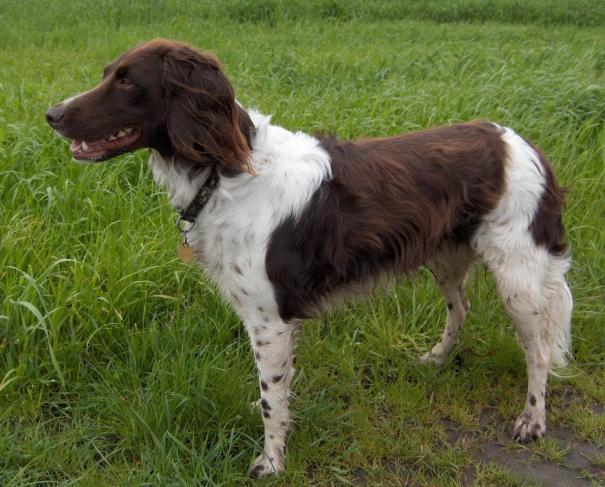
The Small Munsterlander Pointer, or Kleiner Münsterländer, is a medium German gundog bred to point and retrieve across field, forest and water. It is intelligent, keen and closely attached to its handler, with a handsome brown-and-white coat built for weather and cover. In the right home it makes a capable, affectionate companion that wants to be involved in everything you do. It is also a serious working dog with a strong hunting drive, not an ornamental pet. That distinction is where most of the good and bad outcomes come from.
History and Origin
The Small Munsterlander developed in Germany as a versatile hunting dog, built to work with a handler across varied ground and to point and retrieve as needed. Modern breed governance sits within international gundog structures, including the Fédération Cynologique Internationale (FCI), where it is listed as a Continental Pointing Dog (Spaniel type).1, 2
Appearance and Physical Characteristics
This is a tidy, functional dog rather than a bulky one. Males stand about 52 to 56 cm at the shoulder and females about 50 to 54 cm, with ranges varying slightly by registry.1, 2 The build is athletic and balanced, made to work all day.2 The coat is dense, medium-length, straight to slightly wavy and water-repellent, with feathering on the legs and tail; it is dense enough to protect against cold water and scrub, but not so long that it hides the outline of the body.2, 3 The tail is carried with a distinct flag. Colour is brown and white, including roan, patches, ticking and mantle, and solid colour is a fault or disqualification in some standards.2, 3 If you are comparing similar breeds, note that white with black markings is not typical for the Small Munsterlander in the major standards.2, 3
Temperament and Personality
A well-bred, well-socialised Small Munsterlander is attentive and quick to learn, with a steady, even temperament and an instinct to stay connected with its handler.2 They are generally friendly with people and can suit family life. The hunting drive is real, and it shows up as enthusiasm for scent, movement and the wider world beyond the gate. They do best with owners who enjoy training as part of daily life: short sessions, clear boundaries, and plenty of calm repetition. Inconsistent handling tends to create problems such as pulling, ignored cues, scavenging, and a dog that never learns how to switch off.
Is a Small Munsterlander Right for You?
This breed suits homes that genuinely enjoy active routines: early morning walks, weekend bush time, structured play, and a dog that wants a job. A secure yard helps but does not replace exercise, and without an outlet many gundogs invent their own work. With children and other pets the basics apply: early socialisation, supervised interactions, and thoughtful management around fast movement such as running kids, flapping chickens or darting cats until the dog is trained and reliable. If you want a low-maintenance companion who is happy with a lap of the block, this is not your breed.
Training and Exercise
This is a high-activity gundog, and a quick walk rarely touches the sides. Most adults need a daily outlet that combines movement with problem-solving: sniffing, retrieving, obedience, tracking games, or structured off-lead running where safe and legal.
- Exercise aim: Think about quality as much as quantity. Free running, scent work, water retrieves, and training walks that include stops, recalls and steadiness.
- Training style: Reward-based, consistent, and started early. This breed is described in standards as capable of learning and eager to work closely with its handler.2
- Adolescence note: Expect a period where the nose seems to turn the volume up. Manage it with a long line, rehearsed recalls, and controlled access to exciting environments.
Health and Lifespan
No breed is immune to health problems. For Small Munsterlanders, the commonly discussed risks include orthopaedic issues, notably hip and elbow dysplasia, and inherited eye disease such as progressive retinal atrophy (PRA).4, 5, 6
- Hip and elbow dysplasia: These are developmental joint conditions seen across many medium-to-large, active breeds. Screening programs, in which radiographs are submitted for expert scoring, are widely used to reduce risk in breeding lines.4, 5
- Progressive retinal atrophy (PRA): A group of inherited retinal degenerations that lead to progressive vision loss. Some forms have DNA tests available, and rcd4-PRA testing specifically lists the Small Munsterlander as a relevant breed for testing.6
Even with good testing, health is never a guarantee. What you are looking for is sensible risk management: transparent results, honest discussion of limitations, and a breeder who can explain why particular tests matter for this breed and what they do with the results.8
Grooming and Care
The coat is practical, but it still needs maintenance, especially if your dog runs through burrs, grass seeds and wet scrub. A weekly brush usually keeps the feathering from matting and helps you spot ticks, skin irritation and small cuts.
- Brushing: Weekly as a baseline, and more often during shedding or hunting season.
- Bathing: As needed. Focus on drying the feathering and ears after swims and wet-weather runs.
- Nails and feet: Keep nails short and check the pads, since active dogs can still split nails or abrade pads on rough ground.
Drop ears and an outdoorsy life make ears a frequent maintenance point. The goal is not constant cleaning; it is recognising early signs and keeping ears dry and well-ventilated after water work. Watch for head shaking, scratching, redness, odour, discharge, pain or a head tilt. Use a vet-approved cleaner and wipe only what you can see. Do not push cotton buds into the ear canal, and do not keep cleaning a painful ear instead of seeing your vet.7
A Few Things Worth Knowing
- If you are buying a puppy, slow the process down. Meet dogs in person, see where they live, and ask to sight health testing evidence rather than accepting verbal claims or vague DNA-tested lines.9, 8
- Meet the breeder and the litter, and the dam at minimum. Avoid delivery-only arrangements.9
- Ask for proof of screening for hips and elbows and relevant eye testing, and ask what the results mean for the mating, not just whether a test was done.5, 6, 8
- Look for temperament in the adults: calm in the house, responsive to the handler, and not overly shy or sharp.
- If you are adopting, talk with the rescue group about prey drive, recall reliability, and how the dog behaves around other animals. Adult gundogs can be wonderful companions, but they deserve an honest match.
The Bottom Line
The Small Munsterlander Pointer is a working gundog in a handsome coat. With steady training, daily exercise and space to use its nose, it can be a close and capable companion. Put the same dog in a home with no outlet and those traits turn into restlessness, escape attempts and a dog always scanning the horizon for something better to do. Match the home to the dog and it is one of the more rewarding gundogs you can own.
References
- Fédération Cynologique Internationale (FCI), Kleiner Münsterländer (No. 102) breed listing
- Small Munsterlander Club of North America, Official breed standard (as published for the breed)
- United Kennel Club (UKC), Small Munsterlander breed standard
- Orthopedic Foundation for Animals (OFA), About OFA and inherited orthopaedic disease screening
- Cornell University College of Veterinary Medicine, Overview of OFA hip evaluation and scoring
- UC Davis Veterinary Genetics Laboratory, rcd4 Progressive Retinal Atrophy (includes breed list for testing)
- Vet in a Van (Australia), How to clean a dog's ears safely (general guidance and cautions)
- RSPCA Australia, Red flags to watch for when looking for a pet online (including claims about DNA testing)
- RSPCA Knowledgebase, Red flags when looking for a dog or cat online (including meeting in person)

Dog lover and writer at My Pets Australia, sharing practical breed guides and care advice for Australian pet owners.