Severe Macaw
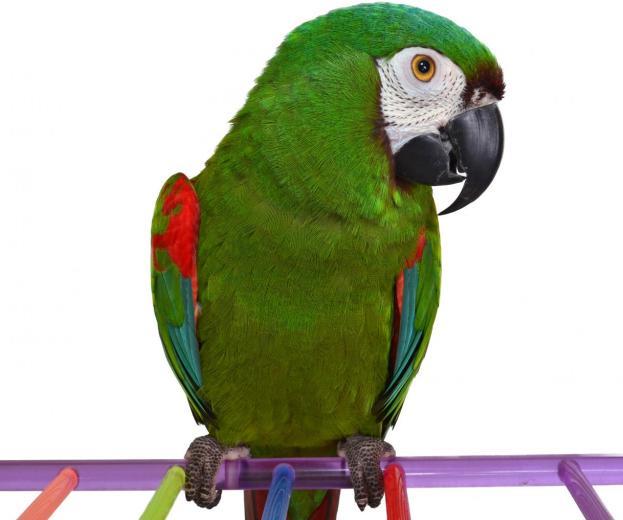
The Severe Macaw, also called the Chestnut-fronted Macaw (Ara severus), is a compact green macaw with a big voice, a powerful beak, and a long, elegant tail. It is one of the so-called mini macaws, so it delivers a lot of macaw personality in a smaller, more manageable frame than the giant blue-and-golds. People are drawn to how bright, social, and engaging these birds are, and a well-kept one can be a genuine companion for decades. It is also a serious commitment. Before anyone gets attached, the important thing to know in Australia is that this is not a bird you can simply buy and bring home, because import and movement rules are strict.1
Quick Facts
- Common names: Severe Macaw, Chestnut-fronted Macaw
- Scientific name: Ara severus
- Adult length: about 40 to 49 cm, a mini macaw rather than a full-sized large macaw1
- Adult weight: roughly 307 to 387 g1
- Typical lifespan: 30 years or more in human care is often reported, varying with genetics, diet, housing, and veterinary care1
- Conservation status: listed as Least Concern globally, which does not mean no threats2
- Trade controls: listed under CITES Appendix II, so international trade is regulated3
Appearance and Physical Characteristics
At a glance a Severe Macaw reads as mostly green, but the closer view is where it becomes unmistakable. Look for a chestnut-brown wash across the forehead and face, a bare facial patch marked with fine dark lines, red at the bend of the wing, and blue edging through the crown and tail tips. In good light the underwing shows deeper orange-red tones when the bird lifts off or banks.1
One persistent error is describing the species as a 90 cm macaw. That size belongs to the true large macaws. Ara severus is far smaller, though it carries itself with the same long-tailed silhouette and the same pry-bar beak.1
Temperament and Personality
Severe Macaws are intensely social parrots. In the wild they are often seen in pairs or small groups, and their day is stitched together with contact calls, flight, feeding, and long bouts of chewing and preening. In captivity that same wiring can look like clinginess, constant vocal contact, or frustration if the bird is isolated or understimulated.
They are widely described as loud. The sound is not random noise, it is normal macaw communication, sharp far-carrying calls that make sense in a forest canopy but can be difficult in close suburban housing.1
Habitat and Range in the Wild
Severe Macaws are Neotropical birds. They occur from Panama south into the Amazon basin and adjacent regions, with records spanning a broad sweep of northern South America, including Amazonian Brazil and Bolivia. They are typically associated with forested landscapes, but may also use edges and more open country where there are fruiting trees and safe roosts.2
They are not native to Australia. Any Severe Macaw seen here is a captive bird, or very rarely an escapee, not part of a natural Australian population.4
Is a Severe Macaw Right for You?
A Severe Macaw can be a deeply engaging companion, but it is not a low-maintenance parrot. The daily essentials are simple to list and demanding to deliver: space, flight time, chewing outlets, training, stable social contact, and avian veterinary support. If your household cannot handle regular loud calls, daily out-of-cage time, and decades of care, this is not the right bird. For anyone able to meet those needs, a Severe Macaw offers years of intelligence and companionship in a smaller package than the giant macaws.
Minimum care expectations
- Housing: a large, secure enclosure with room to climb and fully extend the wings, since macaws damage weak fittings quickly.
- Exercise: routine out-of-cage time in a safe space, plus climbing and foraging inside the enclosure.
- Enrichment: fresh chewables such as bird-safe wood, leather, and shreddable paper or cardboard, rotated often.
- Training: short, consistent sessions using positive reinforcement, which improves handling and reduces stress.
- Veterinary care: establish an avian vet early, before problems become urgent.
Diet and Nutrition
In the wild, macaws are built for hard plant foods. Their diet is dominated by fruits, seeds, and nuts, with seasonal shifts as trees and palms come into fruit. Like other parrots, they spend a large portion of the day moving, climbing, and handling food, using the beak as a third limb as much as a cutting tool.5
In captivity the safest baseline is a formulated parrot diet of pellets, supported by daily vegetables and measured amounts of fruit and nuts. The goal is variety without letting energy-dense treats, especially fatty seed mixes, quietly become the main course. Fresh water, clean food surfaces, and predictable routines matter as much as the ingredient list.
Practical feeding notes
- Pellets as the backbone, with vegetables offered daily.
- Fruit and nuts as controlled extras, useful for training and foraging.
- Foraging matters. Hiding food in safe shreddable materials and puzzle feeders reduces boredom-driven behaviours.
Breeding and Reproduction
In suitable habitat, Severe Macaws nest in cavities, often in large trees. Captive breeding is a specialist undertaking. It requires stable pair compatibility, correct nesting set-up, careful nutrition, and strong disease-prevention practices. World Parrot Trust references a clutch size commonly around 2 to 3 eggs for this species, with fledging around the 12-week mark in aviculture contexts.1
If you are buying a young bird, ask direct questions about parentage, weaning approach, and veterinary screening. A cheap macaw with a poor start can become an expensive, ongoing welfare problem.
Conservation: What Least Concern Does and Does Not Mean
Globally the species is assessed as Least Concern, which generally reflects its broad distribution and overall numbers. That label does not mean individual populations are untouched. Across much of the Neotropics, parrots face ongoing pressure from habitat loss and trapping, and these pressures can bite locally even when a species is not globally threatened.2
Internationally, Severe Macaws are listed under CITES Appendix II, meaning trade is regulated and should be traceable through permits where required.3
Legal and Import Notes for Australia
If you are dealing with a Severe Macaw in Australia, the key point is that import and movement rules sit across multiple systems: biosecurity requirements through DAFF, and wildlife trade and environment requirements through DCCEEW, including CITES where relevant. Australia also limits which live species can be imported at all through the Live Import List.6, 7
For pet birds, DAFF guidance stresses checking the Live Import List, the need for permits where applicable, and that import conditions can be strict and situation-specific, including eligibility pathways and documentation. Do not rely on seller assurances. Confirm through the relevant government channels before spending money or making travel plans.6, 8
The Bottom Line
The Severe Macaw is a bright, social, long-lived mini macaw that can be a rewarding companion for an owner who is ready for the noise, the mess, the chewing, and the decades of care. In Australia the first question is not whether you want one, it is whether you can legally and properly bring one home, because import and movement are tightly controlled. Sort out the legal and welfare realities first, then decide.
References
- World Parrot Trust, Chestnut-fronted (Severe) Macaw (Ara severus) profile
- BirdLife International Data Zone, Chestnut-fronted Macaw (Ara severus) species factsheet
- CITES Species+, Ara severus listing details
- Los Angeles Zoo, Macaw overview (distribution and general biology)
- San Diego Zoo Wildlife Alliance, Macaw overview (habitat, diet, behaviour)
- DCCEEW (Australian Government), Live Import List (what it is and how it works)
- DCCEEW (Australian Government), Do I need a wildlife trade or CITES permit?
- DAFF (Australian Government), Importing your pet bird (biosecurity steps and requirements)
- DAFF (Australian Government), Importing live animals and reproductive material (BICON and eligibility)

Dog lover and writer at My Pets Australia, sharing practical breed guides and care advice for Australian pet owners.