Seppala Siberian Sleddog
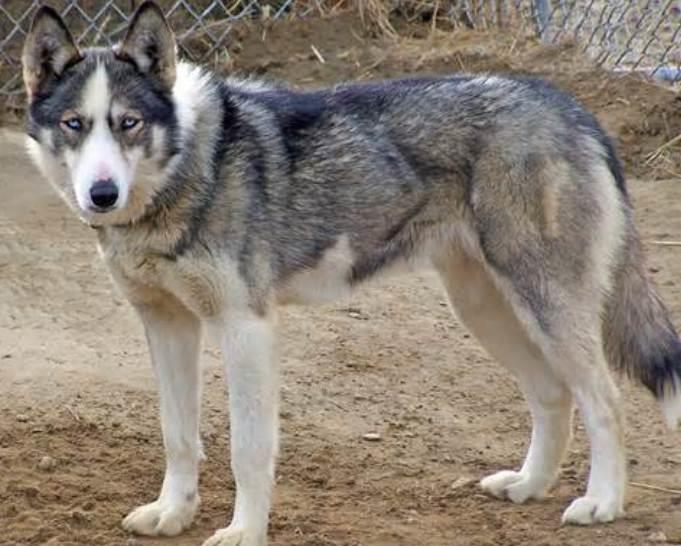
The Seppala Siberian Sleddog is a working sled dog descended from Leonhard Seppala's Alaskan racing teams, bred for the harness first and the show ring never. If you want a dog that can travel steadily for hours in cold weather and think for itself in motion, this is a genuine article rather than a marketing label. "Seppala" generally refers to a deliberately preserved strain kept tightly focused on working ability, and that heritage shows up in how these dogs move, cope with distance, and read the world.1, 2 It is also a serious commitment, and a mismatch with quiet suburban life tends to show quickly.
History and Origin
The dogs behind the Seppala name trace back to northern Siberian sled dogs kept by the Chukchi people, later brought into Alaska in the early 1900s. From there the wider "husky" world split: some lines were increasingly selected for show-ring type, while others stayed focused on working ability in harness.4, 2
Leonhard Seppala, a Norwegian-born musher working in Alaska, became strongly associated with these dogs through racing and breeding, and his teams helped define a type prized for efficiency and endurance over long distances. In Seppala-focused breeding circles the aim has stayed consistent: maintain a capable sled dog, not a decorative one.1, 5
The 1925 serum run
In January and February 1925, teams relayed diphtheria antitoxin roughly 674 miles from Nenana to Nome. Seppala and his lead dog Togo ran the longest and most hazardous legs of the relay, including a crossing of Norton Sound sea ice on the return toward Golovin.6, 7 The story is often simplified to a single dog, but the real event was a relay of many mushers and teams moving medicine through extreme cold and limited visibility. It is a fair reminder of what these dogs were built to do: travel steadily, work in cooperation, and keep functioning when conditions are hard on both body and judgement.6, 7
Appearance and Physical Characteristics
Seppala-type sled dogs are typically medium-sized, athletic, and built for economical movement rather than bulk. Expect a deep but not barrel chest, a balanced outline, and a gait that looks like it could continue for hours.5 Overall frame is similar to many Siberian Huskies, though type can vary depending on working selection.3
They carry a double coat suited to cold conditions. Density and length vary with climate and selection, but the general pattern is a weather-resistant outer coat over an insulating undercoat, and shedding is seasonal and can be intense.3
On size, it is worth noting that in the Siberian Husky breed standard used in Australia, males are typically taller and heavier than females, and there are clear upper limits for height. Treat any listing that gives identical figures for both sexes with caution.3
Temperament and Personality
Well-bred working sled dogs tend to be alert, social, and independent-minded. They often learn quickly, but they do not offer obedience the way a biddable herding breed might, because they are tuned for decision-making in motion rather than waiting for permission at every step.5
Many are people-friendly, but friendly does not mean easy. A Seppala-type dog may test boundaries, roam if given a gap, and become noisy or destructive when under-exercised or under-stimulated. The behaviour usually reads as plain cause and effect: too little movement, too little purpose, too much idle time.3, 5
Is a Seppala Siberian Sleddog Right for You?
For a household that wants a calm, low-maintenance pet, honestly, no. These dogs generally do not settle on a short stroll, and they need purposeful daily movement plus containment you can trust. In the right hands, active, consistent, and realistic about fencing and exercise, they can be a remarkable companion.
Before you commit, confirm the dog's background with documentation such as pedigree and identification, and ask what that registry recognition does and does not mean.2 Meet adult dogs from the same lines, not just puppies, and be honest with yourself about your weekly routine.
Training and Exercise
These dogs do best with calm consistency and a lot of repetition in real-world settings. Keep sessions short, finish while the dog is still engaged, and use rewards that matter in the moment such as food, play, or access to movement.8
- Steady aerobic work: long walks, jogging once mature, hiking, or structured pulling sports where appropriate.
- Secure free running: only in safe, enclosed areas. Many husky-type dogs will wander if a fence or gate offers an option.3
- Work for the brain: scent games, food puzzles, and training for a job such as canicross cues, directional cues, and mat work.8
A simple rule holds up well. If the dog's day contains purposeful movement and small training jobs, home life is usually quieter. If it does not, the dog will often invent its own projects.
Seppala-type dogs are still used for sledding and dryland mushing where climates allow, and many owners enjoy canicross, bikejoring, skijoring, and trekking. The common thread is forward motion with a clear task.5 In Australia, heat management is basic welfare for any cold-adapted double-coated breed: exercise in the early morning, provide shade and water, and avoid hard work in hot conditions.
Health and Lifespan
No line is immune to inherited disease. In husky-type dogs, the issues most often discussed in breed health literature include hip dysplasia and a range of inherited eye conditions. The sensible approach is not to assume a problem, but to insist on screening and transparent records from breeders.9, 10
When speaking with breeders, ask what health testing is routinely done and whether results are independently recorded, and ask about longevity and cause of death in older dogs from the same lines. You are listening for calm, specific answers rather than reassurance. Husky-type dogs commonly live around 12 to 15 years, with individuals varying, so ask breeders about longevity in their own lines.7
Grooming and Care
The double coat needs regular brushing, and you should expect heavy seasonal moults when the undercoat blows.3 Beyond the coat, the basics that prevent problems are secure fencing with disciplined gate habits, daily movement paired with small training tasks, and routine veterinary care including parasite control and early attention to changes in gait, eyes, or skin.
Breeders and Registration
The name "Seppala" is used unevenly and not always carefully. Some organisations and long-running Seppala projects describe the Seppala Siberian Sleddog as separate from modern show-bred Siberian Husky lines, with pedigree rules designed to preserve specific ancestry and working traits.1, 2 What matters to a buyer is evidence, not branding. Ask which registry or association the dogs are recorded with, what working or performance proof is expected of breeding stock, and how the kennel avoids drifting into "pretty husky" territory over generations.2, 5
A Few Things Worth Knowing
- The Seppala is best understood as a Seppala strain within the wider husky world, bred for work first.1, 2
- Foundation stock came from Siberian and Chukotka dogs developed through Alaska and later North American breeding programmes.4
- Exercise needs are high, built for steady purposeful movement rather than occasional bursts.5
- Care needs are high, especially coat care, containment, and daily enrichment.3
The Bottom Line
A Seppala Siberian Sleddog is a working heritage carried into the modern world, a dog shaped by distance, cold, and the discipline of pulling in a team. Give it an active, consistent home with containment you can trust, and it can be a superb companion. Put the same dog in a setting with little movement or purpose, and those traits tend to spill out as noise, escape attempts, and chaos.
References
- SeppalaSleddogs.com (documents), "What is the SSSD?"
- SeppalaSleddogs.com, "What is the SSSD?" (registry and status overview)
- Dogs SA, Siberian Husky breed standard (height and weight limits used in Australia)
- SeppalaSleddogs.com (documents), "What was MARKOVO all about?" (background on sleddog lineages)
- SeppalaSleddogs.com, Seppala Siberian Sleddog breed standard (working emphasis)
- Wikipedia, 1925 serum run to Nome (overview of the relay and distance)
- Wikipedia, Togo (dog) (Seppala's leg distances and context)
- RSPCA Australia Knowledgebase, Best methods for training a dog
- Orthopedic Foundation for Animals (OFA), Hip dysplasia overview
- Orthopedic Foundation for Animals (OFA), Eye certification (CAER) overview

Dog lover and writer at My Pets Australia, sharing practical breed guides and care advice for Australian pet owners.