Scottish Deerhound
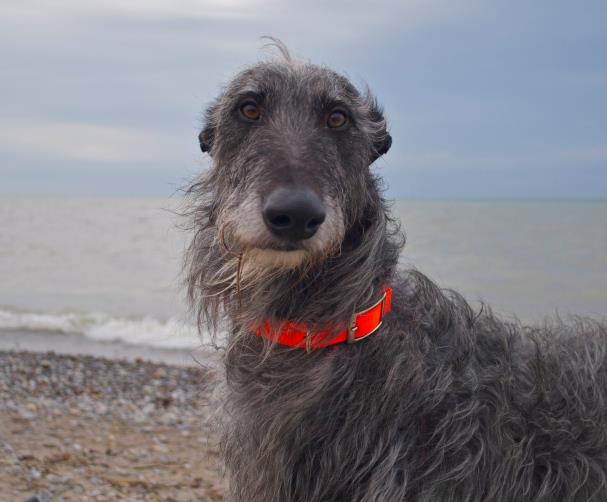
The Scottish Deerhound is a tall, rough-coated sighthound bred to run down red deer across open Scottish country, and that history shows in every line of it: long legs, a deep chest, and a stride made for galloping. At home it is a different animal, quiet, dignified and affectionate once it knows you, often happy to stretch out and do very little indoors. It is also a serious commitment. Size, speed, and a handful of breed-linked health issues all shape daily life with one, and none of them are minor. Lead with the good, but go in with your eyes open.
Quick Facts
- Origin: Scotland
- Height: dogs, minimum desirable 76 cm; bitches, minimum desirable 71 cm1
- Weight: dogs, about 45.5 kg; bitches, about 36.5 kg1
- Coat: harsh, crisp, shaggy (not woolly), with softer hair on head, chest and belly1
- Colours: dark blue-grey and other greys, brindles, also yellows, sandy-red and red fawns with black points (some white permitted on chest, toes and tail tip, though less is preferred in the UK standard)1
- Typical temperament: gentle, dignified, calm, loyal, often reserved rather than effusive3
- Exercise needs: high, often more than 2 hours a day for adults, plus safe opportunities to run flat out2
- Commonly discussed health concerns: gastric dilatation-volvulus (GDV, or bloat), cardiac disease (including dilated cardiomyopathy), osteosarcoma (bone cancer), and some inherited bleeding and clotting disorders screened by breed clubs4, 5, 6, 7
History and Origin
The Deerhound belongs to Scotland's long tradition of rough-coated, greyhound-type coursing dogs, built to run down red deer over open ground. The modern breed standard is shaped by that job: a long stride, deep chest, strong loin, and a weather-resistant coat suited to cold, damp country.1, 2
Appearance and Physical Characteristics
A Scottish Deerhound reads as height, reach and quiet power. It is a sighthound, long-legged and aerodynamic, yet heavier-boned than a Greyhound, with a rough coat that lies close and feels harsh to the touch. A woolly coat is considered undesirable in the breed standard, partly because it does not shed weather the same way.1
Because they are tall and fast, practical handling matters: secure fencing, careful recall expectations, and lead skills that protect both dog and passer-by when a sudden moving object triggers the chase instinct. That chase response is not disobedience so much as ancient wiring.
Temperament and Personality
Deerhounds are often described as calm, dignified companions at home, with a soft manner once they know you. Many are polite with visitors rather than demonstrative, and their independence shows up as a tendency to weigh things up before responding.3
With children, the main consideration is the size and swing of tail and body. Even a well-mannered Deerhound can accidentally bowl over a small child in a tight hallway. Supervision and calm greetings matter more than training tricks.
Is a Scottish Deerhound Right for You?
This breed suits a household that respects what it is: a gentle, athletic sighthound with a big body and a bigger stride. It needs space, secure fencing, and time for real exercise, and it is not a good match for someone who wants an easy, low-effort dog or a reliable off-lead companion in open country. If you can give it those things, ask to see health testing and have a direct conversation with the breeder before you put down a deposit:
- cardiac screening results and how often dogs are re-checked6
- any family history of GDV, sudden death, or osteosarcoma
- how pups are raised (handling, exposure to household noise, meeting calm adult dogs)
- what support the breeder provides if the dog cannot stay with you
Training and Exercise
These dogs were made to gallop. Many adults need substantial daily exercise, and The Kennel Club describes the breed as needing more than 2 hours per day, along with safe, fenced areas where they can open up without risking roads or wildlife.2 Off-lead time is safest in fully enclosed spaces. In unfenced areas, a Deerhound's speed and chase drive can turn a split-second decision into a long search.
Training is usually less about dominance and more about repetition, clarity and good timing. Short sessions work best, and they tend to respond to calm, consistent handling and rewards-based training, with boundaries that do not change day to day. Focus early on:
- Lead walking. A 45 kg sighthound that leans into the lead can be a lot to hold.
- Recall management. Practise it, but assume prey drive can override training in open spaces.
- Settle skills. Teaching calm on a mat is as useful as teaching sit.
Health and Lifespan
A few breed-linked conditions deserve an upfront chat with a vet, and some are emergencies. Understand them before you commit rather than after.
GDV (bloat) is an emergency. Scottish Deerhounds have the deep chest shape that can increase the risk of gastric dilatation-volvulus (GDV). GDV is life-threatening and needs urgent veterinary care. Survival improves with immediate intervention, and mortality in treated cases is still significant.4 Signs that warrant emergency attention include repeated unproductive retching, obvious abdominal swelling, restlessness, and rapid decline.4, 5
Heart disease, including dilated cardiomyopathy (DCM). Cardiac disease is a recurring theme in Deerhound health discussions, including DCM. This is one reason breed clubs and kennel organisations emphasise cardiac screening in breeding dogs.6 If you are buying a puppy, ask what cardiac testing has been done in the line, and when, and what the breeder does when an issue shows up. If you already own a Deerhound, speak to your vet about the right time to begin routine heart monitoring.
Osteosarcoma (bone cancer). Osteosarcoma is an aggressive bone cancer seen most often in large and giant breed dogs, and Scottish Deerhounds are among the breeds recognised as being at increased risk.7 Early signs can be subtle: a limp that does not settle, pain, and firm swelling near a limb bone. Any persistent lameness in a giant breed deserves prompt veterinary assessment.
Breed-linked bleeding and other inherited issues. Breed clubs also highlight inherited problems that may not be obvious until a dog is sick or having surgery. The AKC's health testing guidance for Scottish Deerhounds includes cardiac exams and DNA tests for specific clotting and bleeding disorders (such as Factor VII deficiency and delayed post-operative haemorrhage), plus bile acid testing for liver function screening.6
Grooming and Care
The coat is rugged rather than fluffy. Weekly brushing is usually enough to lift out dirt and loose hair, with occasional hand-stripping or trimming to keep the outline tidy, especially around the ears, feet and furnishings. The breed standard describes a thick, close-lying, harsh coat with softer hair on the head, breast and belly.1
Like any large dog, keep nails short (long nails change gait), check ears regularly, and stay on top of dental care. Big dogs do not get a free pass on teeth.
The Bottom Line
Give a Scottish Deerhound space, structure, and safe exercise, and it often settles into the home with a quiet, steady presence. It is a lot of dog, with real exercise demands and some serious health risks to watch for, so it rewards owners who plan for what it is rather than what it looks like on the couch.
References
- The Kennel Club (UK), Deerhound breed standard
- The Kennel Club (UK), Deerhound (breed characteristics and history)
- Scottish Deerhound Club of America, Breed information
- Merck Veterinary Manual, Gastric dilation and volvulus (GDV) in dogs
- Cornell University College of Veterinary Medicine, GDV (bloat) in dogs
- American Kennel Club, Hound Group health testing requirements (Scottish Deerhound)
- Cornell University College of Veterinary Medicine, Osteosarcoma in dogs

Dog lover and writer at My Pets Australia, sharing practical breed guides and care advice for Australian pet owners.