Rabbit Breeds
Rabbits are quiet, curious, long-lived companions that can learn a routine, use a litter tray, and bond closely with a household and with each other. Most people searching "rabbit breeds in Australia" are really trying to match a rabbit to their home: how big it will get, how much grooming it needs, and whether it will cope with children, heat, and indoor life. Breed answers some of that, but the practical details around housing, companionship, and disease prevention shape a rabbit's welfare far more than a pedigree does. One legal point first: keeping pet rabbits is allowed in most of Australia but banned in Queensland, where rabbits are a declared pest, so check your state authority before you buy. Everywhere they are legal, rabbit haemorrhagic disease (calicivirus) is still circulating, which makes vaccination and hygiene part of responsible ownership here.1, 2, 3
What breed can (and cannot) tell you
Breed gives you clues about adult size, coat type, and some broad tendencies, and that is genuinely useful when you are planning space and grooming. It does not decide temperament. Early handling, a stable routine, desexing, and whether the rabbit has an appropriate companion often shape behaviour more than the label on a pedigree. When you compare breeds, think in three layers:
- Body size (space, lifting and handling, vet costs can scale with size)
- Coat type (grooming time, risk of matting, heat management)
- Daily management (exercise time, enrichment, companionship and safe housing)
Popular rabbit breeds kept as pets
These breeds, and crosses that resemble them, are commonly kept as companions. If you are adopting, you may be offered "type" rather than a confirmed pedigree, which is still useful for guessing adult size and coat care.
Netherland Dwarf
One of the smallest breeds. Their compact build suits indoor living, but their small size makes safe handling especially important around young children. A secure pen with good floor grip matters, because small rabbits can still move fast and startle easily.
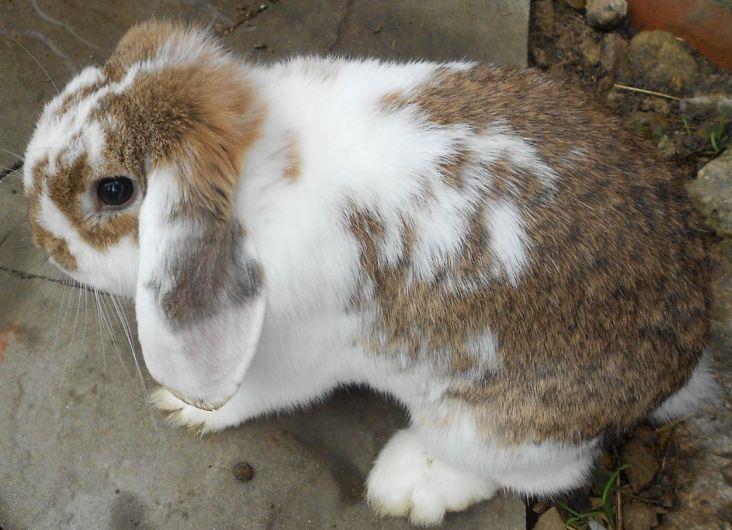
Mini Lop (and other lop types)
Round-headed, compact rabbits with lopped ears. Lop-eared rabbits can be prone to ear issues because the ear canal is less well ventilated, so routine checks and good hygiene are part of life with a lop. Choose housing that stays dry and well ventilated, and plan for daily exercise outside the hutch or pen.4, 5
Dutch
A medium, sturdy rabbit with a distinct two-tone pattern. Often a good generalist companion: not too delicate, not too large, and typically easy to groom thanks to the short coat.
Rex and Mini Rex
Known for their plush, velvety coat. It feels different under the hand, but it is still a short coat, so grooming is usually simpler than in long-haired breeds. Provide soft resting areas and solid flooring to protect feet and joints.5
Jersey Wooly and Angora types
Long-haired rabbits are striking, but the coat is real work. They need frequent grooming to prevent matting, and many need extra attention in warm weather. If grooming will be a struggle in your household, a short-haired breed is often kinder for both rabbit and owner.
Housing and companionship
This matters more than breed. Rabbits are a social species, and most do best with a compatible rabbit companion, usually after desexing and a careful bonding process. If you keep one rabbit, you will need to provide substantial daily interaction and enrichment, especially if it is alone for long stretches of the day.4, 6
Whatever the breed, housing should allow real movement and choice: a sheltered resting area, a separate toileting area, and enough space to hop, stretch, and stand comfortably. Small hutches with little time out are a common welfare problem.4, 5
- Space and exercise daily: rabbits need room to move, plus regular time out of the enclosure for exercise.5
- Solid, comfortable flooring: avoid wire floors and provide a solid standing and resting surface to protect feet.4, 7
- Enrichment: opportunities to forage, dig, hide, and explore reduce boredom and support normal behaviour.5, 8
Biosecurity: calicivirus is a real risk in Australia
Rabbit haemorrhagic disease virus, often called calicivirus, can spread through direct contact and contaminated materials, and it can be carried by insects such as flies. For pet rabbits the practical response is layered protection: vaccination guided by your vet, insect control, careful hygiene, and minimising contact with wild rabbits and with unfamiliar pet rabbits.1, 2, 3
Australian authorities and welfare organisations recommend measures such as keeping pet rabbits indoors where possible, cleaning equipment, and taking care with shoes and hands after outdoor activity or contact with other rabbits.1, 2
Breeds for showing and exhibition
Show rabbits are selected for appearance, condition, and handling. Breeds often seen in exhibition settings include lop varieties, Rex types, Dutch, and larger breeds such as the Flemish Giant. If your goal is showing, plan for:
- Conditioning and handling practice (calm, consistent, gentle)
- Coat and nail maintenance suited to the breed
- Transport and biosecurity, because shows can increase disease exposure without careful hygiene and vaccination planning1, 2
A note on "rare" and "endangered" breeds
Some breeds are less common than others in Australia, depending on local breeder networks and what is popular in shows. It is usually not accurate to describe common domestic breeds like the Flemish Giant or English Lop as endangered in a conservation sense. When people say "rare", they generally mean harder to find locally rather than at risk of extinction.
Choosing the right rabbit for your home
Use breed as a starting point, then choose based on what you can provide every day.
- Living space: can you provide a large pen or rabbit-proofed room time daily, not just a small hutch?4, 7
- Time: rabbits need daily feeding, cleaning, handling, and enrichment, and more if kept singly.5, 6, 8
- Grooming tolerance: if you will not keep up with long-coat grooming, choose a short-haired breed.
- Companionship plan: are you aiming for a bonded pair, and can you manage desexing and introductions safely?6, 9
- Vet and vaccination: are you set up for routine rabbit-savvy veterinary care and vaccination advice appropriate to your area?1, 2
Breeding: a note of caution
Breeding rabbits is not a casual extension of pet ownership. It raises health risks for does and kits, increases the odds of unwanted litters, and can complicate housing and bonding through hormonal and territorial behaviour. If you are considering it, speak with a rabbit-savvy veterinarian and an experienced, welfare-focused breeder first, and have a clear plan for housing, veterinary care, and responsible rehoming.
The Bottom Line
The best rabbit breed is the one that fits your daily life: enough space to move, safe footing, steady companionship, and calm, regular care. Get those basics right and most breeds, along with many lovely mixed rabbits, settle into a quiet rhythm, alert and curious, watching the household go by.
References
- Australian Government Department of Agriculture, Fisheries and Forestry (DAFF), Rabbit Haemorrhagic Disease Virus (Calicivirus)
- RSPCA Australia Knowledgebase, What is rabbit calicivirus and how do I protect my rabbit from rabbit haemorrhagic disease?
- CSIRO, Rabbit caliciviruses update (May 2025 update page)
- Agriculture Victoria (Animal Welfare Victoria), Owning a rabbit
- Agriculture Victoria (Animal Welfare Victoria), Your rabbit's welfare needs
- RSPCA Australia Knowledgebase, What companionship do rabbits need?
- Agriculture Victoria (Animal Welfare Victoria), Guidelines for keeping pet rabbits
- Agriculture Victoria (Animal Welfare Victoria), Enrichment for rabbits
- RSPCA Australia, How to socialise rabbits

Dog lover and writer at My Pets Australia, sharing practical breed guides and care advice for Australian pet owners.