Pet Rat Markings
Pet rat markings are the pattern of coloured and white areas across a rat's coat: a white belly, a coloured "hood" over the head and shoulders, a blaze up the face, or splashes scattered along the back. Most people look them up because they want to name what they are seeing, keep track of similar looking littermates, or describe a rat accurately to a vet or breeder. Markings are a coat trait, and that is nearly all they are. They tell you almost nothing about personality, and only occasionally do they flag a health issue worth a closer look.
Rat markings, explained simply
People often say "markings" to mean both the pattern and the colour, but those are two different things. Pattern is the arrangement of coloured and white areas. Colour is the shade of the coloured parts. The same pattern, hooded for example, turns up in many colours.
Knowing the pattern is useful for a few plain reasons:
- Identifying individuals in a group, especially littermates with similar faces.
- Describing a rat accurately to a vet, rescue, breeder, or pet-sitter.
- Understanding inheritance if you are breeding, or trying hard not to.
Common markings you are likely to see
Different organisations use slightly different terms, but the patterns below are widely recognised and commonly used by breeders and rescues.1, 2
Hooded
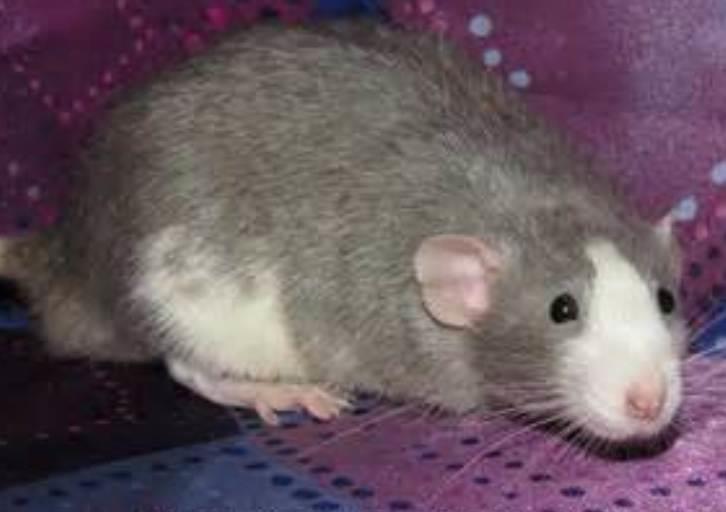
A coloured head and shoulders, the "hood", with a mostly white body and a coloured stripe running down the spine to the tail. The stripe can be narrow or wide, clean-edged or uneven, depending on the lines behind the rat.2
Berkshire
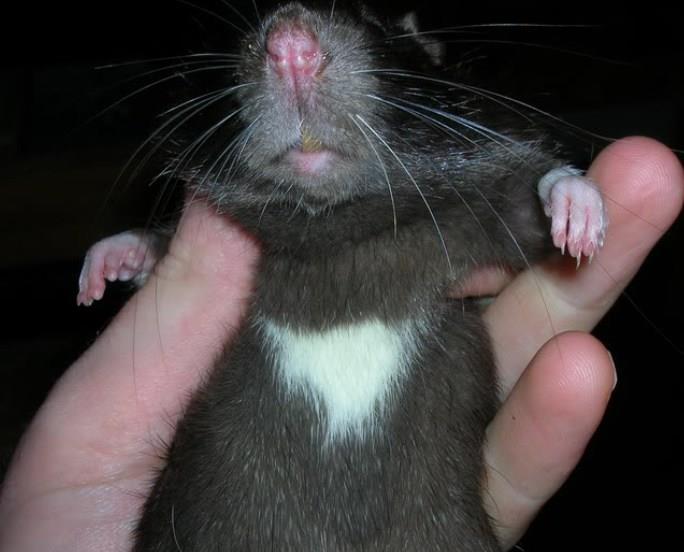
A mostly coloured rat with a white belly and white feet. Many also have a small white spot between the ears. Some lines carry more or less white on the underside, which is still often called "Berkshire" in everyday pet descriptions.1, 2
Irish / English Irish
Often described as a lightly marked Berkshire: a coloured rat with a neat white belly and typically four white feet, sometimes with a white tail tip. "Irish" gets used loosely in pet homes, while "English Irish" may appear in fancy standards to describe a particular style of the marking.1
Variegated
Usually a coloured head and shoulders, then a mostly white body with flecks or patches of colour scattered along the back and sides. The amount ranges from a few marks to heavy splashing.1, 2
Blaze
A wedge-shaped white marking on the face, running up from the muzzle. It is not a full pattern on its own so much as a feature that can appear alongside certain marked types, commonly in Berkshire or variegated lines.2
Dalmatian
Many small splashes of colour distributed over a white body, without the solid hood typical of hooded rats. This one turns up in some pet lines.2
Markings do not predict temperament
It is tempting to link a pattern to a personality, "hoodeds are smart" or "Irish are docile", but there is no reliable evidence that a coat marking causes a particular temperament. A rat's behaviour is shaped far more by genetics unrelated to coat pattern, early handling, social grouping, and daily husbandry.
How markings can change as your rat grows
Most white markings stay in the same places for life. What can change is the intensity of the colour and the overall look of the coat as it cycles and ages. Some varieties, such as roan and husky types, are known for progressive lightening with each moult, sometimes fading dramatically over time.3
If you notice something that looks like a new marking, check whether it is actually one of these:
- Moulting, which brings temporary unevenness, especially along the spine and shoulders.
- Coat thinning from age or season.
- Over-grooming or barbering in a stressed or conflicted group.
The genetics behind markings
Marked patterns are strongly influenced by a set of genes that affect white spotting and the distribution of pigment. In simple terms, parents pass on combinations of pattern-related genes, and the pups express a range of markings depending on what they inherit.1, 3
If you are not breeding, there is no need to memorise gene codes. The useful takeaway is short:
- Two rats with similar markings can still produce pups with different markings.
- Some marked types are complicated and may involve multiple genes acting together.1
Breeding for specific markings: the real trade-offs
Selecting for dramatic markings can narrow the gene pool if health and temperament are not prioritised alongside appearance. In some lines, heavy selection for white patterning has been linked to serious welfare issues, for example the lethal white and megacolon syndromes associated with certain extreme white phenotypes.3
If you are getting rats from a breeder and you care about markings, it is still reasonable to ask about:
- Average lifespan in the line.
- Respiratory health history.
- Temperament and handling from weaning.
- Whether they avoid breeding extreme whites linked with known health risks.3
Caring for rats with unique markings
Markings do not change daily care. A hooded rat and a Berkshire rat need the same foundations: companionship, space, and a complex environment that lets them climb, hide, forage, chew, and nest.4, 5, 6
Keep them with other rats
Rats are social animals and generally do best in small, compatible groups, often same-sex groups to prevent breeding. Introductions and management matter, but solitude is rarely kind for a rat long-term.5
Build an enclosure that supports normal rat behaviour
Good housing is not just a box with bedding. It is a layered space with places to retreat from light, climb, explore, and construct nests, with enrichment refreshed often enough to stay interesting.4, 6
Keep the enrichment changing
Scatter-feeding, hiding food, offering safe chewing materials, and changing the internal layout of the enclosure all help rats express natural behaviour and reduce boredom-related problems.5, 7
Markings versus health concerns: what to watch for
White patches and pattern edges are normal. What is not normal is a coat that changes because the skin underneath is unwell.
Book a vet visit if you notice any of these:
- Bald patches, especially with redness, scabs, or broken hairs.
- New dandruff, crusting, or intense scratching, since mites and other parasites are common causes.
- Ring-shaped lesions or patchy hair loss, which can be fungal.
- Dull coat and weight loss alongside a coat change.
These signs are about skin and overall health, not markings, and they deserve a proper diagnosis rather than a guess based on colour or pattern.
The bottom line
Rat markings are a map of pigment: hoods, bellies, blazes and splashes laid down by genetics. They are handy for describing and recognising your rats, but they will not tell you who is bold, who is shy, or who will steal the best sleeping spot. Focus on the things that hold steady, good companionship, a rich enclosure, and quick attention to genuine coat or skin changes, and the patterns stay what they are meant to be: a quiet, pleasant detail.
References
- American Fancy Rat & Mouse Association (AFRMA), Fancy Rats: Marked (standards and descriptions)
- AFRMA, Fancy Rat Standards (markings including hooded, Berkshire, variegated, blaze, Dalmatian)
- AFRMA, Fancy Rat Genes: Marked Rats (overview of marking genetics, notes on extreme white and megacolon risk)
- Agriculture Victoria (Animal Welfare Victoria), Caring for pet rats and mice (housing and welfare basics)
- RSPCA Knowledgebase, How should I care for my rats? (social housing and care)
- Animal Welfare Victoria, Code of Practice: Behaviour and environmental enrichment (species-typical behaviours and enrichment)
- RSPCA Australia, Understanding environmental enrichment for rats
- RSPCA Knowledgebase, How can I use environmental enrichment to provide opportunities for my rats to experience good welfare?

Dog lover and writer at My Pets Australia, sharing practical breed guides and care advice for Australian pet owners.