Pumi
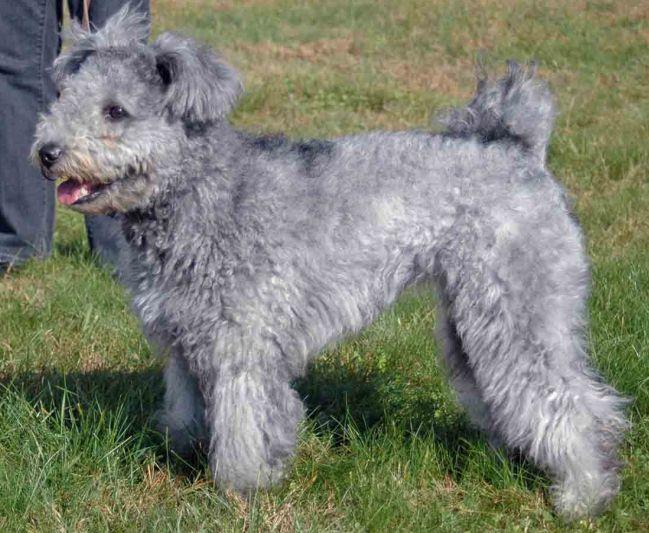
The Pumi is a Hungarian herding dog with a curly coat, high-set semi-erect ears and a switched-on brain that rarely idles. It is small to medium, quick on its feet and built for busy days, and in the right home it is a devoted companion and a keen worker. This is a breed that thrives when its energy has somewhere useful to go. It is also a vocal, high-drive dog that gets bored and noisy without enough to do. Below is a clear picture of the size, temperament, care needs and the questions worth asking before you bring one home.
Pumi at a glance
- Size: Small to medium
- Height: Dogs 41 to 47 cm; bitches 38 to 44 cm1
- Weight: Dogs 10 to 15 kg; bitches 8 to 13 kg1
- Coat: Dense, wavy to curly double coat; never corded2, 3
- Colours: Grey (various shades), black, fawn (red, yellow or cream), or white2, 3
- Temperament: Alert, intelligent, energetic; typically devoted to their people and ready to work4, 5
- Energy level: High; needs daily exercise plus training and problem-solving games4, 5
- Life expectancy: Commonly around 12 to 13 years, with individuals varying6
- Training approach: Reward-based methods suit the breed's sensitivity and speed7
History and Origin
The Pumi developed in Hungary as a practical farm dog. It was bred to be quick enough to shift stock along tight lanes, bold enough to handle independent livestock, and attentive enough to work close with a handler. The breed is still used for herding in its country of origin, and it carries that brisk, alert style into everyday life.4, 2
Appearance and Physical Characteristics
The Pumi is squarely built and lightly framed, with a springy way of moving that makes it look as if it is always about to change direction. The ears are set high and carried semi-erect, and the coat forms loose curls or corkscrews rather than cords.4, 3 Adults sit in a fairly tight size band: males are typically 41 to 47 cm at the withers and 10 to 15 kg, while females are 38 to 44 cm and 8 to 13 kg.1
Temperament and Personality
Most Pumik are alert and observant in the house, and built for motion outdoors. They watch, they scan, and they respond fast. Many are affectionate with their family, but they are rarely laid-back in the way some companion breeds are.5, 4 Because they were shaped to notice change, movement, sound and pressure around stock, they can be naturally vocal and quick to react. Early training and calm exposure to everyday life usually makes a noticeable difference.
Is a Pumi Right for You?
Start with lifestyle fit, not looks. Energy level, noise tolerance, grooming commitment and time for training matter more than aesthetics, and they matter every day. A Pumi suits someone who enjoys training as part of normal life, who takes daily movement as a given, and who is willing to shape calm behaviour from the start. If you want a quiet, low-maintenance dog that switches off easily, this is not the breed for you. In the right home, their energy becomes a useful current rather than a constant storm.
Training and Exercise
Pumik learn quickly, and that cuts both ways. They pick up good habits fast, and they can just as easily rehearse noisy, busy behaviours if those behaviours get attention or become routine. A few principles help:
- Keep sessions short and frequent: two minutes done well beats a long session that frays their focus.
- Use reward-based training: clear cues, quick rewards and gentle consistency tend to work better than harsh corrections for this kind of responsive herding dog.7
- Train calm as a skill: practise settling on a mat, waiting at doors and quiet time after exercise, not just more activity.
- Socialise with care: aim for neutral, positive experiences with people, surfaces, vehicles and other dogs without overwhelming the puppy.
A Pumi usually wants more than a lap around the block. They tend to thrive when exercise is paired with a job: obedience, agility foundations, scent games, trick training, or structured herding work where it is available. The aim is not to build an athlete that never rests. It is to give the brain something satisfying to hold onto.4, 5 That same toolkit of quick footwork, sharp turns and fast decisions often shows up in dog sports, where they can be precise and enthusiastic when the training is clear and the rewards are worth it.4, 2
Health and Lifespan
No breed is free of inherited risk. For Pumik, owners and breeders commonly discuss hip issues and eye conditions, alongside more everyday problems like allergies and ear irritation, especially if the ear coat traps moisture or debris. The practical approach is simple: choose breeders who can show relevant health screening, and keep routine vet care, parasite prevention and dental care steady through the year.8 Most Pumik live around 12 to 13 years, with plenty of individual variation.6 If you are buying a puppy in Australia, keep the basics in order too: microchipping, vaccinations, worming and local council registration, then update the microchip details as soon as the dog is yours.
Grooming and Care
That curly outline is not wash-and-wear. The Pumi's double coat is meant to be maintained so it stays resilient and airy rather than becoming felted or matted. Regular combing and occasional trimming keep the curls tidy and the skin comfortable, especially around the ears, armpits and behind the legs where knots like to start.3
Finding a Pumi in Australia
If you are deciding between a breeder and a rescue, weigh the daily commitment first. A responsible breeder should welcome questions, encourage you to meet the puppy where it is being raised, and provide written proof of any health testing they claim has been done. Be cautious of online ads that pressure you to pay quickly, offer delivery without meeting, or cannot show you the puppy with its mother.9, 10 Rescues can be a good path into the breed, especially if you are open to an adolescent or adult dog. Meeting the dog in person, asking about behaviour in foster care, and discussing your daily routine helps set expectations early.
The Bottom Line
The Pumi is a small-to-medium herding dog with a bright mind and a restless body: compact, curly and rarely idle. It rewards owners who treat training and daily movement as part of normal life, and it frustrates those who do not. Get the match right and you have a steady, capable companion that turns its energy into something useful.
References
- Dogs Australia (DogSA), Pumi breed standard (size, weight, colour)
- Fédération Cynologique Internationale (FCI), Pumi (No. 56) breed listing and standard publication details
- United Kennel Club (UKC), Pumi breed standard (coat, colour, size)
- American Kennel Club (AKC), Pumi overview (history, work, coat, size)
- Canadian Kennel Club (CKC), Pumi breed information (temperament, size, coat)
- Chewy, Pumi breed guide (life expectancy and general care overview)
- Association of Pet Dog Trainers Australia (APDT Australia), position statements (reward-based training definitions)
- PetMD, Pumi dog breed health and care overview
- RSPCA Knowledgebase, how to find a responsible dog or cat breeder
- RSPCA Knowledgebase, safe ways to look for a companion animal online

Dog lover and writer at My Pets Australia, sharing practical breed guides and care advice for Australian pet owners.