Pole Bending
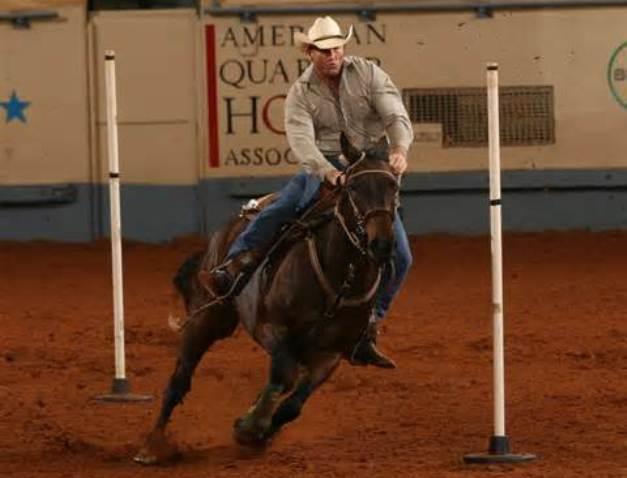
Pole bending is a timed weaving event run around six upright poles, and it rewards tidy lines more than raw horsepower. A horse and rider gallop to the far end of the line, turn, then snake through the poles down and back before sprinting home. The fastest run is usually the smooth one that stays close to the poles without drifting wide. Most people look it up when they are deciding whether to try it at a gymkhana or rodeo day, or when they are setting up a course and want the pattern, spacing and penalties right. Small details matter, because a few metres off in spacing changes how a horse travels, and unclear rules can turn a clean run into a frustrating rerun.
The standard pattern and course set-up
Local clubs can tweak the layout to suit their arena, but the most widely used standard pattern is simple. Six poles are set in a straight line, spaced 21 feet (about 6.4 m) apart, with the same 21 feet (about 6.4 m) from the start line to the first pole.1, 2
A typical run looks like this:
- Cross the start line and ride straight to the far end, past all poles, on either side.
- Turn around the end pole.
- Weave through all six poles to the near end.
- Turn the end pole and weave back to the far end.
- Turn the end pole and gallop straight back across the finish line, on the opposite side to your run-in line.1, 2
Rules and judging
Most competitions judge pole bending on time, with penalties added for mistakes. Knocking a pole down adds a time penalty, often 5 seconds in many systems, though some use smaller penalties.1, 2 Running off pattern, such as missing a pole or weaving the wrong side, typically means disqualification.1, 3 Penalty times vary between organisations, so always check the rule set for the day you are competing under.1, 3 If you are hosting an event, spell out the pattern, timing method and penalties in the program so every rider walks in with the same picture in their head.
Equipment that matters
The poles themselves do most of the safety work. Use poles that are light enough to fall away if hit, rather than stopping a horse like a fence post. Keep them consistent in height across the line, with many patterns describing poles around 6 feet (1.8 m).2, 3 Set them on safe bases that do not create sharp edges or trip hazards, and avoid improvised metal stands or anything that can snag a leg.
For tack, choose a set-up that lets the horse lift its shoulders and turn cleanly: a well-fitting saddle, a bridle the horse understands, and a rider whose leg can stay quiet at speed. The best set-up varies by horse, but poor fit shows up fast in a pattern of tight turns, whether that is short strides, falling in, or popping a shoulder out through the line.
A properly fitted, fastened helmet is the non-negotiable. If you are riding in events run under Equestrian Australia rules, helmets must meet one of the approved safety standards listed by Equestrian Australia, for example AS/NZS 3838, ASTM F1163 with the SEI mark, PAS 015, VG1 and others as specified.4
How a clean run is built
A good pole run looks almost simple. The horse stays straight between poles, then bends around each one with a steady rhythm. Start by riding a larger, quieter line that keeps the horse balanced, then gradually tighten the track as accuracy improves.
Many horses naturally swap leads as they snake through the line. Rather than forcing a change at every pole, focus on balance, with shoulders up, hindquarters engaged, and your eyes already on the next pole. When the horse is organised, lead changes become easier and less dramatic.
The end turns often decide the run. Aim for a turn that stays close without collapsing inward: think of the horse stepping under itself, lifting through the wither, and leaving the pole behind without swinging the hindquarters wide.
Training tips that protect the horse
- Keep sessions short. A few correct repetitions teach more than drilling fast runs until the horse gets tired and starts leaning.
- Vary the work. Mix pole bending schooling with straight-line fitness, transitions and lateral work so the horse stays supple.
- Build speed in layers. Walk and trot the pattern for correctness, canter for rhythm, then add speed only when the horse stays soft and steerable.
Common mistakes to avoid
- Poor set-up. Uneven spacing or a crooked line of poles changes the pattern and encourages drifting. Stick to the standard measurements where possible.1, 2
- Chasing time too early. Speed without shape usually ends in clipped poles, rushed turns and a horse that starts bracing.
- Over-riding the line. Big rein pulls at each pole make a horse fall onto the forehand. Quiet preparation before the turn works better than last-second steering.
Pole bending in Australia
In Australia, pole bending is commonly seen at gymkhanas, rodeo-style events and club days. Conditions and rules can differ between associations and venues, especially around attire, helmet standards, arena size and penalties, so it is worth checking the schedule notes or rule sheet for the specific event you are entering.
The Bottom Line
Pole bending is a small, tidy course that asks for a lot: straightness, quick feet, and a rider who can steer without scrambling the horse's balance. Get the set-up right and train for rhythm, and the speed usually turns up on its own.
References
- American Quarter Horse Association (AQHA), Pole Bending (pattern overview and penalties)
- Cornell University CALS (NY 4-H), Gymkhana: Pole Bending (course description, spacing, penalties)
- AMA Rulebook, Rule 253: Pole Bending (course set-up and penalties)
- Equestrian Australia, Current approved safety standards for helmets

Dog lover and writer at My Pets Australia, sharing practical breed guides and care advice for Australian pet owners.