Pindos Pony
The Pindos Pony is a small mountain horse from the Pindus range of mainland Greece, valued for being sure-footed, hardy and cheap to keep on ground where bigger horses struggle. It has spent centuries doing real work, carrying loads up narrow tracks, pulling light loads, and carrying riders across stone and steep country. Compact and tough-limbed, it is an animal shaped almost entirely by the landscape it comes from. It is also genuinely rare, and in Australia you are very unlikely to ever meet one. This is a breed worth understanding rather than shopping for.
Origin: Greece (Pindos/Pindus mountain regions of mainland Greece)1, 2
Height: commonly around 132 cm (about 13 hands); some sources give a broader range of roughly 114 to 132 cm1, 2
Weight: often reported around 200 to 300 kg (varies with type and condition)1
Coat colour: commonly bay, chestnut, grey, black2
Temperament: typically hardy and frugal; generally described as sure-footed with good stamina (individual handling varies)2
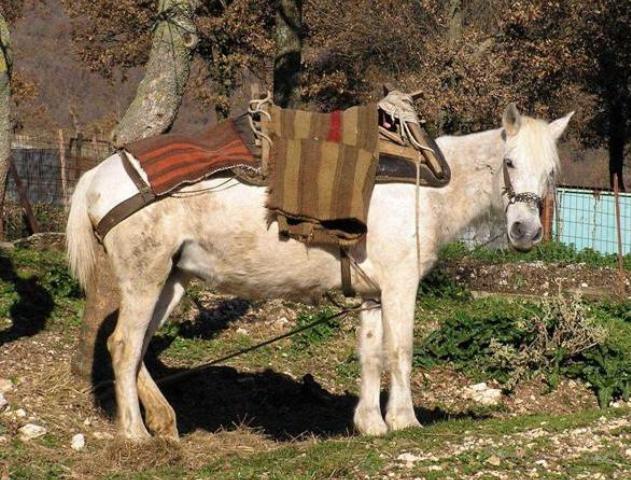
Uses: pack and light draught work, riding; still used in mountainous areas and agrotourism settings2
Lifespan: often 20 to 30 years for ponies with good care (individual and management dependent)
Diet: forage (pasture/hay) as the base, with concentrates only as needed; always provide clean water and salt access7, 8, 9
Health concerns: no widely recognised breed-specific disease; routine hoof and dental care still matters10
Population status: often treated as a breed of conservation concern; published figures vary widely by source and year (see Conservation Status below)2, 3
History and Origin
The Pindos is a local Greek breed that has long been part of rural life in mountainous country, where machinery struggles and tracks are narrow. Modern descriptions place its core distribution in mainland Greece, including Epirus and Thessaly, with Pindos-type animals also appearing in other mountainous areas.2, 4
Some populations live semi-ferally. A well-known example is a group near Neochori, close to Lake Plastiras, and recent reporting also notes local concerns where free-ranging ponies come into contact with farms, gardens, and roads.1, 6
Appearance and Physical Characteristics
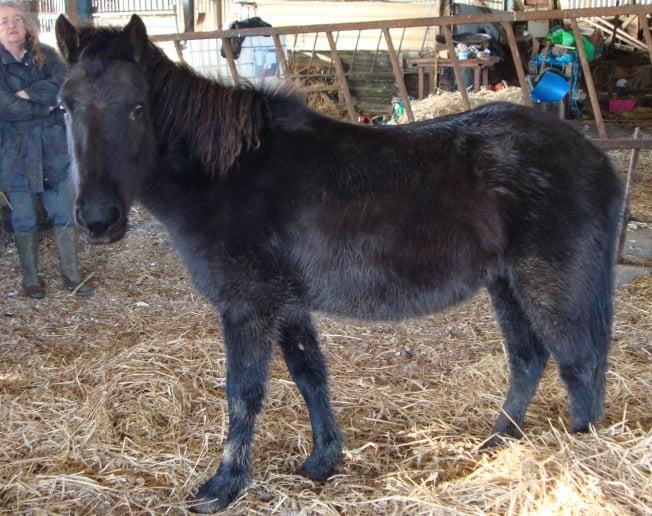
Most sources describe an animal around 132 cm at the withers (about 13 hands), with sturdy legs and hard hooves that may reduce the need for shoeing in some conditions. Colours are commonly bay, chestnut, grey, and black.1, 2
These ponies are shaped by steep terrain: a body that stays balanced on rocky ground, and feet that cope with long miles. Hardy does not mean maintenance-free. Hooves still need regular attention, especially in domestic settings where diet and footing change.2, 10
Temperament and Personality
The Pindos is typically described as hardy, frugal and sure-footed, with good stamina for long days on difficult ground. Its reputation is less about flash and more about reliability: steady movement, endurance, and a body that fits the landscape it comes from. Individual handling varies, as it does with any horse.2
Is a Pindos Pony Right for You?
For most Australians, honestly, this is not a pony you can go out and buy. It is a rare local Greek breed, closely tied to its home regions, and it is not established here. Anyone drawn to the Pindos is usually researching the breed itself, or reading up on Greece's mountain horses, rather than planning to own one.
If you do keep or work a Pindos-type pony in its home country, the appeal is clear. It is economical to keep, suited to rough terrain, and useful for real work rather than show. It is also a serious commitment. Any horse or pony needs daily care, secure grazing, farriery, dental checks and veterinary attention, and hardiness in the field does not remove any of that.10
Training and Exercise
The Pindos is still linked to practical work in difficult country. Common uses include:
- Pack work (moving loads where vehicles cannot easily go)2
- Light draught and small-scale farm tasks2
- Riding, including trail riding and agrotourism activities in mountainous regions2
Work like this keeps the pony fit and occupied, which suits an animal bred for stamina and steady movement across long distances.2
Health and Lifespan
With good care, ponies of this type often live 20 to 30 years, though lifespan is individual and heavily management dependent. There is no widely recognised breed-specific disease in the Pindos, but that is not the same as being risk-free. Routine farriery, dental checks, parasite control guidance from your vet, and sensible feeding all still apply.10
Grooming and Care
Even when a breed is known for strong feet, routine hoof care matters. Regular trimming is commonly recommended on a schedule measured in weeks rather than months, and early attention helps prevent small hoof issues becoming long, expensive lameness problems.10
Teeth deserve the same quiet maintenance. Horses' teeth continue to erupt through life, uneven wear can create sharp edges, and routine veterinary dental checks help keep eating comfortable and efficient.10
Diet and Nutrition
For most horses and ponies, forage is the foundation, pasture when available and hay when it is not. Concentrates such as grains or commercial feeds are tools, not defaults, and are usually added only when workload, body condition, or life stage demands it.7, 8
Water is non-negotiable. Maintenance water needs vary with body size, diet, heat, and work; horses on dry hay typically drink more than horses grazing lush pasture, and hot weather pushes requirements up, which matters through an Australian summer. Provide clean water and plain salt access at all times.8, 9
Conservation Status
You will see the Pindos Pony described as endangered, but published numbers vary sharply depending on whether a source is counting breeding animals, recorded animals, or broader populations.
- Older summaries report relatively small breeding numbers in the early 2000s (hundreds rather than thousands).1
- More recent breed-profile reporting, citing Greece's Centre of Animal Genetic Resources (2019), states about 5,400 horses registered in the studbook, while also noting that fewer may meet the full breed standard due to crossbreeding and identification challenges.2
So rather than treating the Pindos as either safe or about to vanish, it is more accurate to call it a local breed under pressure, especially where land use changes, rural depopulation shifts grazing patterns, and unmanaged or semi-feral groups create conflict around crops and roads.2, 6
A Few Things Worth Knowing
- Hardy does not mean no care. Hardiness helps in rough country, but domestic diets and soft footing can create new problems, especially in the feet and gut, if management is sloppy.10
- No famous disease does not mean nothing to watch. A lack of breed-specific diseases is not the same as being risk-free. Routine farriery, dental checks, parasite control and sensible feeding still matter.10
- Endangered does not always mean a handful left. Conservation labels can reflect geographic concentration, crossbreeding risk, and breeding structure, not only raw headcounts. Different sources may be counting different things.2, 3
The Bottom Line
The Pindos Pony is a small Greek mountain horse with a practical build that makes sense the moment you picture steep tracks, stone underfoot, and long days moving through sparse country. Its story now sits between tradition and modern pressure: local work still exists, but landscapes change, breeding practices blur the edges, and unmanaged groups can end up in conflict with people. The breed's future depends less on romance and more on careful records, sensible management, and the quiet work of keeping a local animal locally viable.2, 6
References
- Wikipedia: Pindos Pony
- Amalthia (Greece): Pindos (horse breed profile, incl. use and 2019 studbook figures)
- Amalthia (alternate page): Pindos (population note and Minority cluster)
- Wikipedia: Horses in Greece (officially recognised Greek breeds and notes on feral populations)
- The Livestock Conservancy: Conservation Priority List (definitions of Critical/Threatened/Watch/Recovering)
- eKathimerini (24 Oct 2024): Locals seek help to coexist with wild ponies on Pindos
- Clemson University (Land-Grant Press): Principles of Feeding a Healthy Horse
- Merck Veterinary Manual (Professional): Nutritional Requirements of Horses and Other Equids (water needs)
- University of Kentucky: Heat-wave management strategy for horses (water and salt access)
- Merck Veterinary Manual (Horse Owners): Dental, Coat, and Hoof Care of Horses

Dog lover and writer at My Pets Australia, sharing practical breed guides and care advice for Australian pet owners.