Pacific parrotlets as pets
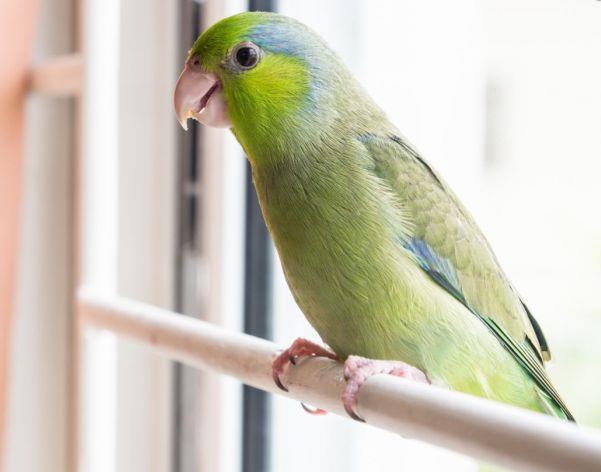
The Pacific parrotlet (Forpus coelestis) is one of the smallest parrots kept as a companion bird, roughly sparrow-sized but with the full personality of a much larger parrot. People are drawn to them because they fit comfortably in an apartment, they are quieter than most parrots, and they are bold, curious and genuinely engaging to be around. For a bird this small, they carry a surprising amount of attitude. They are also a long-term commitment, and small mistakes with cage size, bar spacing or diet can quietly turn an alert little bird into a bored, unhealthy one.
History and Origin
Pacific parrotlets come from western Ecuador and north-western Peru, where they live in dry forest, scrub and cleared edges. In the wild they move in quick, chattering groups, feeding and travelling in short bursts.1, 2, 3 That background matters for keepers, because the traits that make them lively in a living room, constant motion, quick investigation and strong opinions about their space, are the same ones that keep them alive in scrubland.
Appearance and Physical Characteristics
Adults are commonly around 12.5 cm long with a short tail.1 Wild-type birds are mostly green. Males usually show cobalt-blue markings, a blue streak behind the eye like eyeshadow, plus blue on the lower back and rump and across the wings. Females are generally all green, though some hens show faint blue hints.1, 2, 3
In captivity you may also see colour mutations, for example blue and lutino. Mutations vary by breeding line and do not change the species' underlying care needs.
Temperament and Personality
A parrotlet moves through its day like a pocket-sized patrol, alert, fast and ready to investigate anything within beak range. Some individuals are gentle and steady. Others are more assertive and can escalate to biting if they are pushed, startled, or simply not used to hands.4
What usually makes the difference is routine, handling and enrichment. Short, frequent interactions with predictable boundaries suit them better than long sessions that end in frustration. On noise, they lean more towards chirps and metallic squeaks than the piercing screams of bigger parrots, but they are still a parrot with plenty to say.3
Keeping one parrotlet or two
Parrotlets can live singly or in pairs, but introductions are not always simple. They may show aggression to other birds, especially in tight spaces or when competing for food, nesting corners or favourite perches. If you keep more than one, provide generous space, duplicate food and water stations, and be ready to separate them if bullying appears.
Is a Pacific Parrotlet Right for You?
Before anything else, check the rules where you live. In Australia, keeping exotic birds can depend on state law, and some species need a permit. Confirm with your state or territory wildlife authority whether Pacific parrotlets can be kept in your state and whether a licence is required.
Beyond legality, these are a good fit if you want a small, characterful bird and can commit to daily out-of-cage time, a proper cage and a balanced diet for the length of the bird's life. They are less suited to people who want a low-input, hands-off pet, or who expect a bird this small to be automatically gentle. Handling, routine and enrichment are the work, and skipping them is where most behaviour problems start.
Care and Housing
Pacific parrotlets are built for motion. They climb, hop, chew and launch into short, rapid flights when given the chance, so a cage is home base rather than a whole world.
Aim for daily supervised out-of-cage time for movement and exploration. One hour is a bare minimum for many birds, and more is usually better, provided the environment is safe and the bird is not being overstimulated. Offer a rotating mix of enrichment:
- shreddable and chewable toys (safe soft woods, palm, paper-based bird toys)
- foraging opportunities (food hidden in clean paper cups, foraging wheels, puzzle feeders)
- varied perches (natural branches of different diameters, plus a flat perch for resting feet)
Cage size and bar spacing
A parrotlet can wedge itself into surprisingly small gaps, so bar spacing matters even more than overall size. Too-wide bars risk escape and, worse, a bird getting its head stuck.
- Bar spacing: about 1.27 cm (0.5 inch) is a widely used upper limit for parrotlets and similar small parrots.6
- Cage dimensions: choose width over height where possible, so the bird can hop and flap between perches. As a general minimum for small parrots including parrotlets, veterinary references list around 51 x 51 x 76 cm (length x width x height, roughly 20 x 20 x 30 inches), with bigger always preferable if the bird will spend many hours inside.6
Avoid sandpaper perches and cramped starter cages. Think of the space like a thicket: multiple routes, interesting textures, and enough room to move without brushing feathers on every turn.
Cleaning and household safety
Parrotlets eat with small, quick beak movements, and they often drop and re-test pieces, so mess is normal. A simple cleaning rhythm prevents mould, bacterial build-up and insect problems.
- Change cage papers daily, or at least several times a week.
- Wash food and water bowls daily with hot, soapy water, then rinse well and dry.
- Keep birds away from cooking smoke, aerosols, strong cleaners and overheated non-stick cookware.
Diet and Nutrition
Pacific parrotlets are energetic, but that does not mean they thrive on constant seed. A balanced base diet helps prevent common nutrition-linked problems in pet parrots, including obesity and vitamin or mineral imbalances. For many companion parrots, avian-vet guidance commonly recommends a high-quality formulated diet (pellets) as the main component, with vegetables and other fresh foods offered daily.7, 8
A practical daily pattern looks like this:
- Base: quality pellets or formulated diet (your avian vet can recommend brands available locally).7, 8
- Vegetables: a colourful range, for example capsicum, carrot, sweet potato, broccoli and leafy greens.8
- Fruit: smaller amounts, offered more like a treat than a staple.
- Protein add-ons: small servings of cooked egg or legumes can help some birds, especially during heavy moult or breeding condition, but do not make eggs and meat a daily mainstay unless your avian vet advises it for your bird.7
For calcium, provide a cuttlebone or a mineral block, and discuss calcium needs with your avian veterinarian, especially for hens, which can be at risk of egg-binding. Remove fresh foods after a few hours so they do not spoil, and avoid known toxins such as avocado.8
Grooming and Care
Parrotlets respond best to gentle, consistent handling and positive reinforcement. If a bird is biting, treat it as information: the bird is over threshold, confused, or guarding a space. Step back, simplify the setup, and reward the behaviour you want in tiny increments.
If you are stuck in a biting loop, an avian vet or a qualified bird behaviour consultant can help you rule out pain, a common hidden driver of aggression, and rebuild handling safely.
Health and Lifespan
This is a long-lived little bird. Many sources place pet lifespans around 15 to 20 years, sometimes longer with excellent care, and rare outliers have reached 25 years or more.4, 5 Most avoidable health problems trace back to diet and housing, so a formulated base diet, a properly sized cage and daily exercise do a lot of the preventive work. Sudden changes in appetite, droppings, posture or noise are worth an avian-vet visit, since birds tend to hide illness until it is advanced.
A Few Things Worth Knowing
- They are small but not delicate in temperament. Expect a confident bird with firm boundaries.
- Bar spacing is the detail people get wrong most often, and it is a safety issue, not just an escape one.
- Noise is moderate for a parrot, which is part of why they suit apartments.
- Two parrotlets are not automatically happier than one. Pairing needs space and monitoring.
The Bottom Line
The Pacific parrotlet is a lot of bird in a tiny package: bold, active, quieter than most parrots and well suited to smaller homes. In return it asks for real daily engagement, a correctly set up cage, a balanced diet and a keeper who will invest in calm, consistent handling. Check your state rules first, and if you can meet the routine, it is a rewarding companion for well over a decade.
References
- World Parrot Trust, Pacific Parrotlet
- Peru Aves, Pacific Parrotlet (Forpus coelestis)
- eBird (Cornell Lab of Ornithology), Pacific Parrotlet species account
- WebMD, Pacific Parrotlets: Characteristics, Care, and Considerations
- Psittacology, Lifespan of a Parrotlet (includes recorded longevity data for Pacific parrotlet)
- Merck Veterinary Manual, Minimum and bar spacing recommendations (includes parrotlets)
- Avian & Animal Hospital, Feeding guidelines for birds
- Texas A&M University College of Veterinary Medicine, Bird nutrition (Pet Talk)

Dog lover and writer at My Pets Australia, sharing practical breed guides and care advice for Australian pet owners.