Norwegian Elkhound
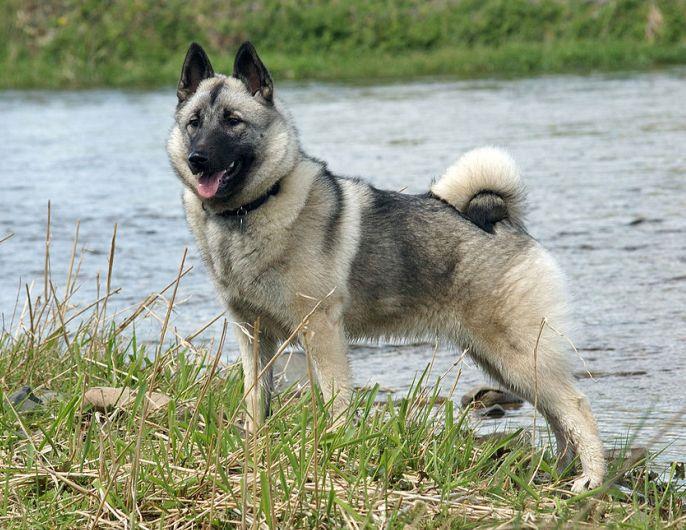
The Norwegian Elkhound is a medium-sized Nordic spitz with a thick grey coat, pricked ears, a tightly curled tail, and a working hunter's stamina. People who love the breed love its alertness, its closeness to family, and its willingness to keep going all day. It is also a vocal, independent dog that needs daily activity and real coat care. In the right home it settles in beautifully. In a home that wants a quiet, low-effort dog, it can feel like too much.
Norwegian Elkhound at a glance
- Size: Medium. Ideal height: dogs 52 cm at the shoulder, bitches 49 cm.1
- Weight: Dogs approx. 23 kg, bitches approx. 20 kg (breed standard ideal).1
- Coat: Close, abundant, weather-resistant double coat (soft, woolly undercoat, coarse outer coat).1
- Colour: Grey of various shades with a black-tipped outer coat, and typically darker ears and foreface.1
- Life expectancy: Commonly cited around 12 to 15 years (individual dogs vary).2, 3
- Temperament (broadly): Alert, independent, energetic, people-oriented, often vocal.3
History and Origin
The Norwegian Elkhound was developed to work in harsh Nordic conditions: travelling over difficult ground, tracking scent, and holding large game at bay with persistent barking while the hunter closed in. That heritage still shows. Today it comes through as stamina, independence, and an always-on awareness of what is happening around the home.3
Appearance and Physical Characteristics
Elkhounds are compact, squarely built dogs with pricked ears and a tightly curled tail. The coat is built to shed water and hold off cold, with a dense undercoat under a harsher outer coat. Markings are typically grey with darker points on the muzzle and ears. Small variations happen, but pronounced departures from the grey colour are considered undesirable in the Australian breed standard.1
Temperament and Personality
This is usually a friendly, steady companion with its own opinions. Many Elkhounds enjoy being close to their people but are not always obedience-tidy without patient training. Their alertness is a joy on bushwalks and a nuisance at home if boredom builds.
Traits owners tend to notice:
- Independence: They think for themselves, which is useful in a working dog and challenging in a suburban backyard.3
- Vocalising: Barking is part of the breed's traditional working style. Without training and enough exercise, it can become a habit.3
- Prey drive and scent interest: Some will follow their nose with real determination, so good fencing and a recall plan matter.
Is a Norwegian Elkhound Right for You?
Be honest about your daily routine before you commit. These dogs cope best in a home that can offer real activity and structure, not just a quick lap of the block.
- Daily exercise and time outside.
- Training that continues well past puppyhood.
- Good fencing and supervision, especially where wildlife or neighbour cats are common.
- A tolerance for some noise, plus a willingness to train and manage it.
If you want a quiet, low-maintenance dog, this is probably not the breed for you.
Training and Exercise
Elkhounds do best when exercise is routine, not occasional. Aim for daily movement plus something for the brain: sniffy walks, short training sessions, and games that let them work for food. Many respond well to positive reinforcement, clear boundaries, and variety. Consistency matters more than intensity.
Early socialisation helps them move calmly through the world, covering other dogs, visitors, traffic noise, and grooming, before their watchful instincts and confidence fully settle in.3
Health and Lifespan
No breed is problem-free, and individual lines vary. The best protection is choosing a breeder who health-tests appropriately, provides evidence, and is open about what they are seeing in their dogs. Elkhounds commonly live around 12 to 15 years.2, 3
Hip dysplasia
Hip dysplasia occurs across many medium and large breeds. It can range from mild changes with no obvious signs through to painful arthritis. If you are buying a puppy, ask what hip scoring scheme the breeder uses and to see documentation for both parents, and ideally close relatives.
Eye disease (including glaucoma and progressive retinal atrophy)
Norwegian Elkhounds are among the breeds in which inherited eye disease is a known concern. Breed-specific programmes and DNA tests exist for some conditions overseas. Primary open-angle glaucoma, for example, has had formal DNA testing schemes recorded by The Kennel Club in the UK.5
Pyotraumatic dermatitis (hot spots)
Hot spots are fast-developing, inflamed skin lesions, often triggered by itching, trapped moisture, or underlying issues such as allergies, parasites, or ear disease. Thick-coated dogs can be more prone if they stay wet against the skin. If you notice sudden, intense licking or a painful, weeping patch, contact your vet promptly, as these can worsen within hours.7
Grooming and Care
The double coat is protective and attractive, but it is not low-maintenance. Regular brushing removes loose undercoat and reduces matting, especially during heavier seasonal sheds. The Australian breed standard describes a coat that should not be trimmed, so in daily life this generally means brushing and de-shedding rather than clipping the dog short.1
Bathing is usually occasional, but drying matters. A thick coat that stays damp close to the skin can contribute to skin irritation in some dogs, particularly in warm, humid weather or after swimming.6
Quick grooming checklist
- Brush thoroughly several times a week, and increase during heavy shedding periods.
- Check ears, teeth, and nails routinely.
- After swims or rain, dry the coat properly down to the skin, not just the top layer.6
Living with a Norwegian Elkhound in Australia
Many Elkhounds enjoy cooler weather, so heat is the thing to plan for. In hotter parts of Australia, manage it with shade, fresh water, cooler walking times, and a home that can stay comfortable in summer. Heavy coats and high energy are a tricky combination if exercise only happens at midday.
Choosing a Norwegian Elkhound: Finding a Reputable Breeder
If you are buying in Australia, start with breeders registered with Dogs Australia (ANKC). A good breeder expects questions, provides paperwork, and is frank about the downsides of the breed as well as the joys.8
Questions worth asking
- Are the puppies registered with a Dogs Australia state body?8
- What hereditary conditions occur in your lines, and what health testing do you do (hips, eyes, and anything breed-relevant)? Can I see results?8
- Can I meet the dam (and sire if possible), and see where the puppies are raised?8, 9
- At what age do puppies go to new homes? In Australia, reputable sellers do not rehome puppies under 8 weeks.10
The Bottom Line
The Norwegian Elkhound is a sturdy, capable dog with the instincts of a working hunter: alert, vocal, and built to keep going. In a home that enjoys daily exercise, steady training, and regular coat care, it can be a wonderful companion. In a home that needs a quiet, low-maintenance dog, it is likely to feel like a constant project.
References
- Dogs Australia (ANKC), Norwegian Elkhound breed standard
- Purina UK, Norwegian Elkhound (overview, size, lifespan)
- American Kennel Club (AKC), Norwegian Elkhound breed information
- United Kennel Club (UKC), Norwegian Elkhound breed standard
- The Kennel Club (UK), DNA schemes for inherited disease in the Norwegian Elkhound
- PetMD, Norwegian Elkhound health and care (coat, heat considerations)
- Kingston Veterinary Hospital (Australia), Hot spots / pyotraumatic dermatitis in dogs
- Dogs Australia, Choosing a breeder (questions to ask)
- RSPCA Pet Insurance (Australia), Tips for safely buying a pet (responsible breeder checks)
- RSPCA Australia Knowledgebase, Red flags when buying pets online (including under-8-weeks concern)

Dog lover and writer at My Pets Australia, sharing practical breed guides and care advice for Australian pet owners.