Norfolk Terrier
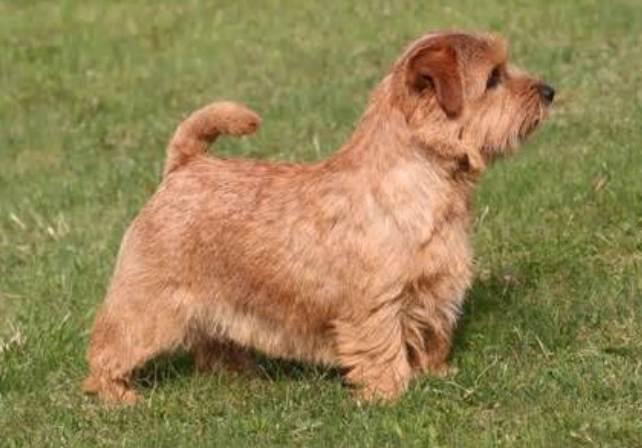
The Norfolk Terrier is one of the smallest working terriers, a compact dog with a hard, wiry coat and drop ears that folds neatly into apartment life without losing an ounce of terrier character. They are bright, sturdy, and quick to investigate the next scent trail, which is exactly what people want from a small dog that can still keep up on a proper walk. With their own family they tend to be affectionate and keen to be involved, alert in the house and energetic outdoors. They suit homes that enjoy daily exercise and steady, practical training. It is a low-drama breed, but the coat and the health checks still need real attention.1, 2
Norfolk Terrier at a glance
- Origin: East Anglia, England1
- Size: Small, with an ideal height of about 25 cm at the withers under the breed standard2
- Weight: Often around 5 to 6 kg, though individuals vary and breed guides commonly place them in a small range1
- Coat: Hard, wiry, straight, lying close to the body and thicker around the neck and shoulders2
- Colours: Red, wheaten, black and tan, or grizzle, with white marks generally undesirable in breed standards2
- Typical lifespan: Over 10 years, with many living into their teens on good care1
History and Origin
The Norfolk Terrier developed in England's East Anglia, where small working terriers earned their keep dispatching vermin around farms and stables. In the show world, Norfolk and Norwich Terriers were historically grouped together, and both ear types sat under the same umbrella for many years.1
In the UK, the broader type was recognised in 1932, and the split came later. The drop-eared variety became the Norfolk Terrier, while the prick-eared variety became the Norwich Terrier.1
Appearance and Physical Characteristics
A Norfolk Terrier is compact and low to the ground, built with surprising substance for such a small dog. The head is wedge-shaped, the eyes are dark and alert, and the ears are a defining feature, medium-sized, V-shaped, and dropping forward close to the cheek.2
The coat is a practical working jacket. It is hard, wiry and straight, with more roughness around the neck and shoulders, designed to cope with weather and undergrowth rather than sit silky and flat.2
Temperament and Personality
Norfolk Terriers are typically lively and watchful, with the classic terrier habit of noticing everything. Breed standards describe them as alert and fearless, and they often carry themselves that way, small in body and busy in mind.2
With their own people they are usually affectionate and keen to be part of the day. With strangers, some are immediately friendly and others take a moment to assess. Early socialisation helps them stay steady and adaptable as adults.
Is a Norfolk Terrier Right for You?
In the right home the Norfolk Terrier fits neatly. They are small enough to travel easily, bold enough to feel like a real dog, and social enough to enjoy family life. They tend to suit smaller homes when their exercise needs are met, they make a natural watchdog, and they are usually keen to be near their people.1, 2
The honest counterweight is that they need daily activity. Boredom turns into barking, digging, and general nuisance behaviour, and terrier independence means training has to be consistent, especially around recall and chasing small animals. The wiry coat needs ongoing grooming too. If you can commit to daily exercise, steady training and regular coat care, this is a compact companion who will stay close.1
Training and Exercise
Norfolk Terriers learn quickly, and they will test boundaries just as quickly if training is inconsistent. Short, frequent sessions work best, with clear cues, rewards that matter to the dog, and calm repetition rather than pressure.
Most will do well with up to about an hour of exercise a day, split between walks, sniffing time, and play. They are small enough for apartment living, but they are not ornamental. They still need daily outlets for energy and curiosity.1
- Best kind of exercise: brisk walks, scent games, short training sessions, and supervised off-lead play in safe areas.
- Common weak spots: recall around wildlife, digging, and barking when under-stimulated or over-excited.
Health and Lifespan
No breed is free of health problems. Norfolk Terriers are generally sturdy, but prospective owners should know about a few conditions that show up across small breeds and terriers.
Patellar luxation is the main orthopaedic one to watch. It is a developmental condition where the kneecap slips out of its normal position, common in small dogs, and it may show up as an intermittent skipping lameness. Treatment ranges from conservative management to surgery, depending on severity and clinical signs.3
- Eye conditions: several problems can occur in dogs, so a vet eye exam is a sensible part of routine care.7
- Allergic skin and ear issues: not unusual in small terriers. Good parasite control and prompt treatment for itchy skin help reduce flare-ups.
- Dental disease: very common in dogs, and prevention is much easier than treatment later.6
If you are choosing a puppy, ask what health screening the parents have had and request documentation where applicable. A good breeder is used to these questions and will not rush you.
Grooming and Care
The Norfolk Terrier's coat is low-shed compared with many breeds, but it is not no-maintenance. Expect regular brushing and periodic hand-stripping, or careful clipping depending on your goals and your groomer's advice, to keep the coat harsh and weather-resistant. Over-bathing can soften the coat and irritate the skin, so keep baths occasional unless the dog is truly dirty.
As with any small breed, dental care matters. Daily tooth brushing, or as close as you can manage, plus regular veterinary dental checks, helps reduce the risk of periodontal disease, which is common in dogs.6
A Few Things Worth Knowing
- Norfolk and Norwich Terriers were the same breed until the drop-eared and prick-eared varieties were separated.1
- Whether you buy or adopt, visit in person where possible and check the environment and the dog's general condition.4
- Ask for health records and confirm the dog is up to date with vaccinations, parasite control and microchipping, noting that requirements and checks vary by state and territory.4
- Be cautious of sellers who will not let you see the puppy, offer to meet in a car park, or push for payment before you have met the dog.4
- In Australia, Dogs Australia (ANKC) member bodies and breed clubs are useful starting points for finding breeders who follow recognised standards and ethics frameworks.5
The Bottom Line
The Norfolk Terrier is a small terrier with a steady, capable build and a mind that likes to stay busy. They do best with daily exercise, clear training, and coat care that matches their wiry jacket. Choose well, ask the unglamorous health questions, and you will usually end up with a compact companion who stays close, watching, listening, and ready for the next walk.
References
- The Kennel Club (UK), Norfolk Terrier: breed information
- Dogs Australia (ANKC), Norfolk Terrier breed standard
- Merck Veterinary Manual, Patellar luxation in dogs and cats
- NSW Department of Primary Industries, Buying or adopting a dog (choosing a responsible breeder, avoiding scams)
- Dogs Australia (ANKC), National body for pedigree dogs in Australia
- American Veterinary Medical Association (AVMA), Pet dental care
- American College of Veterinary Surgeons (ACVS), Cataracts in dogs
- The Kennel Club (UK), Norfolk Terrier breed standard

Dog lover and writer at My Pets Australia, sharing practical breed guides and care advice for Australian pet owners.