Nez Perce Horse: History, Characteristics, and Care
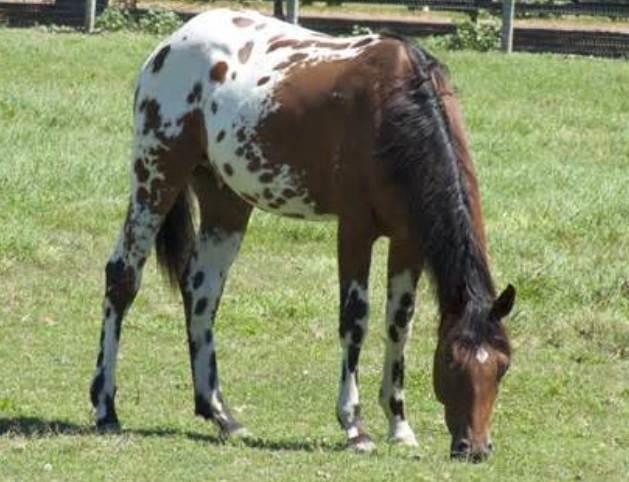
The Nez Perce Horse is a modern breed developed by the Nez Perce Tribe in Idaho, built by crossing old-line Appaloosas with the Akhal-Teke to produce an athletic, long-travelling riding horse that often carries striking spotted colour over a buckskin or palomino base.1, 2 What makes it appealing is exactly that combination: distance-horse stamina and a smooth, easy way of going, wrapped in a coat that turns heads on the trail. It is also a breed with fragile footing. Numbers are small and the name is tied to one specific breeding program, so if you are buying, breeding, or just trying to work out what you are looking at, accuracy matters.1, 2
History and Origin
The Nez Perce (Nimiipuu) are strongly associated with horse culture in the Pacific Northwest, including the skilled breeding and horsemanship that shaped what later became known as the Appaloosa.3, 4 After the Nez Perce War in 1877, the tribe's horse herds were dispersed and reduced, and their ability to keep breeding at the same scale was severely disrupted.3
The breed you can buy today comes from a program the tribe began in the mid-1990s to help restore that horse culture. It is not simply an Appaloosa from Nez Perce country. The name refers to horses registered through this specific program, which crosses old-line Appaloosas (often referenced as Wallowa lines) with the Akhal-Teke to produce a horse bred to cover ground.1, 2 That distinction is worth holding onto when you are verifying breeding or checking a seller who may be using the name loosely because it sounds rare.1
Appearance and Physical Characteristics
Many Nez Perce Horses show classic Appaloosa traits: mottled skin, white sclera, striped hooves, and patterns such as a blanket or spotting, often over buckskin or palomino colouring.2 Not every individual carries obvious spots, so the colour is a common feature rather than a guarantee.2 Some horses also show a sheen people describe as metallic, a look strongly associated with Akhal-Teke coats and thought to relate to hair structure and composition rather than any single pigment.7
Compared with many Western stock-horse types, the Nez Perce Horse is usually longer and leaner, with a runner's outline suited to steady kilometres rather than short bursts.1, 2 Some lines are reported as gaited, showing a smoother intermediate gait such as a running walk, which can make long rides easier on the rider's body.1, 2
Temperament and Personality
Temperament varies with handling, training, and the individual horse, so treat any single label with caution. In general, owners and registries describe the Nez Perce Horse as trainable and people-oriented, with the steady curiosity you tend to see in horses bred and used for distance work.1, 2 What tells you more than any breed description is what the horse shows you in person: how it handles pressure, novelty, and fatigue, especially if you are weighing up endurance riding or remote trail work.
Is a Nez Perce Horse Right for You?
For most Australian buyers this is a specialist choice, not a first horse. The breed is uncommon here, the name is easy to misuse, and the horse is bred for a job (long-distance riding) that suits an experienced owner with the time and property for regular conditioning work. If that is you, and you are prepared to verify breeding through the registry and have a vet check the horse over before purchase, it can be a genuinely rewarding trail and endurance mount. If you want a straightforward paddock companion or a beginner-safe hack, there are far easier breeds to source and keep.
Training and Exercise
These horses are built for long rides, so the training priority is quiet, progressive fitness, with joints, tendons, hooves, and gut all coping with regular work, not just the lungs.1, 2
- Start with calm repetition: short sessions, consistent cues, plenty of breaks.
- Build duration before speed: add minutes and terrain variety before you add intensity.
- Keep the mind occupied: trail exposure, poles, small obstacles, and varied ground do more than endless circles.
Health and Lifespan
Because the Nez Perce Horse draws heavily on Appaloosa lines, it is worth knowing the Appaloosa-linked eye risks that travel with leopard complex (LP) spotting genetics. Horses with LP, especially those homozygous for LP, are associated with congenital stationary night blindness and carry an increased risk of equine recurrent uveitis (ERU), a painful and potentially blinding eye disease.10 Not every spotted horse will develop these conditions, and environment and other genetics also matter, but it is a sensible conversation to have with a vet if you are buying a horse with strong Appaloosa characteristics or planning to breed.5, 10
Beyond that, steady kilometres depend on ordinary maintenance: regular hoof care, dental checks, parasite control, and sensible weight management. Problems like laminitis and colic are not really breed traits, they are management risks that can turn up in any horse when feeding, workload, or routine gets out of balance.6, 8
Diet and Nutrition
For most horses, high-quality forage is the foundation. A practical approach is to plan daily intake around a percentage of bodyweight in dry matter, then adjust for workload, pasture quality, age, and metabolism. Provide clean water at all times and make any feed changes gradually.6
If you suspect colic, the right response depends on the cause. While you wait for the vet, basic first-aid guidance commonly includes removing feed, allowing access to water, and avoiding exhausting the horse with forced walking, all while watching closely for worsening signs.9
A Few Things Worth Knowing
- Origin: the breeding program is based in Lapwai, Idaho, in the United States.1
- Common uses: long trail rides and endurance riding, with some horses also jumping or showing gaited movement in certain lines.1, 2
- Rarity claims: you will sometimes see very precise population figures online, for example "only 200 exist". Those numbers are hard to verify from stable, authoritative sources and can age quickly.1, 2
- What is clear: the breed is tied to a specific registry and remains comparatively uncommon, especially against major breeds.1, 2
The Bottom Line
The Nez Perce Horse is a small, purpose-built breed with real distance ability and distinctive colour, backed by a tribal breeding program with a clear history. For an experienced rider chasing a trail or endurance mount, it can be an excellent fit. For everyone else it is a niche horse that is hard to source in Australia and easy to misidentify, so verify the breeding, get a vet check, and go in with your eyes open.
References
- Nez Perce Horse (overview of the breed and Nez Perce Horse Registry program) . Wikipedia
- The Nez Perce Horse (breed program background and characteristics) . Appaloosa Museum & Heritage Centre
- Appaloosa (history including Nez Perce breeding, and aftermath of the 1877 war) . Wikipedia
- Appaloosa horse breed (Nez Perce association; temperament and endurance traits) . The Oregon Encyclopedia (Oregon Historical Society/PSU)
- Equine Recurrent Uveitis (ERU) (risk, outcomes, Appaloosa susceptibility) . UC Davis School of Veterinary Medicine
- Feed requirements of horses . Agriculture Victoria
- The secret of the unique metallic shine of Akhal-Teke coat: chemical comparison of Akhal-Teke hair with other horse breeds (2024 thesis) . Hungarian University of Veterinary Medicine repository
- Prevention & management of laminitis . The British Horse Society
- First Aid for Horse Owners (colic do's and don'ts) . University of Florida IFAS Extension
- Leopard Complex, Congenital Stationary Night Blindness, and Uveitis (LP genetics and associated risks) . UC Davis Veterinary Genetics Laboratory

Dog lover and writer at My Pets Australia, sharing practical breed guides and care advice for Australian pet owners.