Narragansett Pacer
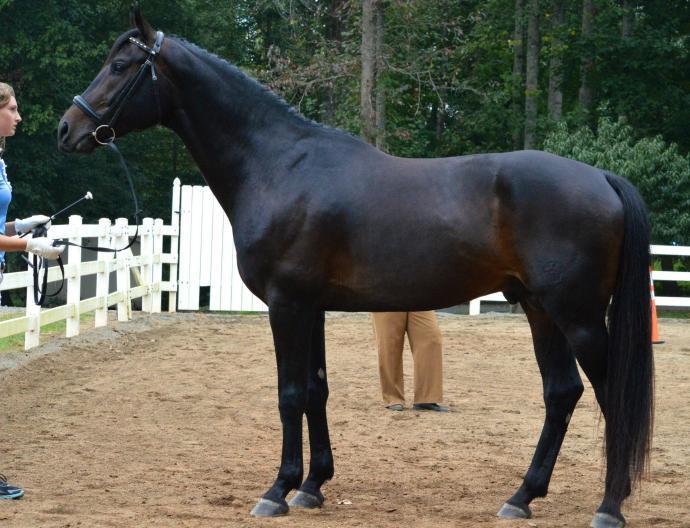
The Narragansett Pacer was colonial America's most admired riding horse, a smooth-gaited saddle animal that carried people comfortably across rough New England roads through the 1700s. It was prized for an easy ambling gait that spared the rider the jolting of a trot, which mattered a great deal when a day's travel meant long hours over uneven tracks. It is often called the first horse type developed in what became the United States. Most people who go looking for it today have met the name in a history book, a gaited-horse conversation, or a New England family story, and want one plain answer. The honest answer is that it no longer exists as a distinct breed.1, 2
Quick Facts
- Origin: Colonial New England, strongly associated with Rhode Island and the Narragansett Bay region.1, 2
- Status: Extinct as a distinct breed, not simply rare.1, 2
- Known for: A smooth ambling gait, often discussed alongside pacing, which made it comfortable over distance and on rough roads.1, 2
- Common colours: Frequently described as chestnut, though historical descriptions vary.1
- Modern relationship to other breeds: Better understood as an influence on later American horses, through bloodlines and type, rather than a living breed with a registry today.1, 3
History and Origin
The Narragansett Pacer is often described as the first horse type developed in the American colonies, shaped in the 1700s from imported stock. Historical sources most commonly link it to gaited horses from the British Isles, with other influences discussed alongside them.1, 4
Through the 18th century it became a widely admired saddle horse: steady underfoot, comfortable to ride, and well suited to the everyday travel of colonial life, where distance and uneven ground mattered more than showiness.1, 5
By the 1800s the pure strain faded. Large numbers were exported, including to the Caribbean, and the horses that remained were crossed into other developing American types until the Narragansett Pacer no longer existed as a breed of its own.1, 2
Gait and Physical Type
Despite the name, the Narragansett Pacer was not only about a true pace. Historical accounts describe an ambling gait, smooth and efficient, valued because it carried a rider with far less jolting than a trot over a long day in the saddle.1
Descriptions of its build tend to emphasise a lighter, longer-lined riding frame rather than a heavy draught type. This was an animal made for covering ground, not for hauling loads.1
Its Place in American Horse History
The breed disappeared, but its influence carried on. The Narragansett Pacer is regularly named among the ancestral ingredients that helped shape later American riding and harness types, especially in discussions of gait and early American horse development.1, 3
In the wider story of harness horses, Encyclopaedia Britannica notes Narragansett Pacer blood as part of the early heritage that fed into the American pacer tradition.6
Is There a Narragansett Pacer Today?
No, and this is the part worth being clear about. Because the breed is extinct, there are no modern horses competing as Narragansett Pacers, and there is no set of breed standards to rely on.1, 2
If the appeal for you is a comfortable, naturally gaited riding horse, the realistic path is to look at established gaited breeds and at individual horses known for smooth intermediate gaits, then judge temperament, soundness and training on their own merits. That is how you find the feeling the Narragansett Pacer was famous for, even though the breed itself is gone.
Health and Care
Older write-ups sometimes list specific health concerns and a set lifespan for the Narragansett Pacer, naming conditions such as laminitis, colic and navicular disease. Those conditions are real in horses generally, but they are not unique to one extinct colonial breed, and there is no modern population to generate reliable breed-level health figures.
For any horse, the practical essentials stay the same: an appropriate diet, regular dental care, parasite management, attentive hoof care, safe conditioning, and early attention to any sign of colic or lameness.
Sorting Fact from Folklore
The Narragansett Pacer has picked up a few claims that do not hold up. It is sometimes linked to the Marwari horse, but the Marwari is an Indian breed with its own distinct history, and a direct relationship between the two is not supported in the mainstream references. It is also sometimes described as popular in the United States and gaining popularity in Australia, which does not fit a breed that is extinct. What can be said accurately is that the Narragansett Pacer remains culturally and historically interesting, and is frequently referenced in discussions of early American horses and gaited bloodlines.1, 2, 5
On famous owners, many prominent Americans are reported to have owned Narragansett Pacers, George Washington among them.1 More colourful stories about named individual horses, with detailed dates and anecdotes, are best treated with caution unless backed by strong primary or museum sources.
Preserving the History
Since the Narragansett Pacer no longer exists as a distinct population, preserving it now means preserving its record rather than its bloodlines. That is archival research, responsible interpretation, and careful separation of documented fact from later folklore.2, 5
That work still matters. It is how an animal that once moved quietly through everyday colonial life stays visible, present in the record even after the horses themselves are gone.5
A Few Common Questions
Is the Narragansett Pacer extinct? Yes. It is generally described as extinct as a distinct breed by the late 19th century, with the last known individuals often placed around the late 1800s.1, 2
What gait did it have? It is most strongly associated with an ambling, smooth intermediate gait, often discussed alongside pacing, and valued for comfort and efficiency over distance.1
Was it a harness racing horse? It was used for riding and local racing in its own time, and it appears in the broader ancestry discussions around American pacing traditions in harness history.1, 6
Can I buy a Narragansett Pacer today? Not as a registered, living breed. If you are after the same feel, a smooth gait and comfortable long-distance riding, focus on individual gaited horses and reputable breeders within existing breeds.
References
- Narragansett Pacer (overview, history, characteristics), Wikipedia
- Harness racing (historical context, mentions Narragansett Pacer heritage), Encyclopaedia Britannica
- American Saddlebred (breed history mentioning Narragansett Pacer as an ancestor), Wikipedia
- History of the American Saddlebred (mentions Narragansett Pacer as early American gaited type), American Saddlebred Horse and Breeders Association
- Arcade exhibit showcases research on the Narragansett Pacer (Rhode Island Historical Society exhibit, academic research context), Roger Williams University
- The Narragansett Pacer, the Lost Horse of the New England Colonies, New England Historical Society
- Narragansett pacer (topic entry), Encyclopaedia Britannica
- Conservation Priority List, The Livestock Conservancy

Dog lover and writer at My Pets Australia, sharing practical breed guides and care advice for Australian pet owners.