Morab Horse
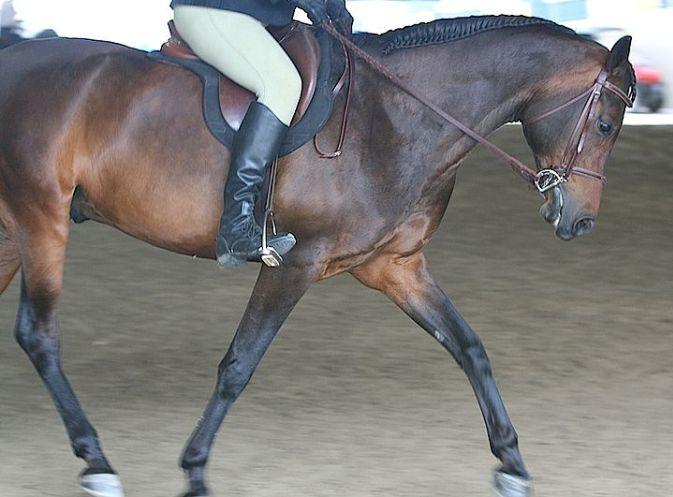
The Morab is an American-developed horse that sits between the Arabian and the Morgan, blending Arabian refinement and stamina with the Morgan's more compact, muscular build. Riders tend to like the same thing about them: a sensible, athletic all-rounder that will happily hack down a trail one day and school a dressage test the next. They are recognised through their own registries, though in casual use the name covers just about any Arabian and Morgan cross. It is a versatile package, and a horse is still a horse. What matters is the individual animal and its paperwork, not the label.
History and Origin
Morabs began appearing in the United States in the late 1800s, when breeders deliberately crossed Arabians with Morgans to combine refinement and stamina with a more compact, substantial build.1
Because many early horses were bred for type rather than within a single unified registry, documentation from the early period is patchy. A Morab registry is commonly dated to 1973, and several organisations later consolidated their records under the Purebred Morab Horse Association (PMHA), with a widely reported merger announced in 2009.1, 5
Appearance and Physical Characteristics
A Morab usually reads as a neat, muscular riding horse with a finer head than a typical stocky type. Many have a refined face with large eyes, a clean throatlatch, and a shorter, strong back, traits that are common in both foundation breeds.1, 3
Height most often falls around 14.3 to 15.3 hands, with a broader reported range of roughly 14.1 to 16 hands depending on bloodlines.3, 1 There is no single usual Morab colour. Solid colours across the spectrum are accepted, and you will see bay, black, chestnut and grey most often.1, 3
Temperament and Personality
Well-bred, well-handled Morabs are often described as trainable and versatile, with enough sensitivity to respond to light aids and enough steadiness to settle into regular work.3 Temperament is shaped by genetics, early handling, training and day-to-day management, so judge the individual in front of you rather than the label alone.
Is a Morab Right for You?
The Morab's main appeal is range. They are commonly ridden English or Western, and you will see them doing everything from low-level club competition to long, steady trail kilometres, along with dressage, jumping, gymkhana-style events, endurance and harness work.3 If you want one horse that can turn its hoof to several jobs without being a specialist at any of them, that suits a Morab well.
For endurance in particular, Australia's organised sport places horse welfare at the centre, with marked courses, time parameters and veterinary checks at set points.6 If you are looking at a Morab for endurance, plan your training around progressive conditioning and careful management rather than speed for its own sake.
Breeding and Registration
In everyday speech, Morab often means any Arabian and Morgan cross. In registry terms the definition can be narrower. The PMHA is widely described as operating an open stud book that accepts Morab-to-Morab breeding and, under set rules, first- and second-generation crosses, while requiring the horse's ancestry to contain only Arabian and Morgan blood and neither breed to fall below a stated minimum percentage, often cited as 25%.1, 3
Before breeding, decide what you actually need:
- A riding horse with a known mix (Arabian by Morgan), where paperwork is helpful but not the whole point.
- A registry-eligible Morab, where you will need to match the rules of the specific registry you intend to use and keep thorough records.
Practical checks before you buy or breed:
- Verify identity and parentage. Confirm microchip or brand details where relevant and match the papers to the horse in front of you. If registration matters, ask what proof the registry requires, as some may require DNA in certain situations.1
- Assess conformation and soundness for the job. The best build depends on whether you want dressage basics, jumping, endurance or harness.
- Watch temperament in context. See the horse caught, led, tied up, saddled, mounted and ridden in an unfamiliar moment, not just in a polished demo.
- Ask about management history. Feet, teeth, worming approach, diet, workload and injury history tell you more than a sales description.
Health and Lifespan
Morabs do not need special care because they are Morabs. They need the same basics that keep any riding horse sound over decades: consistent nutrition, dental care, hoof care, sensible conditioning and a calm routine. Many horses reach their mid-20s and beyond with good management, with a common range of around 25 to 30 years, though individuals vary and longevity is never guaranteed.4
Morabs in Australia
You may see Morabs described as increasingly popular in Australia. There are certainly Morabs here, but good Australia-specific population figures are hard to pin down in public sources, because Morabs may be recorded under different registries or described simply as Arabian and Morgan crosses. Treat claims of rapid growth as marketing unless the seller can back them with registrations, competition records or breeding data you can verify.
The Bottom Line
A Morab is a refined, athletic all-rounder that will do a bit of everything well. The care it needs is ordinary good horsekeeping, and the thing to get right at purchase is the individual horse and its paperwork rather than the name on the ad.
References
- Wikipedia, Morab (overview, history, height range, colour, registry notes)
- Oklahoma State University, Morab Horses
- Horse Illustrated, A Winning Combination: Morab (breed profile, height range, uses, registry notes)
- WebMD, How long do horses live? (typical lifespan range and factors)
- Arabian Horse Network, The Purebred Morab Horse Association (2009 registry merger announcement)
- Equestrian Australia, Endurance (how the sport works and welfare emphasis)

Dog lover and writer at My Pets Australia, sharing practical breed guides and care advice for Australian pet owners.