Moluccan Cockatoo
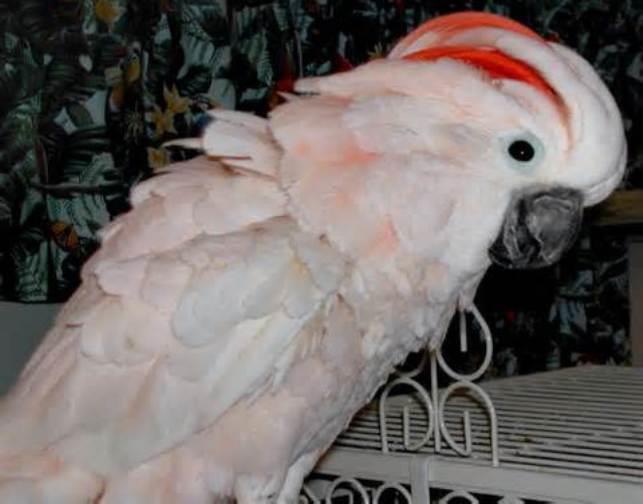
The Moluccan cockatoo (Cacatua moluccensis), also called the salmon-crested cockatoo, is one of the largest and most striking of the white cockatoos, with a pale peach wash through its feathers and a dramatic salmon crest it can raise and lower at will. It is intelligent, observant and deeply social, and for the right household it can be a companion for decades. It is also one of the loudest and most demanding birds you can keep. Big brain, big voice, big lifespan: none of that shrinks to fit a busy schedule. This guide covers what the species actually is, where it comes from, what it needs day to day, and what commonly goes wrong in captivity.
History and Origin
In the wild, Moluccan cockatoos are endemic to the Seram archipelago in Maluku, eastern Indonesia, where they use forest habitats from the lowlands up into higher country. This is a genuinely small range, and that restricted footprint is a large part of why habitat loss hits the species so hard.4, 5
Claims that the species is naturally found across Papua New Guinea, the Bismarck Archipelago, the Solomon Islands, the Philippines or that it is "established in Australia" are not supported by reputable range authorities. Outside Indonesia, occasional sightings may come from escaped birds, but that is not the same as a native, self-sustaining wild population.4
Appearance and Physical Characteristics
Adults are large, roughly 40 to 50 cm long, though size varies from bird to bird. The body is white with a soft peach tint, and the crest is a deep salmon that shows most when it is raised. Underwing and undertail feathers carry a gentle yellow tint, most noticeable in flight or when the wings are stretched. The bill and eyes are dark, and the differences between individuals tend to be subtle rather than bold male and female markings.3, 4
Temperament and Personality
The same traits that make a Moluccan cockatoo captivating are the ones that make it hard work. They are alert, fast-learning birds that notice patterns: who leaves the house, when the kettle boils, where the favourite perch is. They can bond strongly with people, and they often struggle when their social world is inconsistent.
Behaviours to plan around include:
- Contact calling: loud, repeated calling when separated from their preferred person or flock.
- Chewing and dismantling: a normal, necessary behaviour that turns destructive without safe outlets.
- Over-arousal: screaming, frantic pacing, biting or feather damage when routine, sleep or handling are off.
Not every bird shows all of these, but the species as a whole responds better to steady routines, generous enrichment and calm boundaries than to constant cuddling.
Is a Moluccan Cockatoo Right for You?
For most households, honestly, this is not the right bird. It is loud enough to strain relations with close neighbours, it needs daily out-of-cage time and enrichment, and it lives for decades, so you are planning around a companion that may outlast jobs, houses and relationships. The genuine upsides are real: an intelligent, engaged animal that responds to training and stays interested in what is happening around it, and a bond that can be stable for many years when the household suits it.
There is also a legal layer to sort out first. This is an exotic species, not an Australian native, so whether and how you can keep one depends on state law and the licences your state wildlife authority requires. The species is listed on CITES Appendix I, which means international commercial trade in wild-caught birds is prohibited and any legal international movement is tightly regulated, so birds available here come from established captive stock. Check your state authority before you commit.1, 2
The honest cons list:
- Noise: loud calling is normal, not a fault to be trained out.
- Time demand: daily out-of-cage time, enrichment and interaction are essential.
- Destruction: chewing is part of being a cockatoo, so furniture and fittings need protection.
- Behaviour risk: chronic stress can surface as screaming, biting and feather damage.
- Cost: a large enclosure, constant enrichment, a quality diet and avian vet care add up.
Care and Housing
A Moluccan cockatoo needs room to move, climb and fully extend its wings, plus time out of the enclosure every day. A cage that only fits perches and bowls is a holding pen, not a home. An aviary-style setup usually makes life easier for both bird and household, provided it is safe, escape-proof and protected from weather extremes.
Housing priorities:
- Room to climb and flap: a wide footprint matters as much as height.
- Chewable enrichment: untreated branches, shreddable toys and foraging opportunities.
- Predictable sleep: uninterrupted dark, quiet rest is not optional for long-term behaviour stability.6
Health and Lifespan
Moluccan cockatoos are long-lived birds. Several decades is normal, and more than 60 years is possible with excellent care, so this is a lifetime commitment in the literal sense. Two health issues deserve particular attention.
Feather destructive behaviour (plucking and chewing). Feather damage is common enough in captive parrots that it should be read as a warning light, not a habit. The causes usually blend medical and behavioural factors: skin disease, infection, nutritional problems, chronic stress, sleep disruption, or a lack of foraging and enrichment. A proper work-up with an avian vet matters, because you cannot reliably train away a medical cause.8, 9
Respiratory illness and psittacosis. Parrots and cockatoos can carry Chlamydia psittaci (avian chlamydiosis). In people the infection is called psittacosis, or parrot fever. It most often spreads by inhaling dust or aerosols from dried droppings, respiratory secretions and feather dust, especially during cage cleaning. Good hygiene, cleaning that keeps dust down, and prompt veterinary attention for an unwell bird all reduce the risk.10
Grooming and Care
Routine grooming is mostly about supporting normal feather condition: regular access to bathing by way of a mist, a shallow dish or a shower perch, a good diet, and appropriate humidity. Feather trimming is not a standard grooming need. Flight feathers are not hair. They do not grow back on a schedule, and aggressive wing clipping can increase falls, injuries and behaviour problems. If flight restriction is genuinely necessary for safety, discuss it with an avian vet and keep it conservative.6
Be careful with handling that accidentally stimulates breeding behaviour. Persistent stroking along the back and under the wings can escalate hormonal behaviour in some parrots and may worsen aggression or feather-destructive behaviour.7
Diet and Nutrition
In the wild they feed largely on seeds, nuts, fruit and other plant material, with some animal matter such as insects and larvae. Captive diets should be built for long-term health rather than preference.4
A widely recommended approach for pet parrots is:
- Base diet: a formulated pelleted diet suited to cockatoos and parrots, chosen with an avian vet's guidance.
- Fresh foods daily: vegetables and leafy greens, with fruit in smaller amounts.
- Energy-dense treats: nuts and seeds in moderation, often best saved for training or foraging.
- Water: clean, fresh water at all times.
Sudden diet changes can backfire, so a measured transition works better. If weight, droppings or behaviour shift noticeably, treat it as a health signal and book an avian vet.
A Few Things Worth Knowing
- Breeding is not a casual next step. It requires specialised housing, stable pair compatibility, experience reading behaviour and veterinary oversight. Breeding attempts can increase territoriality and hormonal behaviour, and can be stressful or dangerous for incompatible birds. If it is a genuine goal, seek advice from an avian vet and an experienced, ethical breeder network before introducing any nesting options.
- The wild population is in trouble. Moluccan cockatoos are threatened mainly by habitat loss and trapping for the bird trade, and the species is listed as Endangered.1, 2, 4
- Scientific name: Cacatua moluccensis, also known as the salmon-crested cockatoo.
The Bottom Line
A Moluccan cockatoo is not just a bird with a pretty crest. It is a forest-dwelling, long-lived animal built for movement, noise, social contact and constant problem-solving. When those needs are met, meaning space, sleep, diet, enrichment and sensible handling, the bird usually settles into a steady rhythm. When they are not, the problems are rarely small and rarely stay contained.
References
- CITES taxonomy: Cacatua moluccensis (listing and species entry)
- CITES Appendices (official listings)
- World Parrot Trust: Salmon-crested (Moluccan) Cockatoo species profile
- IUCN Red List of Threatened Species (search: Cacatua moluccensis)
- Bird Conservation International (Cambridge University Press): Distribution, abundance and habitat preferences of the Salmon-crested Cockatoo on Seram (2010)
- Merck Veterinary Manual: Management of pet birds (housing, handling, wing trimming considerations)
- Merck Veterinary Manual: Reducing feather plucking (environment, handling and sleep)
- UC Davis School of Veterinary Medicine: Feather-picking in parrots
- Merck Veterinary Manual (Bird owners): Skin and feather disorders of pet birds
- Victoria State Government (Health): Psittacosis (ornithosis, parrot fever)

Dog lover and writer at My Pets Australia, sharing practical breed guides and care advice for Australian pet owners.