Marwari Horse
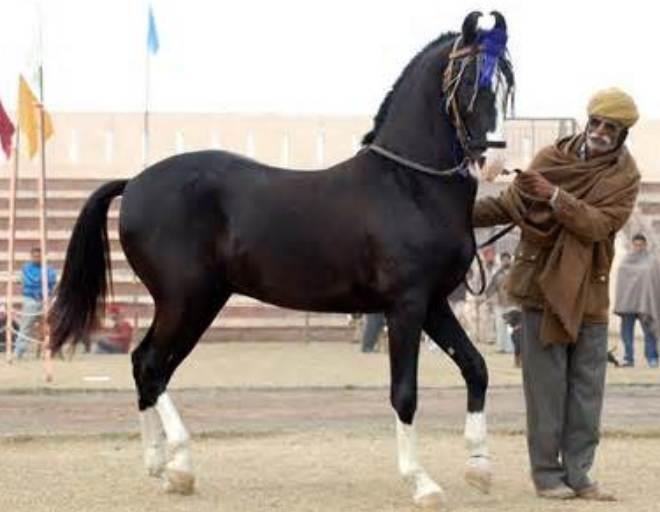
The Marwari is a rare Indian horse best known for one feature you cannot miss: ears that curve inward until the tips nearly touch, and that can rotate through a wide arc. Bred over centuries in the desert region of Marwar in Rajasthan, it is a hardy, athletic riding horse built for heat, distance, and ground that shifts underfoot. It is also uncommon and heavily protected, so much of what gets repeated online about "endangered" status and special gaits is overstated or muddled. This guide sticks to what is grounded: where the breed comes from, what it looks and moves like, and what to keep in mind if you are considering one in Australia. If the ears drew you in, that is fair enough, but it is the whole animal that matters.
History and Origin
The Marwari is a rare Indian breed tied to the Marwar region of Rajasthan in the north-west of the country. It is closely related to the Kathiawari horse of neighbouring Gujarat, and the two share the signature inward-curving ear shape that makes them instantly recognisable.1 The breed was shaped by generations of local breeding for hardiness, long-distance travel, and reliable performance in desert conditions. Traditional accounts place its development with ruling clans in the region and its long use as a cavalry horse across Indian history.1, 2
Appearance and Physical Characteristics
At a distance a Marwari reads as a refined, athletic riding horse. Up close, the head and ears do most of the talking. The ears curve inward and may meet at the tips, and they rotate through a very wide arc, which adds to the impression of constant, precise attention to sound.2, 5
Most Marwaris sit in the light-horse range, commonly around 14 to 16 hands, though reported averages vary by source and bloodline.3, 4 Weights vary too. Some references give average adult weights in the mid-300 kg range (roughly 340 to 365 kg), while many owners will meet individuals that feel heavier, especially well-conditioned horses or those with larger frames.1, 2 The high-set neck and tail carriage are commonly noted.2, 5 Coats occur in many colours, including patterned types such as piebald and skewbald. Some registries and communities hold strong colour preferences, but the breed itself is not limited to a narrow palette.1, 2
You will often hear that the Marwari has a "unique gait". The clearest version of that claim is that some Marwaris show a natural ambling gait, commonly called revaal (spelled several ways). It is typically described as a smooth, four-beat gait that is comfortable over distance.1, 2 Not every Marwari is strongly gaited, and not every smooth-moving Marwari is performing a distinct, breed-specific gait on cue. As with many horses, what you see depends on the individual, its conditioning, shoeing, and training.
Temperament and Personality
Marwaris are widely described as hardy, intelligent, and responsive. Those traits can be a pleasure in experienced hands and a handful if a horse is anxious, under-handled, or pushed too fast.2 As with any breed, temperament is not guaranteed by pedigree. Early handling, consistent training, and a calm environment matter far more than mythology.
Is a Marwari Right for You?
For most people in Australia, the honest answer is that owning one is a long shot, and not because of demand alone. Export from India has been heavily restricted for many years, with only limited pathways for temporary movement for exhibitions or sport in certain circumstances.1, 8, 9 Importing a Marwari means navigating policy, permits, quarantine, and a very small pool of eligible animals. If you are set on it, start by speaking with an experienced equine import agent and check current government requirements before any money changes hands.
Provenance matters just as much. Because the breed's identity is tied so closely to type, conformation, and regional breeding history, formal registration and accurate identification carry real weight. Breed organisations in India have worked towards standard-setting and record-keeping through stud book and registration efforts.7 Be cautious with any casually labelled "Marwari" outside India. Ask for registration documentation, provenance, and veterinary records, and be prepared for gaps.
Training and Exercise
A desert heritage does not make the Marwari low maintenance. It is used for riding, ceremonies, and trekking, and depending on the individual and its training it also turns up in disciplines such as polo and dressage.2 Like any riding horse it needs regular, structured work suited to its fitness and job, along with steady handling. What a given horse can do depends more on its conditioning and schooling than on the breed name.
Health and Lifespan
With good care, many horses live around 25 to 30 years, and the Marwari is no exception.6 Plan for regular farrier visits, dental checks, and a vaccination and parasite-control schedule, plus prompt veterinary attention when something shifts. Small changes in appetite, stance, manure, or demeanour are often the first sign that a horse is unwell.10
Diet and Nutrition
Feeding follows the same fundamentals as any horse. Base the diet on good-quality roughage (pasture and hay), adjusting for workload and body condition.10 Add concentrates such as grain or pellets only when energy demands call for it, and introduce any change gradually.10 Keep clean water available at all times. In hot weather a horse may drink roughly 25 to 45 litres per day depending on conditions and workload.10
A Few Things Worth Knowing
- "Endangered" gets used loosely online. Some international databases have listed the breed as not at risk, while breed groups and journalists have documented periods of sharp decline and ongoing concerns about quality, registration, and sustainable breeding.1, 2 A practical framing: outside India it is genuinely hard to obtain, and within India it is managed as a heritage breed whose numbers and long-term welfare depend on careful breeding and credible registration.
- In Rajasthan the Marwari is more than transport. It appears in ceremonies and processions and remains a visible marker of regional horse culture, often presented with elaborate tack and careful grooming in formal settings.2
- Its origin is the Marwar region of Rajasthan, north-west India.1, 2
The Bottom Line
The Marwari is a horse shaped by place: heat, distance, sand, and a long partnership with riders who needed endurance and reliability. The ears draw people in, but soundness, training, temperament, and the realities of sourcing one ethically and legally are what count. For most Australians it will stay a horse to admire rather than to own, and there is no shame in that.
References
- Wikipedia, Marwari horse (overview, distribution, status notes, export history summary)
- Fédération Equestre Internationale (FEI), Discover the Marwari (conformation, colours, type)
- Merck Veterinary Manual (Pet Owner Version), Description and physical characteristics of horses (lifespan)
- The Spruce Pets, Marwari horse breed profile (size, temperament, rarity outside India)
- Indigenous Horse Society of India, Marwari horse breed (breed-type notes including height range)
- Young Rider Magazine, Meet the Marwari Horse (reported height ranges in modern horses)
- All India Marwari Horse Society, About Society (breed preservation and objectives)
- All India Marwari Horse Society, Export of Marwari Horses (export position and constraints)
- Mint (Livemint), Will and Grace (history of export policy shifting to restricted and early exports)
- Agriculture Victoria, Basic horse care (feeding roughage guidance and water needs)

Dog lover and writer at My Pets Australia, sharing practical breed guides and care advice for Australian pet owners.