Lokai and Tersk Horses
Lokai and Tersk are two rare horse breeds that get mixed up more often than they should, usually when a sale ad puts one name on a horse that looks like the other. They come from different countries, were bred for different jobs, and behave differently under saddle. The Lokai is a hardy mountain riding and pack horse from Tajikistan. The Tersk is a refined, Arabian-type Russian riding horse. Tell them apart before money changes hands, because a "rare breed" label is only as good as the paperwork behind it.
At a glance: Lokai vs Tersk
- Lokai: a tough, mountain-bred riding and pack horse from Tajikistan, traditionally used for transport, local racing and games, and hard work in steep country.1
- Tersk: a Russian light riding horse of strong Arabian type, developed at the Tersk Stud in the North Caucasus (roughly 1925 to 1940) and officially recognised in 1948.2, 3
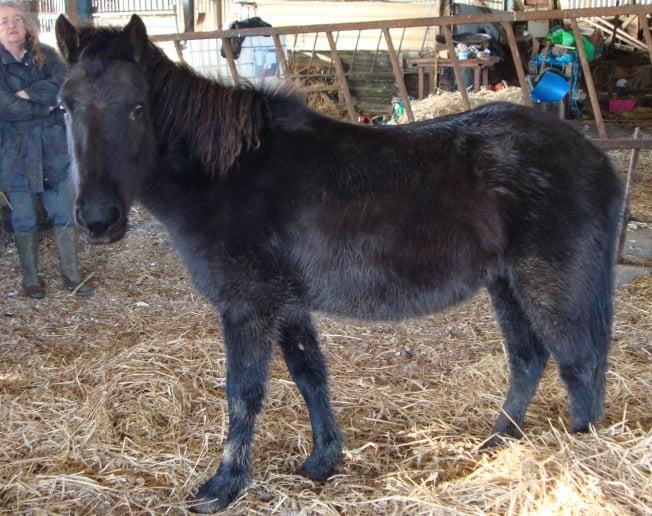
Lokai (Tajikistan).1, 4 A compact, hardy saddle-and-pack type. Many stand around the mid-140 cm range at the wither. Common coat colours include bay, chestnut and grey, and type varies from horse to horse because breeding put function first.
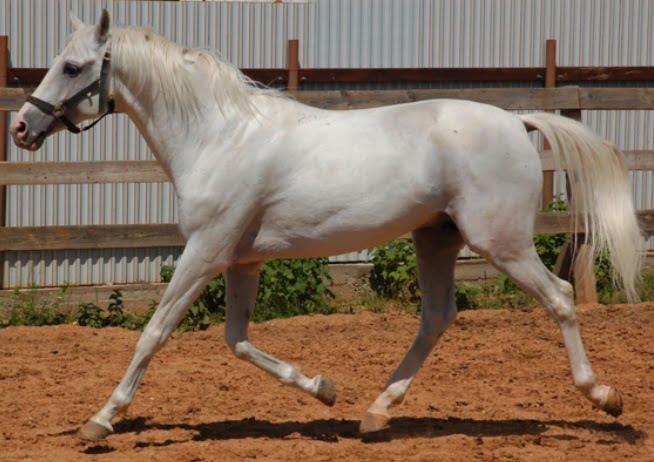
Tersk (Russia).2, 5 A refined, athletic saddle horse close in outline to the Arabian, often grey as well as bay and chestnut. Many stand from the high 150s to about 160 cm, with a lighter, cleaner look than most mountain breeds.
Origins and history
Lokai: shaped by mountains and distance
The Lokai was developed in central and southern Tajikistan, drawing on local mountain horses and later on several Central Asian and imported bloodlines. The goal was never show-ring uniformity. It was an animal that could keep moving, loaded or ridden and often at altitude, on narrow tracks and broken ground.1, 4
Tersk: a Russian Arabian-type riding horse
The Tersk was bred in the North Caucasus at the Tersk Stud and related studs. Breeders started from a small foundation group, including surviving Strelets horses and Arab-influenced crosses, then added Arabian stallions to create a larger, locally adapted riding horse of Arab type. The breed was officially recognised in 1948.2, 3, 5
Physical characteristics
Lokai
Lokai horses are often short and strong for their height, with a practical build and hard feet. They may not look consistent from one animal to the next, and that variability is part of the story. They were selected to work first and to cope with sparse feed, weather, and long days under saddle or pack.4
Tersk
Tersk horses show a cleaner, more Arabian outline: finer skin and hair, a lighter head, a higher-set neck, and a smooth, efficient way of going. The build is riding-horse athletic rather than packhorse compact, which is why the breed is commonly linked with sport and performance uses, including endurance.2, 5
Temperament and trainability
The individual horse matters more than the breed label, but the traditional selection pressures are worth keeping in mind.
- Lokai: bred to be tough and workable in demanding conditions. Often described as hardy and enduring, with maturity that can come a little later when raised in harsher environments.4
- Tersk: selected as a riding horse with Arabian influence. Typically quick to learn, responsive, and athletic when handled with quiet consistency.5
Common uses today
Lokai
Traditionally used for riding and pack work in mountainous regions, and also for local racing and national games such as kokpar (kok-par). In practical terms they suit riders who value sure-footedness, stamina, and resilience over polish.1, 4
Tersk
The Tersk is widely described as suitable for a range of ridden disciplines, including dressage, show-jumping and eventing, and it is also noted for endurance ability. Its build and way of going suit riders looking for a lighter, more refined sport type with staying power.2, 5
Breeding and care: what to be cautious about
Both breeds benefit from the same fundamentals, namely sound nutrition, hoof care, progressive conditioning, and low-stress training. A few cautions are specific to buying a rare breed.
- Do not breed on a name alone. If a horse is marketed as Lokai or Tersk, ask for registry papers or stud documentation. Where documentation is thin, treat the breed as a best guess and assess the individual horse.
- Be conservative with young horses. Lokai in particular are noted as later maturing in traditional conditions. Rushing the workload can cost you years down the track.4
- Match tack to conformation. Tersk horses can have finer withers and a more blood-type shape, while Lokai can be broader and more compact. Check saddle fit on the horse you have, not the breed description.
Conservation and population pressures
Small populations become fragile quickly, especially when breeding is narrow or when economic pressure pushes crossbreeding. The FAO has listed the Tersk as endangered (noting 2007 reporting). Rare can mean vulnerable, not simply unusual.2, 6
Common misconceptions
- "Lokai and Tersk are both Russian Caucasus breeds." No. The Tersk is Russian (North Caucasus), while the Lokai is from Tajikistan in Central Asia.1, 2
- "Lokai are 500 to 600 kg." That is generally too heavy for a small mountain saddle-and-pack type. Reputable breed summaries describe a smaller, lighter horse, often mid-140 cm at the wither.4
- "A curly coat defines the Lokai." Some Lokai show characteristic curling of the hair, but it is not universal and should not be treated as a simple breed test. Even discussions of curly-coated horses treat Lokai curl as an occasional trait, not a guarantee.4, 7
- "There is an International Lokai and Tersk Horse Conservation Trust." No reputable, widely recognised body by that exact name shows up in standard breed references. Treat any such claim cautiously unless it can be verified through recognised registries or major conservation organisations.
The bottom line
Both breeds are specialists, and the right pick depends on the job. If you want a refined sport type with an Arabian flavour, light, quick and efficient, the Tersk is the closer match on paper.2, 5 If you need a durable doer for steep trails, long hours, and practical work, the Lokai's background points that way.1, 4 Either way, the individual horse decides the outcome. Soundness, training history, feet, and temperament will outweigh a label every time.
References
- Lokai (breed overview), Wikipedia
- Tersk horse (history, characteristics, FAO status note), Wikipedia
- Tersk Stud (background on the stud), Wikipedia
- Lokai Horses, Oklahoma State University, Breeds of Livestock
- Tersk Horses, Oklahoma State University, Breeds of Livestock
- DAD-IS (Domestic Animal Diversity Information System), Food and Agriculture Organization of the United Nations (FAO)
- Bashkir Curly Horses (notes mentioning Lokai curl as an occasional trait), Oklahoma State University, Breeds of Livestock
- Tersk horse, breed development and recognition details (History section)

Dog lover and writer at My Pets Australia, sharing practical breed guides and care advice for Australian pet owners.