Live-bearing aquarium fish - livebearers
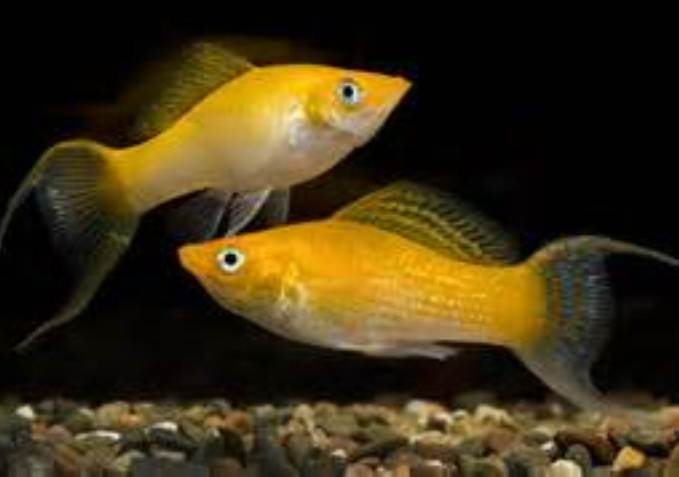
Livebearers are the fish most Australians end up with first, and for good reason. Guppies, mollies, platies and swordtails are colourful, active, cheap to buy and forgiving of a beginner's early mistakes. They also breed in plain view, which is half their charm and half their problem: a tank can go from tidy to crowded in a few weeks. They are hardy, not indestructible, so they still react quickly to poor water. Get the basics right and they settle into a busy, easy rhythm.1, 2
What "livebearer" means
In aquarium keeping, "livebearer" usually means members of the family Poeciliidae: fish that fertilise internally and produce free-swimming young rather than laying eggs. This is why a single female bought from a shop can give birth weeks later, because she may already be carrying sperm from an earlier mating.6
The common freshwater livebearers are:
- Guppies (including Endler's livebearers)
- Mollies
- Platies
- Swordtails
Temperament and tankmates
Livebearers are sold as easy community fish, and most of them earn that reputation. Peaceful has limits, though. Males of some species, especially swordtails, will spar, chase and harass each other and the females, particularly in a small tank or when there are too many males.7
The steadier approach is to keep more females than males, provide sight breaks with plants, wood and rock, and avoid mixing fish that need very different temperatures or water hardness.
Water conditions: stability first
Most popular livebearers tolerate a range of conditions, but they do best when things stay stable and within their comfort zone. Many prefer neutral to slightly alkaline water, and platies and swordtails are commonly kept around pH 7.0 to 8.3.7
Temperature matters too, so choose species with overlapping needs rather than forcing a compromise. A practical mid-tropical range for many community setups is roughly the low to mid 20s degrees Celsius, with Endler's livebearers often kept around 24 to 27 degrees Celsius.7
The one non-negotiable: cycle the tank
Day-to-day life is easy for these fish, but ammonia and nitrite are not forgiving. In an established aquarium, beneficial bacteria in the filter and on surfaces convert toxic ammonia to nitrite, and then to nitrate, which is less toxic but still needs managing. In a brand-new setup that biological filtration takes time to build, so cycle the tank before you add stock.3
Setting up a tank that stays steady
A livebearer tank does not need to be complicated. It needs to be consistent.
- Filtration and surface movement: use a properly sized filter and keep the surface gently moving so oxygen exchange stays strong.1
- Heating for tropical species: use a reliable heater and thermometer, because sudden swings stress fish and invite disease.
- Cover: dense plants, real or artificial, and hardscape give adults places to break line-of-sight and give fry somewhere to vanish between the leaves.
- Lid: active species can jump, especially during chasing or feeding.
Feeding
Most livebearers are omnivores and do well on a quality staple flake or pellet, with small regular extras such as frozen foods and vegetable-based options. The real risk is not the wrong food, it is too much food. Overfeeding turns into water quality problems, and water quality problems turn into disease.1
A good habit is to feed only what they can finish in a minute or two, then stop. A slightly hungry tank is usually a healthier tank.
Breeding, and how to manage it
Livebearers are famous for reproduction because it happens right in front of you and the young arrive fully formed and swimming. Gestation is measured in weeks rather than months, and a single female can produce many fry per brood in good conditions.8
If you do not want a tank that steadily fills with fish, you have a few calm options:
- Keep males only where sexing is reliable, or keep a single-sex group bought from a reputable source.
- Accept some natural predation in a community tank, where many fry will not survive to adulthood without deliberate protection.
- Plan rehoming ahead before you start selectively saving fry.
Common health issues
Most livebearer health problems trace back to stress: unstable temperature, bullying, poor diet, or most commonly deteriorating water quality. A fish that looked fine yesterday can go downhill fast in a tank with ammonia, nitrite or chronic high waste.1, 3
Problems you will see often
- Fin damage and fin rot: often starts as nipping, a social problem, and becomes infected, a water quality problem.
- White spots: usually means "ich", a parasite of aquarium fish. Do not confuse this with Australia's "white spot disease" rules, which apply to crustaceans such as prawns, yabbies and worms, not finfish.4, 5
- Swim bladder problems: a description of buoyancy trouble rather than a single disease. Review feeding, constipation risk and water quality, and treat obvious infections under veterinary guidance where possible.9
Quick checks when something looks off
- Test the water first: ammonia and nitrite should read zero in a stable, cycled tank, and nitrate should be kept under control with maintenance and sensible stocking.3
- Watch the social dynamic: persistent chasing, torn fins and fish hiding all day usually mean the tank is too small for the group, too male-heavy, or too bare.
- Do a partial water change: regular partial changes support fish health and are one of the simplest ways to stop water quality slowly sliding.1
The Bottom Line
Livebearers reward steady hands. Give them clean, well-oxygenated water, stable warmth and enough plant cover to break up the line-of-sight, and they settle into a busy, grazing rhythm that suits a home aquarium. Keep half an eye on breeding and on the tank's quiet chemistry, because that is where most surprises begin.1, 3
References
- RSPCA Australia Knowledgebase, How should I care for my tropical fish?
- RSPCA Australia Knowledgebase, Main welfare issues for fish kept in home aquariums
- University of Florida IFAS Extension, Ammonia in Aquatic Systems (nitrogen cycle and biofiltration)
- Outbreak.gov.au, White spot disease (crustaceans), and note distinguishing it from "white spot" in aquarium fish
- Queensland Government, White spot disease movement restrictions
- Encyclopaedia Britannica, Poeciliid (livebearing) fishes
- Practical Fishkeeping, Quick guide to livebearers (platy, swordtail, Endler's, molly)
- Kerala Agricultural University (Centre for E-Learning), Breeding livebearers (gestation and fry numbers)
- Merck Veterinary Manual, Swim bladder disorders in fish

Dog lover and writer at My Pets Australia, sharing practical breed guides and care advice for Australian pet owners.