Kuvasz SheepDog
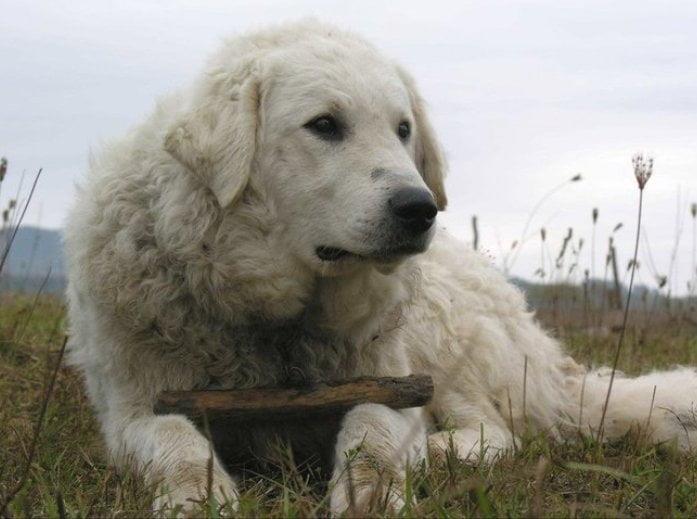
The Kuvasz is a large white livestock guardian from Hungary, bred to live out with the flock, watch quietly, and act the moment something is wrong. That job gave it the qualities people admire most: a calm, steady presence at home, real devotion to its family, and the confidence to make its own decisions when it counts.2, 3 In a settled household it can be a reliable, affectionate companion. It is also a serious commitment, and the same independence that makes it a good guardian means it will not suit every home.
Kuvasz at a Glance
- Type: Livestock guardian breed from Hungary2, 3
- Size (breed standard): Males 71 to 76 cm, females 66 to 70 cm at the shoulder2
- Weight (breed standard): Males 48 to 62 kg, females 37 to 50 kg (some standards list slightly different ranges)1, 2
- Coat: Double coat, medium length on the body, with a wavy to slightly stiff topcoat over a finer undercoat1, 2
- Colour: White, with ivory permitted (other colours are faults or disqualifications depending on the standard)1, 2, 4
- Lifespan: Commonly reported around 10 to 12 years5
History and Origin
The Kuvasz was developed in Hungary as a flock guardian, selected to live alongside stock, watch over it quietly, and respond fast when something did not belong. That working background still shapes the modern dog: a steady presence, strong territorial awareness, and a habit of making decisions without waiting for permission.2, 3
Many sources also describe the breed being used as a property and personal guardian in Hungary across different periods. The details vary from one retelling to another, but the consistent point is function: protection first, obedience second.3
Appearance and Physical Characteristics
A Kuvasz is large, athletic, and built for endurance rather than bulk. In profile the body is close to square, with strong bone that should not look coarse.2
The coat is weatherproof and practical, a harsher outer layer over a softer undercoat. You will often see a gentle wave through the body coat, heavier feathering on the tail and the backs of the legs, and shorter hair on the head and lower legs.1, 2
On colour, there is a common misconception worth clearing up. You will sometimes see the Kuvasz described as coming in cream, grey, or shades of white. In the major kennel standards the accepted colour is white, with ivory permitted. Grey is not an accepted coat colour, though the skin pigment can be slate grey.1, 2, 4
Temperament and Personality
Most Kuvasz are reserved by default, especially with strangers, and deeply attentive to their home territory. They are not looking for trouble, but they notice the world closely and respond quickly when something changes.5
Independence is part of the design. A Kuvasz can learn cues and routines well, but many will not perform obedience for its own sake unless the handling is consistent, fair, and worth their effort. This is often where inexperienced owners come unstuck, not because the dog is unintelligent, but because the dog is selective.5
In a stable household with clear boundaries, a well socialised Kuvasz can live peacefully with children. Supervision matters, mainly because of size and strength, and because a guardian breed may insert itself between children and unfamiliar visitors without being asked.5
Is a Kuvasz Right for You?
For most first-time owners, honestly, this is not the place to start. A Kuvasz does best with space, routine, and someone who is comfortable handling a large, strong dog that thinks for itself. In the right home it can be a steady companion and a reliable guardian. In the wrong setting the same traits turn into constant conflict: a dog that patrols the house, challenges visitors, and ignores requests that do not make sense to it. If you want a dog that lives to please and shrugs off strangers, this is not that breed.5
Training and Exercise
With a Kuvasz the early months are less about tricks and more about careful exposure, teaching the pup what normal looks like so it does not grow up treating everything unfamiliar as a threat. Keep sessions short, reward calm behaviour, and avoid flooding the dog with too much too fast.7, 8
- Start early and stay steady: consistent rules, the same cues, and calm follow-through.
- Use reward-based training: it builds cooperation without triggering defensive reactions or shutdown behaviours.7
- Socialise safely: controlled meet-and-greets, puppy preschool when appropriate, and gradual exposure to surfaces, sounds, people, and handling.6, 8
- Teach place and boundary skills: very useful for a dog that takes guarding seriously.
Kuvasz are capable of long, steady movement and do best with daily outlets: walks, fenced free time, and training that uses their brain. They are rarely a neat apartment dog, not because they need constant sprinting, but because space and a calm routine make their watchfulness easier to manage.5
Health and Lifespan
No breed is generally healthy by default. With a Kuvasz the sensible approach is to assume you will need screening and prevention, then choose breeders and vets who treat that as normal. Lifespan is commonly reported at around 10 to 12 years.5
Large breeds carry a higher risk of developmental joint disease, including hip dysplasia. Ask what screening has been done on the parents and how it was assessed, and keep young dogs lean as they grow to reduce stress on developing joints.9, 10
Gastric dilatation-volvulus (GDV), or bloat, is an acute emergency seen most often in large and giant breeds, particularly deep-chested dogs. It can become life-threatening quickly, so owners should know the signs (unproductive retching, a distended abdomen, sudden restlessness) and have an emergency plan ready.6
Entropion, an in-turned eyelid, is mentioned in some breed standards as a serious fault and does occur in dogs generally. If a pup is squinting, tearing excessively, or rubbing at its eyes, have it assessed by a vet promptly.1
Grooming and Care
The coat is designed to shed dirt and weather, but it still needs regular brushing, more often during the seasonal shed, to prevent matting and to stop the undercoat packing down. Bathing is occasional, as too much shampoo dries the coat and skin.
Routine maintenance matters with a large breed. Keep the nails trimmed before they flare, check the ears, and keep the teeth clean. It is quiet work that saves bigger problems later.
Diet and Nutrition
The single most useful nutrition rule for this breed is to keep the dog lean, especially while it is growing. Extra weight adds load to joints that are already at higher risk in a large breed, so use body condition rather than a fixed cup measure to judge how much to feed, and adjust as the dog grows and its activity changes.10
A Few Things Worth Knowing
- In Australia the Kuvasz breed standard is maintained by Dogs Australia (ANKC), based on the FCI standard. Standards describe the ideal for structure, movement, coat and temperament, and they are useful reading for owners because they explain what the dog was built to do.2, 1
- Stories about individual Kuvasz as royal guard dogs circulate widely online, often without a solid primary source. Treat specific names and anecdotes as folklore unless they are backed by museum archives, kennel histories, or contemporary records. The broader point, that the breed has long been used for guarding work in Hungary, is well supported.2, 3
The Bottom Line
A Kuvasz is a serious, capable dog: calm when life is normal, forceful when it is not. Given space, routine, respectful training, and early socialisation, it can be a steady companion and a dependable guardian. If you are choosing a puppy, prioritise temperament, documented health screening, and a breeder who can talk plainly about what the breed is like at two years old, not just at eight weeks.
References
- FCI Standard No. 54: Kuvasz (as reproduced by Kuvasz World)
- Dogs Australia (ANKC): Kuvasz breed standard
- Wikipedia: Kuvasz (overview and history summary)
- United Kennel Club (UKC): Kuvasz breed standard
- The Spruce Pets: Kuvasz breed profile (characteristics and care)
- Merck Veterinary Manual: Gastric dilation and volvulus (GDV) in small animals
- RSPCA Australia: Here's how to care for your puppy (reward-based training, critical socialisation period)
- RSPCA Australia: Socialising your puppy
- Veterinary Information Network (VIN): Hip dysplasia in dogs (Vetlexicon)
- WSAVA: Global Nutrition Guidelines (body condition and maintaining healthy weight)

Dog lover and writer at My Pets Australia, sharing practical breed guides and care advice for Australian pet owners.