Koolie Dog
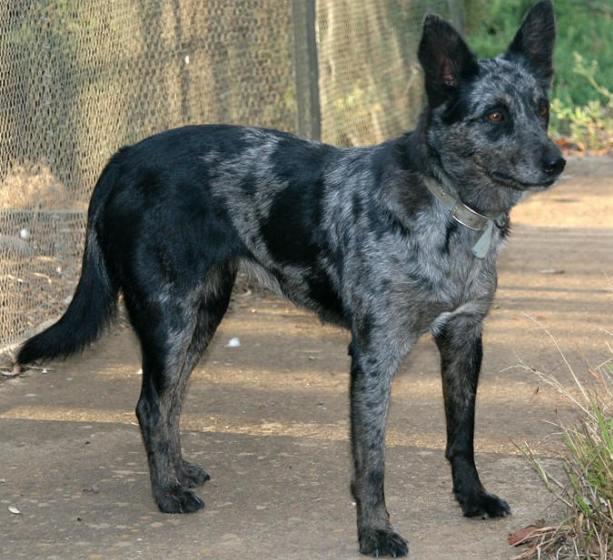
The Koolie is an Australian working dog bred to move stock across big country, known for speed, stamina and a fast, watchful mind. In the right home it is an easy-moving, capable companion that seems to read a situation before you do. It is also a serious commitment: a dog bred for hard work will go looking for hard work, and if you do not supply it, the dog will invent it. Under-exercised or under-stimulated, that intelligence turns quietly into nuisance behaviours. The notes below stick to what is well documented and what matters day to day.
History and Origin
Koolies have worked Australian stock since the early 1800s, shaped less by show-ring looks than by what farmers actually needed: a tough dog that could cover ground, read livestock, and keep doing it day after day.1, 2
Many sources trace the breed's foundations to imported British working dogs, particularly collie-type dogs including smooth-coated merle types, with later influence from other working breeds in some lines as graziers bred for performance over pedigree neatness.1 You will also see the historic label "German Coolie" or "German Collie". It is widely treated as a misnomer and a relic of early settler Australia rather than a reliable statement of origin, and many modern groups prefer "Australian Koolie" or simply "Koolie".1, 2
One point causes constant confusion. Koolies are not recognised as an ANKC standardised show breed. They do, however, have established registries and can be recorded on sporting registers, which allows participation in many organised dog sports under state canine bodies, with rules varying by state and organisation.1, 3, 4 The Koolie Club of Australia formed in April 2000, with a focus on preserving the working dog and maintaining a registry rather than pushing for bench-standard recognition.4
Appearance and Physical Characteristics
A Koolie is best thought of as a working type rather than a tightly standardised look. Build, height, ear set, coat length and overall outline can vary noticeably between lines, because selection has historically prioritised ability and durability over a fixed appearance.1, 2
Most are medium, sometimes medium to large, dogs with a short to medium coat that stays practical in heat, burrs and dust.1, 2 Colours cover a wide range, including solid colours, tricolours and merle patterns, which are common in some lines.1
Temperament and Personality
A healthy, well-raised Koolie usually comes across as alert and economical, always watching, always collecting information. They tend to learn quickly and notice patterns fast, including the ones you did not mean to teach.2
Many are affectionate with their people, but "friendly" looks different from dog to dog. Some are naturally reserved with strangers, and some will use their voice as an alarm system, especially if they are underworked or living with unclear boundaries.2
Is a Koolie Right for You?
Koolies can thrive as companions, but they do not suit every household. The easiest Koolie to live with is usually the one whose daily routine matches its genetics. Choose one when you genuinely want an athletic, observant dog that needs a job, sometimes a literal one on stock, sometimes a carefully designed daily routine. If you cannot commit to daily physical and mental work, this is not the breed for you.
When speaking with breeders or rescue groups, useful questions include:
- What do the parents actually do (work, sport, active pet), and what are they like at home?
- What health screening has been done, covering hips, eyes and hearing where relevant?6, 7
- Are any breeding dogs merle, and how do you avoid producing double merles?8
- What does a typical day's exercise and enrichment look like for your adult dogs?
If you want to compete in dog sports, ask about sporting register eligibility and what paperwork your state body needs. The Koolie Club of Australia notes that club-registered Koolies can be placed on state sporting registers, though requirements and processes differ.3
Training and Exercise
Koolies are built for purposeful movement, not just a lap around the block. A long walk helps, but it rarely meets the whole need. The calmer Koolies you meet are usually the ones getting both physical work and thinking work most days.
- Physical outlets: steady running, hiking, structured fetch, swimming where safe, herding-style games, or farm work.
- Mental outlets: scent work, obedience foundations, trick training, puzzle feeders, short "job" sessions around the house.
- Skill outlets: agility, obedience, tracking, jumping or herding trials, where available under your local rules.4
Intensity matters. A young, fit Koolie can overdo it if it is repeatedly launched into hard stops and tight turns, which is what endless high-speed ball throwing produces. Prefer varied movement, warm-ups and controlled sessions, especially while growth plates are still closing.
On training, Koolies typically respond well to reward-based methods because they are quick to link behaviour to outcome. Keep sessions short and clear. They can become pushy or frantic if training is exciting but inconsistent, or if arousal climbs with no way back down. A few early priorities pay off for life:
- Neutral socialisation: calm exposure to people, animals, vehicles and surfaces without forced greetings.
- Body handling: ears, feet, mouth, gentle restraint, standing still for checks.
- Recall and impulse control: especially around moving things such as bikes, stock and running children.
- Rest as a skill: teaching the dog to switch off indoors.
Health and Lifespan
Koolies commonly live into the mid-teens, with variation by line and lifestyle.2 Because they are not a single, tightly controlled pedigree population, health risk varies from line to line. The smartest approach is practical: ask what the parents have been screened for, and what problems show up in that breeder's dogs over time.
Hip dysplasia is a heritable, multifactorial condition, meaning genes and environment both play a part. In severe cases it can lead to pain, lameness and arthritis. Screening programs exist in Australia to help breeders make better breeding choices.6, 7 If you are buying a pup, ask for hip scoring information on the parents, and ideally older relatives, rather than accepting verbal assurances. Keep young dogs lean and build fitness gradually, because excess weight and inappropriate exercise add pressure to developing joints.
Merle colouring itself is not a problem, but breeding merle to merle can produce double merle puppies, which are at high risk of serious eye abnormalities and may also be deaf. Responsible breeders plan matings to avoid producing double merles.2, 8 If a breeder cannot clearly explain the coat genetics in their dogs, or waves the risk away, walk away.
Grooming and Care
Most Koolies are low-maintenance next to heavy-coated breeds, but they still need routine care. A quick brush once or twice a week usually keeps the coat clean and helps you spot grass seeds, ticks, minor cuts and skin irritation early.
- Nails: trim regularly. Working dogs can still grow long nails if they spend most of their time on soft ground.
- Ears: check after swimming or dusty work, and clean only as advised by your vet.
- Teeth: home toothbrushing is the gold standard for dental health.
A Few Things Worth Knowing
- At their best, Koolies are generalists: sheep, cattle, yards, paddocks, and the constant choreography of gates, trailers and shifting mobs.4
- Many also turn up in dog sports and working roles off the paddock, where their speed and responsiveness translate well, provided the handler is organised and fair.4
- The breed's many names and "types" are a feature of its working history, not a sign of separate breeds.1, 2
The Bottom Line
A Koolie is a working dog first, even when it lives on the lounge. Choose one when you actually want an athletic, observant companion that needs a job, and can supply that job every day. Meet the need and the dog tends to settle into a steady, capable rhythm: bright eyes, quiet feet, and an engine that can run all day. Fail to meet it and that same engine finds its own outlets, none of which you will enjoy.
References
- Wikipedia, Koolie
- Burke's Backyard, Koolie
- Koolie Club of Australia, Register my Koolie
- Koolie Club of Australia, Home
- zooplus Magazine, Australian Koolie: Characteristics, Care, Diet and Price
- Dogs Australia, CHEDS (Canine Hip and Elbow Dysplasia Scheme)
- Dogs NSW, Hip Dysplasia
- Australian Shepherd Health & Genetics Institute (ASHGI), Merle & Health

Dog lover and writer at My Pets Australia, sharing practical breed guides and care advice for Australian pet owners.