Kiger Mustang
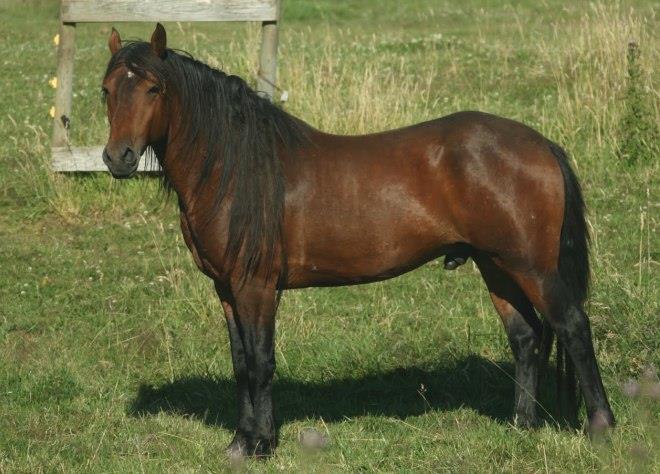
The Kiger Mustang is a distinct-looking wild horse from south-eastern Oregon, known for its dun colouring, primitive markings, and reputation for intelligence and stamina. It is not a domestic breed with a single stud book. It is a managed wild-horse bloodline, and most of what makes it famous is a look: dun-factor coats with a dorsal stripe and faint zebra barring on the legs. People usually search the name to work out exactly that, whether it is a real breed, where it comes from, and what one is actually like. This guide gives a grounded answer and is honest about the fact that, for an Australian, this is a horse to understand rather than one you are likely to own.
History and Origin
The modern Kiger story traces to a Bureau of Land Management (BLM) roundup in 1977 in Harney County, Oregon, when a group of horses with similar colour and markings drew attention and was separated into what became the Kiger and Riddle Mountain Herd Management Areas (HMAs).6 The BLM manages these herds and, after gathers, returns selected animals showing the desired dun-factor colours and Spanish-type characteristics to help maintain the herd's look over time.1, 2
Kiger Mustangs are often discussed in connection with Iberian (Spanish) horse ancestry in the broader mustang population. That is best treated as influence rather than a simple label. What is certain is that the BLM actively manages the Kiger and Riddle Mountain herds with an eye to keeping their characteristic type and appearance.1, 2
Appearance and Physical Characteristics
In the field, Kiger-type horses are recognised by the dun-factor palette and the primitive markings that tend to travel with it, shading that looks painted on rather than placed.1, 2 Because these come from managed wild populations, there is natural variation. You will see tendencies, not a guaranteed set of traits.
- Height: about 13 to 15 hands (roughly 132 to 152 cm).1, 2
- Weight: roughly 340 to 454 kg.1, 2
- Colours: often dun-factor shades including dun, grulla and buckskin, with variation normal.1, 2
- Markings: a clear dorsal stripe along the back and leg barring (zebra stripes).1, 2
- Build: usually compact, athletic and hardy, suited to moving over dry, broken country, though not identical from horse to horse.1, 2
Some popular descriptions also mention a bi-coloured mane and tail. That can happen, but it is not a universal identifier, and colour and markings alone will not tell you a horse's provenance.
Temperament and Personality
The BLM notes that Kiger Mustangs are noted for their intelligence and stamina.1 Beyond that broad description, temperament depends heavily on the individual horse and its handling. A horse raised feral on the range behaves differently from one handled early, and differently again from one that has had patient, consistent training for months.
Assume you are meeting a capable, alert animal that reads pressure quickly. With good handling, many become steady riding horses. With rushed training, they can become guarded and hard to settle.
Is a Kiger Mustang Right for You?
For most Australians, honestly, this is not a horse you will own. Kiger Mustangs come from US public-land adoption programs run through the BLM, and the herds themselves are protected wild animals in Oregon, not stock bred and sold here. Bringing horses into Australia means strict quarantine and considerable cost, so ownership of a genuine Kiger here is closer to theoretical than practical.
If you are set on a hardy, Spanish-type or dun-coloured horse, a better path is to work with a reputable local breeder or rescue and choose the individual horse in front of you on soundness and temperament rather than chasing a famous name. If your interest is the animal itself, following US wild-horse management is the realistic way to engage with it.
Training and Exercise
Once a mustang is gentled and trained, its job description looks much like any other riding horse's, depending on soundness, conformation, temperament and the rider's skill. Kiger Mustangs are commonly adopted as pleasure mounts and can suit trail riding and longer days in the saddle when conditioned carefully.1 A practical way to think about training is to focus on the basics that protect both horse and handler:
- calm leading and yielding to pressure,
- safe handling of feet, since farrier work is non-negotiable,
- consistent, low-drama exposure to ordinary life: gates, tarps, traffic noise, dogs and water crossings,
- slow fitness building, because tendons and hooves adapt more slowly than enthusiasm.
A Few Things Worth Knowing
The management story is a big part of what makes these horses distinct, and a couple of common claims are worth correcting.
- Management and conservation. The BLM periodically transfers horses between the Kiger and Riddle Mountain herds to help maintain genetic diversity, and returns selected animals to the range after gathers.1, 2 In the United States, wild horses and burros on public lands are protected under the Wild Free-Roaming Horses and Burros Act, which sets out protections and penalties for unlawful removal, conversion to private use, and harassment or killing.3, 4, 5
- How they differ from other mustangs. Mustang is a broad label for free-roaming horses in the American West with varied ancestry. What sets the Kiger and Riddle Mountain horses apart is the management focus on a particular phenotype, Spanish-type conformation and dun-factor colouring, supported by periodic herd exchanges. That does not make them better than other mustangs, just more predictable in a narrow band of looks, and more famous for it.1, 2
- Not an official state horse. Kigers are protected because they are wild free-roaming horses on US public lands, not because of any state symbol status. A proposal to make the Kiger Mustang Oregon's state horse has been raised before, but it has not been established as an official designation.3, 4, 5, 7
- No single breeding authority. The BLM manages the wild herds and decides which animals return to the range after gathers. In private ownership, various registries and breeder groups promote standards and ethics, but there is no one universal authority controlling all domestic breeding.1, 2, 8
The Bottom Line
The Kiger Mustang is a living, managed wild-horse lineage shaped by a specific landscape and a specific goal: keep a small, hardy herd that still looks like itself. When that translates into private ownership, the animal is not a legend or a logo but a horse, alert, adaptable, and shaped as much by handling as by heritage. For Australian readers, it is best appreciated as one of the more striking wild-horse stories rather than a realistic purchase.
References
- Bureau of Land Management (BLM), Kiger Herd Management Area (HMA)
- Bureau of Land Management (BLM), Riddle Mountain Herd Management Area (HMA)
- U.S. Code (16 USC 1331), Wild Free-Roaming Horses and Burros Act: Congressional findings and policy
- U.S. Code (16 USC 1332), Wild Free-Roaming Horses and Burros Act: Definitions
- U.S. Code (16 USC 1338), Wild Free-Roaming Horses and Burros Act: Criminal provisions
- Kiger mustang, overview of 1977 roundup and early herd management (Wikipedia)
- List of U.S. state horses, notes on Oregon proposals and lack of official designation (Wikipedia)
- International Alliance of Kiger Mustang Breeders, stated aims and breeder code and standards (organisation site)
- Bureau of Land Management (BLM), National Wild Horse and Burro Program

Dog lover and writer at My Pets Australia, sharing practical breed guides and care advice for Australian pet owners.