Jardine's parrots - red front parrots as pets
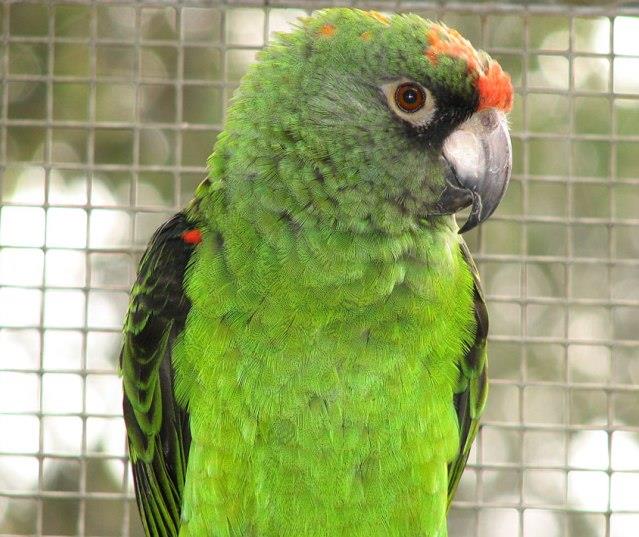
The Jardine's parrot, also called the red-fronted parrot, is a compact green African parrot that suits people who want a clever, engaging companion bird without the size and volume of a large macaw or cockatoo. It is bright, observant, and often keen to interact, and many pick up sounds and a few words. With good care it can share your home for decades. It is also a serious commitment: this is a busy bird that needs daily handling, real enrichment, and a proper diet, or it will unravel from boredom.1, 2
Quick facts (Jardine's parrot / red-fronted parrot)
- Scientific name: Poicephalus gulielmi2
- Adult size: about 28 cm long (varies by subspecies)1, 2
- Adult weight: commonly around 200 to 227 g (some individuals and subspecies heavier)1, 2
- Lifespan in captivity: often 20 to 35 years or more, with good diet and veterinary care1
- Temperament: active, social, bright, can learn sounds and words, needs daily interaction and enrichment1, 2
History and Origin
Despite the tropical-parrot look, the Jardine's parrot is an African bird, not a Central or South American one. It is native to West and Central Africa, with different subspecies spread across regions including parts of West Africa and the Congo Basin, and eastwards to Kenya and Tanzania.1, 2 In Australia it is an exotic species, so availability and any keeping requirements can vary from state to state. Check your state wildlife or agriculture authority before buying one.
Appearance and Physical Characteristics
A Jardine's parrot is mostly green with a patch of red-orange on the forehead, though the amount of red varies between individuals and subspecies. The body is sturdy and compact, the build typical of Poicephalus parrots.2 At around 28 cm and 200 to 227 g, it sits at a manageable middle size: bigger than a budgie, well short of a large parrot.1, 2
Temperament and Personality
These are busy birds. In the home they climb, investigate, chew, and watch the household from a high perch. Many mimic sounds and pick up words, though clarity and chattiness vary from bird to bird.1, 2 Handled gently and consistently, they are observant and often keen to interact.1, 2
Noise is part of the package. They are not loud all day, but they can produce sharp calls, especially when excited, alarmed, or during hormonal periods. Plan for a bird that can be heard across the house at times.2
Is a Jardine's Parrot Right for You?
For the right household, yes. The appeal is real: clever, long-lived company that enjoys training and interaction. Many learn step-up, recall in safe spaces, stationing, and simple tricks using rewards.1, 2
What catches people out is the daily workload and the length of the commitment. A bored Jardine's can become noisy, nippy, or destructive, so enrichment and interaction are not optional. Even a bird that is quiet for a parrot can still be loud in absolute terms.2 The lifespan can outlast jobs, rentals, and relationships, so make a plan for the bird's future before you buy.1
Care and Housing
Choose the biggest cage you can sensibly fit. A Jardine's parrot needs enough room to fully extend its wings, climb, and move between perches without constantly bumping the bars.2 Set the cage in a bright area with steady household company, but not in the middle of the chaos. Avoid kitchens, where fumes and aerosols are a real risk for birds, and give the bird somewhere to retreat from constant traffic.
Inside the cage, include:
- Perches with variety: different diameters and textures to support healthy feet.
- Chewable, destructible toys: rotate them to keep interest up.
- Foraging opportunities: food hidden in safe puzzle toys or paper parcels, so eating becomes an activity.
Daily supervised time outside the cage helps with muscle tone, coordination, and behaviour. Some birds fly, others prefer climbing circuits and short flutters. What matters is regular movement and things to do.
Training and Socialisation
Training works best in short, calm sessions with a clear reward and an easy exit. Start with step-up, gentle towel familiarity, and a comfortable carrier routine long before you need them.
- Keep sessions short: 1 to 5 minutes, a few times a day.
- Reward what you want: tiny favourite treats, praise, and access to a preferred perch.
- Watch body language: back off if the bird pins its eyes, leans away, flares feathers, or starts breathing rapidly.
Socialisation is less about meeting everyone and more about predictable, safe exposure: different rooms, different perches, and different people moving gently through the space. Consistency builds confidence.
Diet and Nutrition
Seed-only diets are a common slow problem in pet parrots. Australian veterinary guidance generally supports formulated pellets as a major part of the diet, with vegetables making up a substantial share and fruit offered in smaller amounts.3, 4
A practical pattern looks like this:
- Pellets: often around 60% of the diet for many parrots, depending on the bird and veterinary advice.3
- Vegetables: a generous daily mix, especially leafy greens and colourful vegetables.3, 4
- Fruit: keep it modest, since the sugars are easy to overdo.4
- Seeds and nuts: best used as training rewards and enrichment, not the main meal.
Some common household foods are dangerous for birds. Avoid avocado, onion, garlic, and rhubarb in particular.4
Health and Lifespan
With appropriate care a Jardine's parrot can live 20 to 35 years or more, so most of the risks are the slow, preventable kind.1 High-fat diets and low activity can quietly lead to weight gain, and a pellet-and-vegetable base diet plus daily movement are the usual foundations of prevention.3, 4
Feather plucking can be linked to stress, boredom, diet gaps, skin irritation, or underlying disease. Treat it as a health problem, not simply behaviour. Improve enrichment, review the diet, and book an avian vet visit early if feather damage starts.
Small changes are often the first clue with birds. Regularly weighing your parrot and keeping an eye on its droppings can help you notice problems before they become emergencies.4
A Few Things Worth Knowing
- Grit is not routine: unlike pigeons and some poultry, parrots hull seeds rather than grinding them internally, so routine grit is generally not recommended. Ask an avian vet before offering it as a default supplement.
- Kitchens are a hazard zone: cooking fumes and aerosols can be dangerous for birds, so keep the cage well away.
- Exotic status: as an African species, its availability and keeping requirements can differ by state, so confirm the rules locally before you commit.
The Bottom Line
A Jardine's parrot can be a steady, vivid presence in a home: green flashes at the cage door, careful beak-work on toys, a sharp call from the other room, then quiet concentration over breakfast greens. Set up the space well, feed with intention, and give the bird something meaningful to do each day, and you are far more likely to see the best of the species.1, 2
References
- Northern Parrots · Jardine's Fact Sheet
- World Parrot Trust · Red-fronted (Jardine's) Parrot
- RSPCA Queensland (Greencross Vets) · Pet bird nutrition
- Animal Welfare League Queensland · Birds: feeding, weight and droppings guidance
- U.S. Fish & Wildlife Service · Red-fronted Parrot (Poicephalus gulielmi)
- Susan Clubb · Jardine's Parrot species profile
- The Vet Desk · Jardine's Parrot: information and care
- RSPCA World for Pets (Vetafarm) · Parrot Pellet Maintenance Diet: feeding guidance

Dog lover and writer at My Pets Australia, sharing practical breed guides and care advice for Australian pet owners.