Jagdterrier
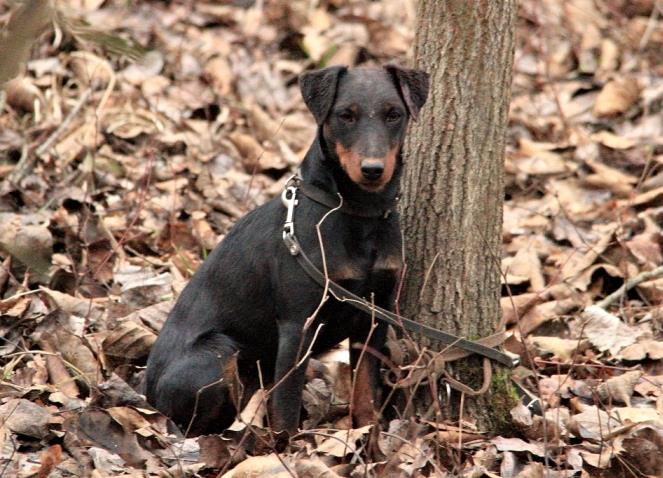
The Jagdterrier, also called the Deutscher Jagdterrier or German Hunting Terrier, is a compact German working terrier bred to hunt both underground and above ground. It is a small dog with real grit: alert, tough, quick to notice movement, and rarely short of opinions about the world outside the gate. People who like training and daily activity tend to love them. The catch is that all that drive comes standard, so a Jagdterrier that is under-exercised and under-trained can be a genuine handful to live with.
History and Origin
The Jagdterrier was developed in Germany after the First World War for hunting performance rather than show traits. Breeders wanted a small, tough dog that could work underground on fox and badger, and also flush game above ground.1
That background still shows in the modern dog. The breed's default settings lean towards high persistence, strong scent interest, and a willingness to push into dense cover and tight places. Those traits are brilliant in the right hands and exhausting in the wrong routine.
Appearance and Physical Characteristics
Jagdterriers are compact, muscular terriers built to move efficiently through scrub and tunnels. The breed standard places them in the small-to-medium range, at 33 to 40 cm at the withers, with an ideal working weight that commonly sits under 10 kg: dogs 9 to 10 kg, bitches 7.5 to 8.5 kg.1, 2
The coat is built for protection: dense and weather-resistant, in either a smooth, short variety or a harsh, wiry one. Colour is typically dark, black, dark brown, or black-grey, with clearly defined tan or rust markings. A light or dark mask is permitted, and small white marks can appear on the chest and toes.1
Temperament and Personality
A well-bred, well-managed Jagdterrier is described in the standard as vital, full of temperament, trainable, and neither shy nor aggressive.1 In a home, that usually looks like a dog who is alert, busy-minded, and quick to react to movement or novelty.
Common realities owners report, especially with adolescent dogs, include:
- High drive around small animals: many Jagdterriers will chase cats, chickens, or wildlife if not trained and managed carefully.
- Persistence: once they lock onto a scent trail, a sound, or a moving target, they can be hard to interrupt.
- Vocal alerts: some are naturally watchful and will comment on any change around the property.
They can live well with children and other pets, but that is rarely something to assume. It depends on early socialisation, the individual dog, and the household's ability to supervise and prevent the dog from rehearsing chasing behaviour.
Is a Jagdterrier Right for You?
This breed suits people who genuinely enjoy training, want a dog to walk and work with every day, and do not mind managing prey drive with secure routines. If that is you, a Jagdterrier can be a superb companion. If you want a low-maintenance pet that settles happily with a short walk and minds its own business, this is not the breed. Under-stimulated, they redirect that drive into fence running, chasing, and conflict with other animals, and that is where most of the trouble starts.
Training and Exercise
With Jagdterriers, training is less about clever tricks and more about reliable defaults: coming when called, disengaging from a scent, walking past triggers, and settling when nothing is happening.
Early socialisation matters because puppies are especially sensitive to learning what is safe during a critical socialisation period. Australian guidance commonly places this window roughly between 3 and 17 weeks of age, and stresses short, positive exposures that do not overwhelm the puppy.3, 4
A practical approach that suits the breed:
- Keep sessions short and frequent (minutes, not marathons), then let the puppy rest.
- Reward calm observation around new people, surfaces, noises, and friendly dogs. Do not wait for perfect behaviour.4
- Teach a strong recall and a "leave it" early, before chasing becomes a self-rewarding habit.
- Avoid harsh methods. Reward-based training is widely recommended for puppies and helps reduce fear-based fallout.3
Daily movement is non-negotiable, but for this breed mental work often makes the bigger difference. A Jagdterrier can be physically tired and still spend the evening scanning fences for movement if its brain has had nothing to do. Useful outlets include on-lead walks with structured sniffing time, short training blocks (recall games, loose-lead practice, impulse control), scent games at home (hidden treats, trail lines, puzzle feeders), and terrier-friendly dog sports where available. Because they can be single-minded, safety matters: secure fencing, a long line in unfenced areas, and careful introductions to off-lead spaces.
Health and Lifespan
Jagdterriers often live around 10 to 12 years, varying with genetics, workload, and general care. No breed is bulletproof, and individual lines differ. For this breed the bigger day-to-day risk is often injury from high-intensity activity, scrapes, punctures, and strains, but a couple of conditions are worth watching for.
Hip dysplasia is an abnormal development of the hip joint that can lead to arthritis and pain. It is more commonly discussed in larger breeds, but it can occur across dogs, influenced by hereditary factors as well as growth, nutrition, and exercise patterns.5 Prevention and early detection are mostly about good decisions rather than guarantees:
- choose breeders who health test and can explain the results plainly
- keep puppies lean and growing steadily, not rapidly
- see a vet early if you notice stiffness, bunny hopping, or reluctance to jump5
Some Jagdterriers develop eye or skin issues, as many active outdoor dogs do. Regular checks help: watch for persistent redness, discharge, squinting, ear irritation, or recurrent itching. If a problem keeps returning, treat it as a veterinary issue rather than a grooming one.
Grooming and Care
The Jagdterrier coat is built for function, so grooming is usually straightforward. A weekly brush is often enough to remove dead hair and check for grass seeds, ticks, burrs, and small wounds after time in long grass or scrub.
- Coat: brush weekly. Harsh-coated dogs may benefit from occasional hand-stripping if you want to keep the coat texture.
- Ears: check regularly for wax, redness, or odour, especially after swims or dusty runs.
- Nails: trim as needed. Terriers can be surprisingly tolerant of long nails until it affects their gait.
- Teeth: routine brushing is still one of the most effective home habits for long-term comfort.
A Few Things Worth Knowing
- The Jagdterrier is at heart a versatile hunting terrier, expected to work both underground and above ground using scent, persistence, and a compact body built for rough terrain.1
- In working contexts that drive is the point. In pet homes it needs careful channelling so it does not spill into chasing, fence running, or conflict with other animals.
- The breed is also known as the Deutscher Jagdterrier and the German Hunting Terrier.
The Bottom Line
A Jagdterrier suits people who like training, enjoy daily movement, and do not mind managing prey drive with secure routines. In return you get a small dog with real working grit: alert, capable, and always paying attention. It is also a serious commitment, so go in knowing the work is the whole deal, not an optional extra.
References
- Fédération Cynologique Internationale (FCI), German Hunting Terrier (Deutscher Jagdterrier) breed entry
- FCI Standard No. 103, German Hunting Terrier (Deutscher Jagdterrier), English translation
- RSPCA Australia, Here's how to care for your puppy (socialisation and reward-based training)
- RSPCA Knowledgebase, Is socialising my puppy important?
- Merck Veterinary Manual (Pet Owner Version), Hip Dysplasia in Dogs

Dog lover and writer at My Pets Australia, sharing practical breed guides and care advice for Australian pet owners.