Ibizan Hound
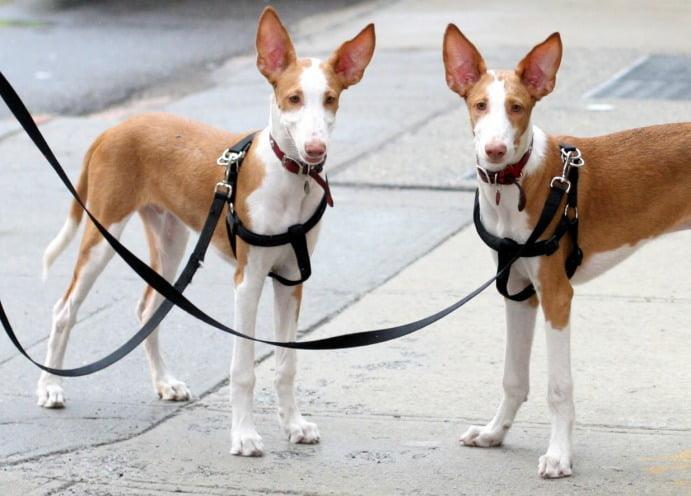
The Ibizan Hound is a tall, lean sighthound from Spain's Balearic Islands, built to hunt rabbits over rough ground and instantly recognisable by its large upright ears and light, floating trot. At home many are affectionate and quietly settled; outdoors they are fast, alert and quick to launch after anything small that moves. They are elegant dogs and genuinely rewarding company for the right owner. They are also a high-drive breed that needs secure space and real daily movement, so the honest question is less about looks and more about what you can offer.1, 2
Ibizan Hound at a glance
- Size: Medium to large, tall and lean1, 2
- Height: Commonly within 56 to 74 cm (breed standard guidance)1, 2
- Weight: Often around 20 to 25 kg, with variation by sex and build3, 4
- Coat: Smooth (short) or rough (wire), both hard, close and dense1, 2
- Colour: White, chestnut (red) or lion (fawn), solid or in combinations. Other colours are not acceptable in the breed standard1, 2
- Temperament: Alert, affectionate with their people, and notably independent, usually best with patient, consistent handling5
History and Origin
The Ibizan Hound (Podenco Ibicenco) is closely tied to Spain's Balearic Islands, where dogs of this type were used for hunting, especially rabbits. The often-repeated link to ancient Egypt comes largely from similar prick-eared, long-nosed dogs appearing in ancient art, but artwork is not the same thing as a documented breed history.1, 6
What is clear is that the modern breed was shaped for function: moving fast over rough terrain, turning sharply, and using both sight and scent while hunting. That purpose still shows in the way Ibizans move, scan and launch into motion with very little warning.1, 2
Appearance and Physical Characteristics
Ibizan Hounds are built like a spring, with long legs, a narrow frame and a light, efficient trot the breed standard calls a "suspended" movement, a brief hover before the foot lands. Two coat types are accepted, smooth and rough, both with a hard texture.1, 2
The ears are large, erect and highly mobile, and the tail is long and thin, carried higher when the dog is excited but not curled tightly over the back.1, 2
Temperament and Personality
An Ibizan Hound is typically observant and people-aware, but not clingy in the way some companion breeds are. Many are affectionate at home, then switch quickly into hunting mode outdoors if something small moves in the scrub or along a fence line.5
Common traits owners describe, and should plan for, include:
- Independence: They may pause and decide before responding, especially outside.
- Sensitivity: Heavy-handed corrections often backfire. Calm consistency tends to travel further.
- Prey drive: Off-lead reliability around wildlife is not a safe assumption.
Is an Ibizan Hound Right for You?
For a first-time owner who wants a low-effort dog, honestly, this is not the easy pick. This is an athlete bred to hunt on the move, and it needs an owner who can give it secure space, patient training and daily exercise. Get those right and many Ibizans settle beautifully in the home. Skip them and you get a bored, agile dog that goes looking for its own work, usually by climbing, jumping or rehearsing chase behaviours at the fence.5
A few things that make living with one easier:
- Prioritise secure fencing: Think in terms of jumpers and climbers, not just a dog that stays put.
- Use a long line for recall training: It lets you practise safely while the dog is still learning.
- Plan enrichment: Food puzzles, scent work and controlled chase games reduce the urge to invent their own entertainment.
- Socialise early and gently: Build calm exposure to people, dogs, surfaces and sounds, without flooding them.8
Training and Exercise
This is a dog designed to hunt on the move, so day-to-day life needs a mix of brisk exercise and enrichment, not just a slow lap of the block. If their body is under-used, their mind goes looking for work at the fence line.5
Training is most effective when it is short, frequent and reward-based. Recall training matters, but so does management: secure fencing, a lead in unfenced areas, and controlled opportunities to run in safe enclosures. Many Ibizans enjoy lure coursing, agility and scent games, which give their instincts somewhere appropriate to land.5
Health and Lifespan
Ibizan Hounds are often described as generally healthy, but like many purebred dogs they can be affected by inherited conditions. Screening and early detection are the practical safeguards, especially if you are buying a puppy.7
Worth discussing with your vet and breeder:
- Hip dysplasia: Can occur even in medium-sized dogs and may lead to pain and arthritis over time.7
- Inherited eye disease: Breed guidance commonly recommends regular eye screening to catch problems early.7
- Deafness: Some breed resources recommend BAER hearing testing for puppies, particularly where there is significant white in the coat.7
All dogs can develop skin irritation, ear infections and allergies, but the evidence base is strongest for hips, eyes and hearing as topics to raise with the breeder first.7
Grooming and Care
Coat care is usually straightforward. A weekly brush is often enough to lift dust and loose hair, and it gives you a quiet moment to check skin, pads and nails. Rough-coated dogs may hold a bit more debris in the coat, but the grooming load is still modest compared with heavily feathered breeds.1, 2
What matters more than coat care is basic body maintenance: nails kept short for traction, teeth cleaned regularly, and ears checked, especially after running through long grass or scrub.
Finding a Breeder or Rescue
Start with people who can show their working: health testing, stable temperaments, and puppies raised with careful handling. In Australia, Dogs Australia member bodies set out practical questions to ask, including whether you can meet the dam, see where puppies are raised, and view relevant health test results for the parents.8
Useful checks include:
- Are the parents screened for known breed-related issues, particularly hips and eyes, and can the breeder show documentation?8
- Can you meet the mother dog and see the litter together in the home environment?8, 9
- Does the seller avoid rushing, welcome questions, and ask you questions too, about your home, fencing and exercise plans?9
If you are looking online, be wary of red flags like requests for money before you have met the puppy, or anyone offering to send a puppy without proper viewing and paperwork. The RSPCA also notes that transferring very young puppies (under 8 weeks) is a serious warning sign and is prohibited in several Australian states and territories.10
The Bottom Line
The Ibizan Hound is a specialist athlete that can also be a calm, affectionate housemate, provided their need to run, think and chase safely is taken seriously. Offer secure space, patient training and daily movement, and you will likely see the breed at its best: quiet indoors, bright-eyed outdoors, and always alert to the small movements in the landscape.1, 5
References
- Dogs Australia (ANKC), Ibizan Hound breed standard
- The Kennel Club (UK), Ibizan Hound breed standard
- Hill's Pet UK, Ibizan Hound breed information
- Purina UK, Ibizan Hound (short/smooth coat) overview
- Ibizan Hound Club of the United States, AKC breed standard (temperament and function)
- Encyclopaedia Britannica, Dog (general context on breed development and domestication)
- PetMD, Ibizan Hound health and care (BAER, hips, eyes)
- Dogs Australia, Choosing a breeder (questions and health testing evidence)
- RSPCA Pet Insurance, Tips for safely buying a pet (responsible breeder checks)
- RSPCA Knowledgebase, Red flags when looking for a dog online

Dog lover and writer at My Pets Australia, sharing practical breed guides and care advice for Australian pet owners.