Hovawart
The Hovawart is an old German working dog bred to guard a homestead: big, watchful, and steady enough to live closely with a family. A well-bred, well-raised one is even-tempered and deeply devoted, alert without being a live wire, and happiest when it has a real job to do. It is also a serious commitment. This is a powerful guardian breed with a strong need for purpose, and get the match wrong and you can end up with a dog that is under-exercised, under-socialised, and hard to manage once adolescence arrives. What follows is a plain snapshot of size, coat, temperament, training, health, and what to look for in a breeder or rescue, grounded in recognised breed standards and welfare guidance.1, 2
- Size: Medium to large. Males typically 63 to 70 cm and 30 to 40 kg, females 58 to 65 cm and 25 to 35 kg (breed standard figures).2, 3
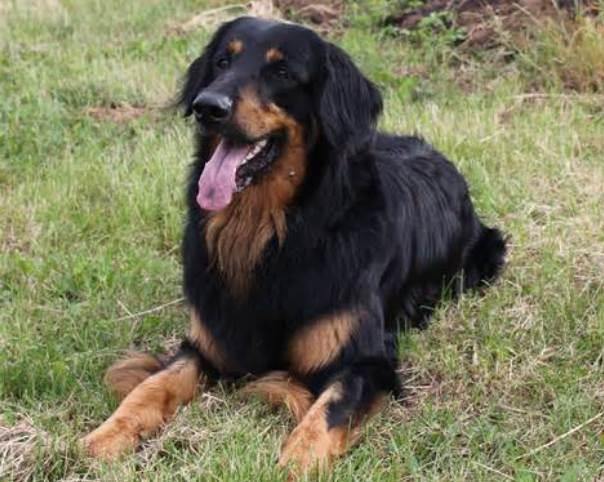
- Coat: Long-haired and weather-resistant, usually slightly wavy, with feathering. Undercoat varies seasonally.3
- Colours: Black-gold (black and tan), black, and blond (golden).2, 3
- Temperament: Devoted and protective, typically even-tempered with a natural guarding instinct when well bred and well raised.3
- Energy level: Moderate to high, and thrives on daily exercise plus mentally engaging work such as training, scent games, and tracking.3
- Life span: Commonly around 10 to 14 years, varying with lines and individual health.4
- Health concerns: Hip and elbow dysplasia are the key considerations. Eye issues exist across the wider dog population, and responsible breeders will discuss what they screen for in their lines.5
- Grooming: Weekly brushing most of the year, more during seasonal shedding. Watch the feathering behind ears and legs where tangles form.3
- Training: Responds best to calm consistency and positive reinforcement. Harsh handling tends to backfire in guardian breeds.3
- Exercise needs: Daily movement plus structured brain work. A bored Hovawart will often invent its own job.3
History and Origin
The name Hovawart comes from Middle High German roots meaning a guardian of the homestead, and that is exactly what the dog was for. References to similar farm and estate guarding dogs appear in German records centuries ago, though the modern breed as recognised today was rebuilt much later.6
By the early 1900s the type had largely faded. A small group of enthusiasts, most notably Kurt Friedrich König, set out to recreate and standardise the Hovawart from surviving dogs and selected outcrosses. Organised breeding gathered pace after World War I, and kennel-club recognition followed as the population stabilised.4
Appearance and Physical Characteristics
Hovawarts are slightly longer than they are tall, with a strong, athletic frame built for steady work rather than sprinting. The head is broad, the ears are dropped, and the overall impression is capable and rugged rather than exaggerated.3
The coat is long and protective, commonly described as slightly wavy, with longer hair on the chest, belly, backs of the legs, and tail. It is a coat made for weather and movement, not elaborate trimming.3
- Height: Dogs 63 to 70 cm, bitches 58 to 65 cm.2, 3
- Weight: Dogs 30 to 40 kg, bitches 25 to 35 kg (commonly cited standard guide).2
- Colours: Black-gold, black, blond.2, 3
Temperament and Personality
A well-raised Hovawart is usually steady in the home and alert outdoors, watching first and then deciding what matters. The guarding instinct is real, which is helpful when it is guided and predictable, and a problem when it is fuelled by poor socialisation or inconsistent boundaries.3
They bond closely with their people and do best on a daily rhythm of exercise, training, rest, and family time. Left to drift, they tend to get busy on their own terms: patrolling fences, sounding alarms, and rehearsing their opinions at the front gate.
Is a Hovawart Right for You?
This breed suits people who want a dog that is large, thoughtful, and useful, and who have the time and space to keep one occupied. With children, the usual rules apply: supervision, calm introductions, and teaching kids how to give the dog space. Hovawarts are powerful, and even a friendly one can knock a small child over without meaning to.
With other pets, early management matters. Many can live well with other dogs and cats, especially when introduced carefully and raised alongside them, but do not assume friendliness will happen automatically. A protective adolescent needs guidance, not guesswork. If you cannot commit to daily exercise, structured training, and secure fencing, this is not the breed for you.
Training and Exercise
Start early and keep it simple. Guardian breeds do not need tough training, they need clarity, repetition, and a handler who stays calm when the dog tests the edges. Reward the behaviours you want to see again, and practise them in many places, not just the backyard.
Socialisation is most effective during a sensitive early window, roughly 3 to 14 weeks, when pups form lasting impressions about people, places, surfaces, sounds, and other animals. The goal is not to overwhelm the puppy, it is to build a long list of ordinary things that feel safe.7, 8
- Make exposure gentle: short sessions, plenty of space, and the option to retreat.7, 8
- Prioritise handling: paws, ears, mouth, grooming brush, collar and lead, paired with treats.
- Teach calm skills early: settle on a mat, wait at doors, recall games, and trading items back.
- Keep puppies safe: follow your vet's advice about disease risk while still creating controlled social experiences.
For exercise, the breed needs daily movement plus structured brain work. Many Hovawarts enjoy roles that use their nose and their steadiness, such as tracking, obedience, and search games. Not every individual will suit operational work, but the breed's design points that way: endurance, attentiveness, and a tendency to stay connected to the handler while working.3
Health and Lifespan
Like many medium to large working breeds, orthopaedic health matters most. Hip and elbow dysplasia are two of the conditions responsible breeders try to reduce through screening and careful selection. Ask what scoring system they use, and to see results for both parents rather than a verbal assurance.5
Hovawarts commonly live around 10 to 14 years, varying with lines and individual health.4 Day-to-day, keep the dog lean, conditioned, and mentally busy.
Grooming and Care
A Hovawart coat usually needs brushing once or twice a week, with extra attention during seasonal shedding. Check behind the ears, along the feathering, and under the collar for knots. Bathing is occasional, and frequent bathing can dry the skin if it is not needed.3
Diet and Nutrition
Feeding is straightforward, with weight management the main point. Large dogs carrying extra weight place more strain through their joints over time, so portion control and steady exercise are part of health care, not just appearance. Keep the dog lean and conditioned rather than heavy.
Finding a Breeder or Rescue
Look for someone who treats temperament and health as the core of the breeding program, not an afterthought. In Australia, Dogs Australia (ANKC) guidance suggests asking to meet the dam, seeing the litter together, confirming vaccination and microchipping timing, and discussing hereditary conditions and health test results.9 If you are adopting through rescue, ask what the dog has lived with (dogs, cats, kids), what training foundations exist, and what situations are known triggers. A good rescue will be frank, not flattering.
A Few Things Worth Knowing
- Both parents' health screening results should be available to view, not just a claim that the dog was vet checked.9
- The breeder can describe the pups' early socialisation plan in detail, including how they handle the sensitive period.7, 8
- You are encouraged to visit, and the dogs look comfortable with the breeder and their environment.10
- The breeder asks you serious questions about fencing, exercise time, and how the dog will be managed around visitors.9
The Bottom Line
The Hovawart suits people who like their dogs large, thoughtful, and useful, guardians that settle well once their needs are met. Choose for stable temperament, commit to early socialisation, and keep the dog busy with real work, even if that work is simply training games woven into ordinary days.3, 7
References
- The Kennel Club (UK), Hovawart breed standard
- FCI, Hovawart (No. 190) breed listing and standard publication details
- Dogs Global, Hovawart FCI standard (summary text)
- Wikipedia, Hovawart (history overview and modern reconstruction notes)
- Orthopedic Foundation for Animals (OFA), canine health screening and databases
- Hovawart.be, history of the Hovawart (historical references and revival summary)
- Purdue University, Canine Welfare Science: socialisation and early exposure
- The Ohio State University, Indoor Pet Initiative: puppy socialisation period
- Dogs Australia, choosing a breeder (questions to ask)
- RSPCA Pet Insurance (AU), tips for safely buying a pet (responsible breeder checks)

Dog lover and writer at My Pets Australia, sharing practical breed guides and care advice for Australian pet owners.